
In coastal Florida, it’s easy to assume your chimney is low-risk because you don’t deal with snow or long freezes. Then the first cold front hits, you light the fireplace for the first time in months, and you’re suddenly searching “chimney inspection.”
Around Tampa Bay, that search often turns up Top Chimney Fireplace, advertising inspections, cap replacement, and creosote removal for wood-burning, gas, and outdoor fireplaces.
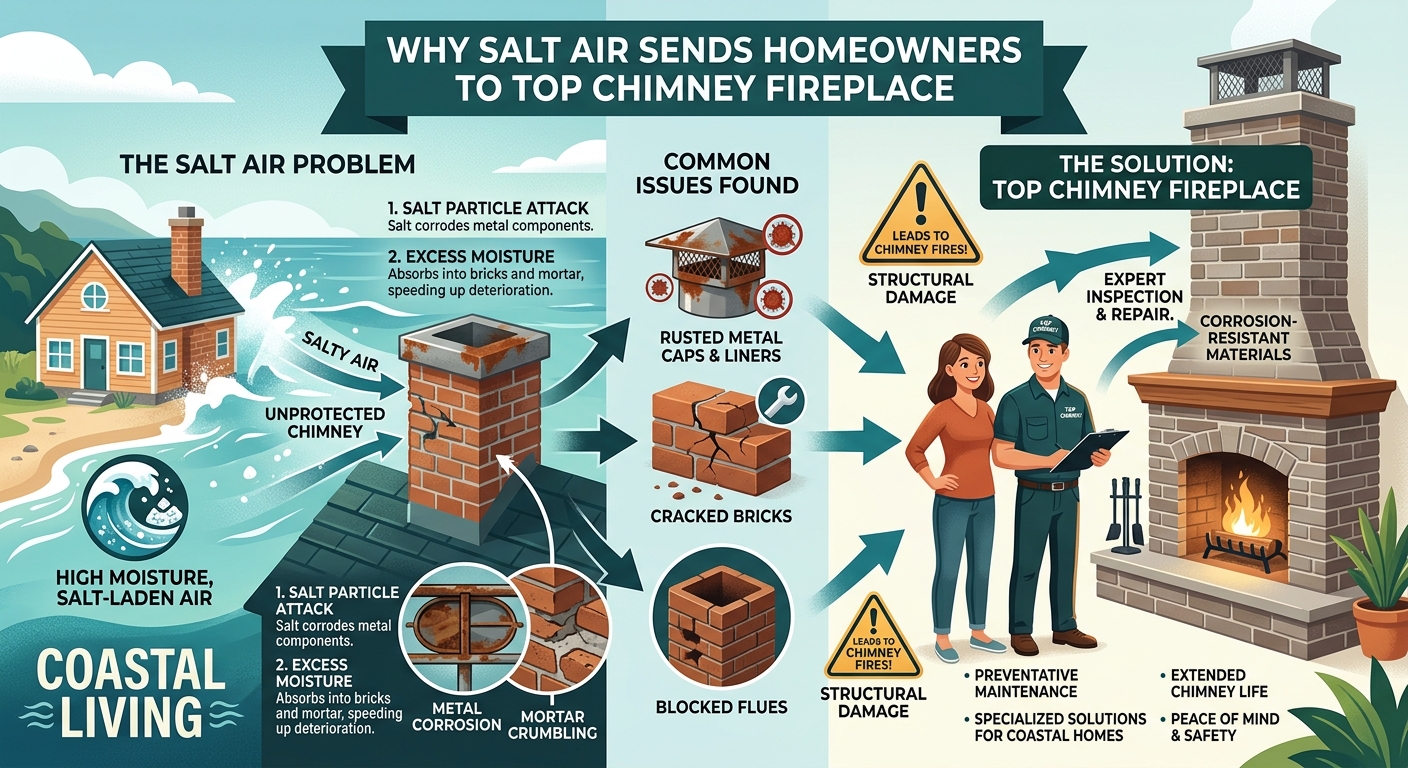
The same salt-laden air that wears down porch furniture in a decade also wears down the metal, mortar, and hardware inside a chimney system. That wear happens every day, regardless of whether anyone lights a fire that night.
A checklist built for a colder, drier region looks for creosote buildup from heavy burning. A chimney built into a stucco house near Tampa Bay answers to a different set of conditions.
If you’re unsure whether to schedule an inspection before the first cool front, look for someone who understands local conditions. They’ll check for corrosion, moisture intrusion, and pests that a generic checklist often misses. Catching those issues early keeps repairs smaller and your fireplace ready when temperatures drop.
Key takeaway: A fireplace that burns twelve nights a year still needs a full-season maintenance mindset in a coastal climate. Fewer fires do not mean fewer risks.
Salt Air Doesn’t Wait for Winter
Northern maintenance guides treat the burning season as the danger window. Everything before or after gets filed under “nothing to worry about.”
Coastal Florida breaks that logic. Salt particles carried on Gulf breezes settle on exposed metal all year, and chase covers, dampers, and spark arrestors made from lower-grade steel start pitting within a few seasons in a beachside zip code.
A flashing seam that lasts twenty years in Ohio fails in eight near Hudson or Citrus Park. Rain adds another layer: Florida’s afternoon storms push moisture into any gap a corroded seam leaves behind, and that water travels down the flue into the firebox and surrounding masonry.
What a Sealed Damper Hides
A homeowner who closes the damper in April and doesn’t open it again until December assumes the chimney sits idle. Nothing happens back there, so nothing bad can happen either, or so the thinking goes.
Behind that sealed damper sits something different: a dark column with limited airflow, condensation, and organic debris. Mold spores find that environment inviting, and wasps search out the same dry cavity to build in.
Humidity trapped behind a closed damper has nowhere to go. It settles into brick, mortar, and any wood framing near the chase.
Bugs, Nests, and the Off-Season Chimney
Pest activity inside a chimney gives few dramatic warning signs. It shows up in small clues a homeowner notices and dismisses one at a time, then remembers all at once during an inspection.
Watch for these signals between fire seasons.
- A faint scratching sound near the firebox wall around dusk.
- A musty smell that air fresheners never clear for good.
- Small twigs, leaves, or nesting material sitting on the smoke shelf.
- Water stains on the ceiling near the chimney chase after a heavy rain.
- Rust streaks running down the exterior of the chase cover.
On its own, any single sign means little. Two or three together often point to a chimney that has been building problems since the last time anyone opened the damper.
Gas, Wood, and the Question Nobody Asks First
Homeowners shopping for a new fireplace often compare upfront cost and looks first. Coastal humidity deserves a place earlier in that decision than many buyers give it.
Wood-burning units draw outside air through a damper and chimney that stay exposed to salt and moisture for months between fires. Gas units run on a sealed system, which limits that exposure but shifts the maintenance conversation toward venting and gasket condition instead of soot and creosote.
Electric fireplaces skip the venting question altogether, which explains why they show up in condo renovations along the coast. A buyer who weighs flame authenticity against price alone skips a variable that decides how often a service call gets made over the next ten years.
Reading a Flue Like a Coastal Contractor Would
A technician trained on cold-climate chimneys checks creosote thickness and calls the job done. One who works the Gulf Coast full time reads the same flue for a different set of clues: rust patterns, mortar erosion from humidity cycling, and gaps where salt corrosion has widened a seam that used to hold water out.
The training gap shows up later, in what gets caught early versus what surfaces only after a repair bill arrives. A flue liner cracked by heat looks nothing like one weakened by years of moisture expansion and contraction, and treating the second problem like the first wastes time and money both.
Certification with specific fireplace brands matters here too. Gas inserts, wood-burning units, and outdoor fireplaces each respond to humidity differently, and a technician who works with only one type misses what the others need.
The Maintenance Calendar Worth Building
A coastal chimney routine looks different from the standard “sweep once a year” advice printed on a generic manufacturer manual. Spring and fall both deserve a look, not just the weeks before the first fire of the season.
A quick visual check after a major storm catches flashing damage before it turns into a full leak. A homeowner who notices a musty smell near the firebox should treat it as a signal to check within days, not months.
Fireplaces in this region do not get to coast on a “light it twice a year” excuse. The climate stays active even when the damper stays shut.
Coastal weather asks more of a chimney than typical maintenance guides admit, and pretending otherwise only delays the repair bill. Homeowners who match their expectations to Gulf Coast conditions, instead of a manual written for a different climate, keep small problems from turning into structural ones.