
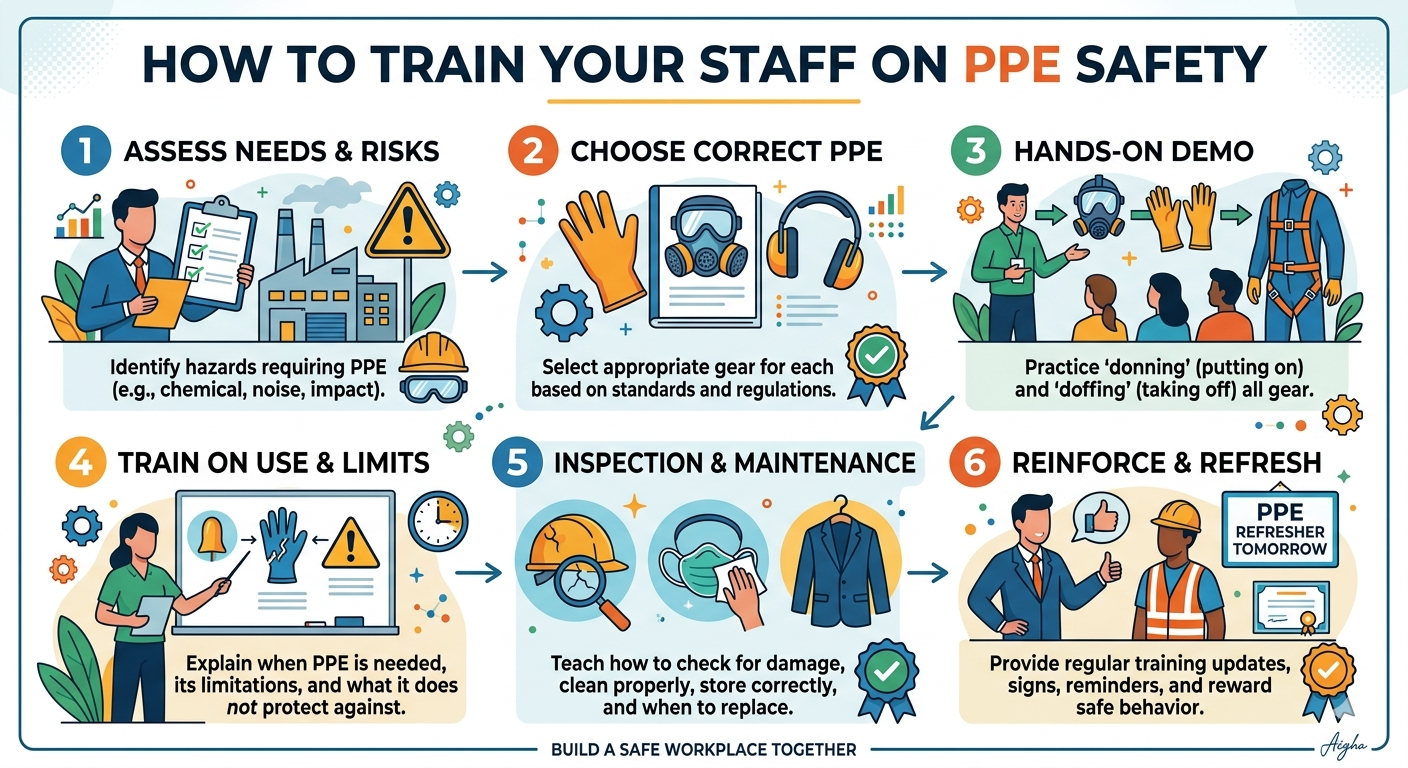
The challenge of introducing new safety gear to your team is just the beginning; you must also train and execute first. Even the most expensive gear does not protect if worn improperly or left in the locker. Good training transforms a piece of plastic or fabric into a life-saving tool through knowledge and habit. This blog will talk about many different ways to make sure that your staff knows PPE safety.
Explaining the ‘Why’ Behind the Gear
Do not just give out equipment; show your staff the specific data or “near-miss” stories that are relevant to their jobs. The gear becomes an important tool they can use when they start to see the correlation between a face shield and preventing blindness.
If you talk to professional ppe safety equipment suppliers, they can give you technical data sheets and safety videos to share. You can learn more about the testing procedures and the specific loads that the equipment is designed to handle from them. When you shift the focus away from “do this because I said so” to “do this to protect your future”, it alters the whole team dynamic.
Hands-On Demonstration and Fit Testing
When it comes to physical safety, a lecture alone is insufficient; your staff must be able to master the process of putting on and taking off their gear. This process, commonly known as “donning and doffing”, is where most of the errors occur, particularly in respirators and harnesses. Ensure every employee can demonstrate a perfect fit under the supervision of a safety officer.
Fit testing is particularly important for respiratory protection. A poor seal makes the device almost useless. Use these trainings to demonstrate how you can adjust straps and check for gaps with mirrors or peer checks.
Proper Maintenance and Storage Training
PPE operates only if it is in good condition, so your staff should know how to clean and store their equipment. Sweat, dirt, and chemicals will degrade rubber and plastics if you don’t wipe them down after use. Training must include specific instructions on which cleaning agents are safe to use on their gear.
Provide dedicated, clean storage areas to prevent equipment from being crushed or contaminated when not in use. Have the team respect their gear, because a scratched lens or frayed strap can compromise their safety.
Identifying Signs of Wear and Tear
Your staff should be the first to inform you when a piece of equipment needs to be retired. Teach them what to look for, such as “crazing” on protective hats, brittle straps on masks, or worn-out tread on boots. Promote a “no-fault” replacement policy so that they feel safe reporting damaged gear right away.
Inspections should be an official part of their daily agenda before they even enter a hazardous zone. If they discover a flaw, they ought to know exactly who to ask for a replacement without delay.
Regular Refresher Courses and Updates
Safety measures and equipment technology are constantly evolving, necessitating ongoing training. Arrange a series of short, regular ‘toolbox talks’ to review certain PPE topics and address any errors you see frequently. This keeps safety a priority throughout the whole year.
If you provide a new kind of glove or a new respirator model, don’t assume the old training applies. Whenever possible, talk the team through the new gear’s specific features and changes. Keeping your training fresh ensures that the culture of safety will continue to be strong and adaptable to new challenges.
Leading by Example at Every Level
If management walks onto the floor without a vest or ear protection, the staff will quickly follow suit. That top-down consistency promotes the concept that safety rules are general and applicable to all employees, whether they are senior or junior.
Praise employees who consistently wear their gear correctly and use them as “safety champions” to help train newer hires. When leadership practices safety by example, it becomes a natural aspect of the workplace identity. Your behaviour speaks louder than any training material ever could, so always wear the gear with pride.
Building a Culture of Mutual Protection
Educating your employees about PPE safety is an ongoing journey of education, practice, and positive reinforcement. Spend time now so your workers all feel comfortable and confident in their safety gear. The payoff is more than a reduced accident rate; however, it’s a workforce that is more engaged, loyal, and healthy. A safe team is a successful team, and the success begins with the first training session!