
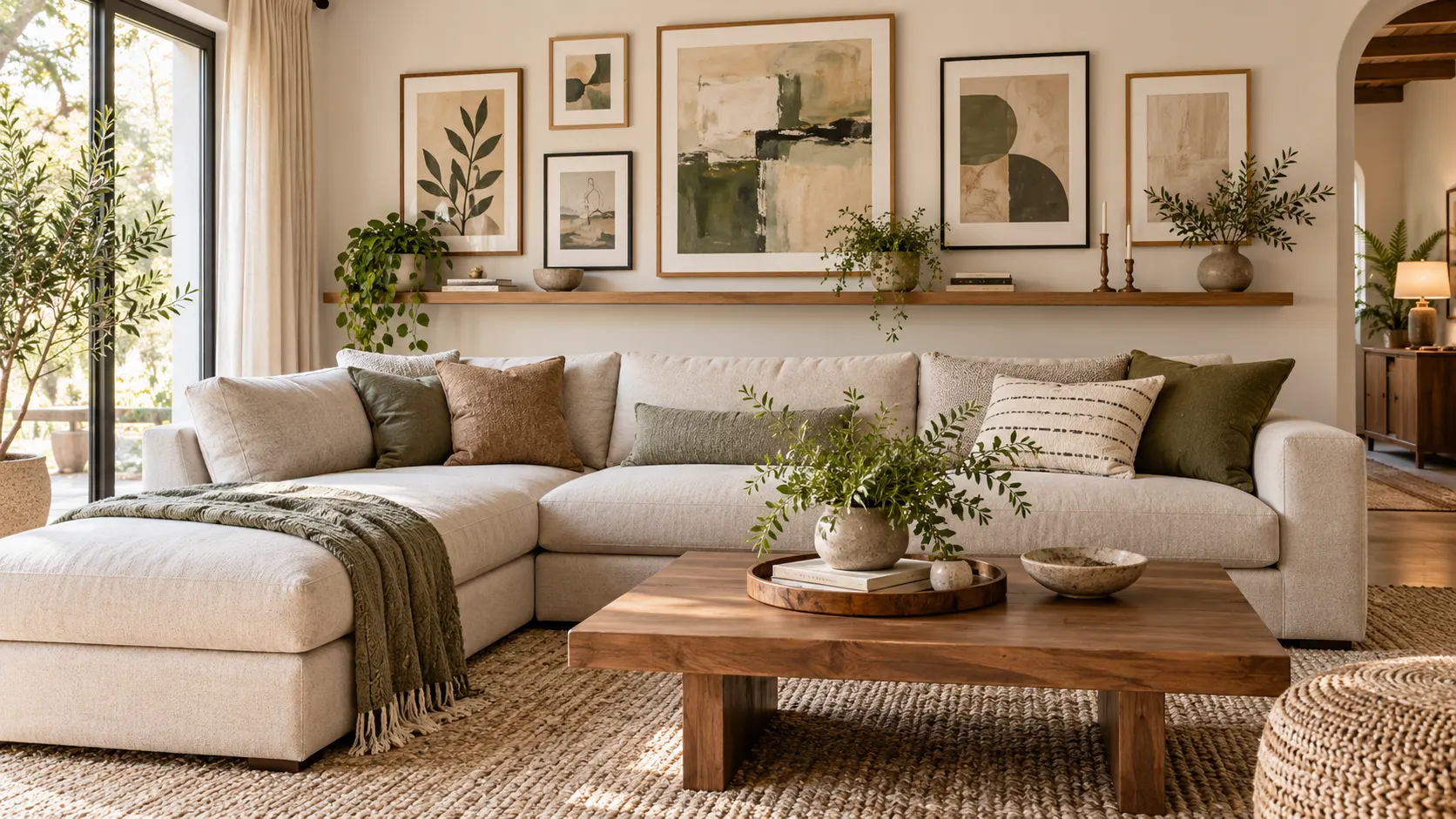
Start With the Sectional’s Size and Shape
Before decorating the wall behind a sectional sofa, look at the sofa’s full width, height, and layout. A large L-shaped or U-shaped sectional needs wall decor with enough visual presence to feel balanced. Measure the available wall area, including the space above each side of the sofa, before choosing artwork, shelves, or a mirror.
The sectional’s back usually creates a strong horizontal line, so wall decor should relate to it. A single wide piece of art can echo that shape, while several smaller pieces can form a gallery arrangement with a similar overall width. As a starting point, consider filling roughly two-thirds of the sofa’s width rather than covering the entire wall.
Also note how close the sofa sits to the wall and whether the sectional has a chaise or tall back cushions. These details affect where decor can hang and how much space remains for lamps or shelves. A simple measurement plan helps you avoid a display that looks crowded or too small once it is installed.
Use One Large Piece of Artwork
A large painting, framed print, or photograph creates a clear focal point behind a sectional sofa. This approach works especially well when you want a calm, uncluttered living room or have a bold sofa that already draws attention. Choose an image or color palette that connects with other elements, such as cushions, a rug, curtains, or an accent chair.
The art should suit the scale of the wall and furniture. A small frame can appear lost above a large sectional, while an oversized piece may feel heavy if it reaches too close to the ceiling or corners. Measure the available space and use painter’s tape to outline the artwork’s dimensions before purchasing.
Hang the artwork so its center sits near eye level when people are standing or seated nearby, adjusting for the sofa’s height. Leave a modest gap between the top of the sofa and the frame so the arrangement feels connected without looking cramped. If the wall is wide, a horizontal canvas or panoramic photograph can complement the sectional’s shape.
Create a Gallery Wall Above the Sofa
A gallery wall lets you combine prints, photographs, illustrations, and meaningful objects into a personalized display. It can bring interest to a large blank wall and work with both modern and traditional living room styles. To keep the arrangement cohesive, use a common element such as matching frame colors, a shared subject, or a consistent color palette.
Lay the frames out on the floor before putting holes in the wall. Try a balanced grid for a tidy look or a looser arrangement for a more relaxed feel. Keep the gaps between pieces fairly consistent, and plan the complete arrangement as one shape that relates to the sectional’s width.
A gallery wall does not need to use identical frames, but it benefits from visual order. Mix frame sizes while repeating a few finishes or colors to tie the collection together. Leave enough breathing room around the display, especially near the ceiling, doorways, and adjacent walls, so the artwork does not feel squeezed into the space.
Add a Mirror to Reflect Light and Space
A mirror can make the wall behind a sectional feel brighter, especially when it reflects a window or another light source. It also adds dimension without introducing a busy pattern or a strong color. Choose a shape and frame that suit the room, such as a simple round mirror for a softer look or a rectangular design for a more structured arrangement.
Consider what the mirror will reflect before hanging it. A view of a window, attractive artwork, or a well-styled part of the room can add depth. If it reflects clutter, a television, or an unflattering angle, it may draw attention to something you would rather keep in the background.
For a large sectional, one substantial mirror can hold its own above the sofa, while a set of smaller mirrors can create a decorative grouping. Make sure the mirror is securely mounted with hardware suited to its weight and wall type. In homes with children or pets, choose a stable installation and a location where it is less likely to be bumped.
Style Floating Shelves for Functional Wall Decor
Floating shelves add display space while helping the wall behind a sectional feel layered. Use them for a curated mix of framed photos, small plants, ceramics, and books. Shelves are particularly useful when you want to change the display seasonally or bring in personal items without committing to a permanent gallery layout.
Keep the objects varied in height and shape, but avoid filling every inch. A few grouped pieces with empty space around them usually look more intentional than a crowded row of accessories. Repeat colors and materials from the rest of the living room so the shelves connect with the sofa, coffee table, and other furniture.
Check shelf depth and installation height before adding decor. Deep shelves above a sofa may feel imposing or get in the way, while very narrow shelves can limit what you can display. Secure each shelf to studs or use appropriate anchors, and keep fragile objects away from the edge where they could fall.
Bring in Texture With Wall Hangings
Textile decor can soften a living room and balance the solid lines of a sectional. A woven wall hanging, fabric panel, or carefully chosen tapestry introduces texture without the shine of glass or the formality of framed art. It can be a good fit for bohemian, coastal, rustic, or relaxed contemporary interiors.
Choose a hanging with enough width to relate to the sofa, and consider how its colors interact with nearby furnishings. A neutral woven piece can add depth to a colorful room, while a patterned textile can bring energy to a simple sofa and plain walls. Repeating a shade from the cushions or rug can help the display feel connected.
Textiles can collect dust, so think about upkeep when selecting materials and placement. Hang the piece securely and leave enough space above the sofa so it does not brush against people’s heads. If you rent or prefer minimal wall damage, a lightweight textile may also be easier to install than a heavy frame.
Use Paint, Wallpaper, or a Feature Wall
A painted accent wall can define the seating area without needing many decorative objects. Choose a shade that complements the sofa and the room’s existing colors; it might be a muted green, warm beige, deep blue, or another tone already present in the space. Testing a sample in different lighting can help you see how the color changes throughout the day.
Wallpaper adds pattern and can make the wall behind a sectional feel more distinctive. Large-scale designs may suit a broad wall, while subtle textures or small patterns can add interest without overwhelming the room. If you are unsure about a full wall, removable wallpaper or a painted panel can offer a less permanent way to experiment.
Let the wall treatment take the lead instead of layering too many competing focal points over it. A simple mirror or a few pieces of art may be enough against a strong pattern. If you want to add frames, choose artwork with quieter colors so the wall and decor work together rather than compete for attention.
Layer Wall Decor With Lighting
Wall lighting can make the area behind a sectional feel comfortable and visually complete. Sconces provide a decorative frame around a sofa, while picture lights draw attention to artwork. Plug-in options can suit rooms where hardwiring is not practical, though cords should be managed neatly and positioned safely.
Plan the lighting around how the living room is used. A reading area may benefit from focused light near one end of the sectional, while ambient sconces can create a softer mood for conversation. Dimmable bulbs offer flexibility, and warm-toned light often feels inviting in a lounge or family room.
Avoid placing fixtures where someone’s head might bump them when leaning back. Measure from the sofa’s top edge and check the height while seated as well as standing. If combining lighting with art or shelves, map the complete arrangement first so the fixtures illuminate the display instead of casting awkward shadows.
Balance the Sofa Wall With the Rest of the Room
Decorating the wall behind a sectional works best when it relates to the whole living room. Look at nearby windows, side tables, floor lamps, media units, and adjoining walls before settling on a layout. The display does not have to match every item, but it should feel like part of the same room rather than a separate design.
Repeat a few colors or materials across the space to create continuity. For example, a black frame might echo a lamp base, while warm wood shelves can connect with a coffee table. Repetition helps the room feel cohesive without requiring a perfectly matched furniture set.
Balance also means considering visual weight. A dark, large-scale artwork may need a lamp, plant, or lighter object elsewhere in the room to keep the space from feeling lopsided. Step back and view the sofa wall from the main entrance and seating positions, making small adjustments until the overall arrangement feels settled.
Choose a Style That Suits Your Home
In a modern living room, a single abstract canvas, a simple mirror, or a clean grid of prints can complement a sectional without adding visual clutter. Choose restrained colors and straightforward frames if the sofa or rug already has a strong pattern. The goal is a focal point that feels deliberate while leaving the room easy to live in.
For a cozy or traditional space, consider framed landscapes, family photographs, botanical prints, or a layered gallery wall. Natural wood frames, warm colors, and textured accents can make the seating area feel welcoming. Mix personal pieces with decorative artwork so the display feels collected rather than assembled all at once.
A minimalist room may call for one carefully chosen object and generous empty space. In an eclectic home, you can combine art, mirrors, and objects, but repeat colors or materials to keep the arrangement from feeling random. Let the sectional’s fabric and shape guide the mood, then add wall decor that supports rather than distracts from it.
Avoid Common Decorating Mistakes
One common mistake is hanging decor too high above the sofa. When the gap is too large, the artwork can look disconnected from the seating area. Use painter’s tape to test the placement, and view it from the sofa before making permanent holes.
Another issue is choosing pieces that are too small for a large sectional. A tiny frame in the middle of a wide wall can feel accidental, while an overly crowded collection can make the room seem busy. Consider the complete shape and width of the display, not just the size of each individual item.
Avoid buying decor before checking measurements, mounting needs, and how it works with the room’s colors. Also be cautious about heavy items mounted above a place where people sit; use secure hardware appropriate to the wall and object. A little planning can prevent damage and make the finished wall feel more intentional.
Conclusion
The best way to decorate the wall behind a sectional sofa is to start with the furniture’s scale and the room’s overall style. Large artwork, a gallery wall, a mirror, shelves, textiles, or a feature wall can each create a strong focal point. Choose an approach that fits your space and feels comfortable to live with.
Measure the wall, plan the layout, and test placements before hanging anything. Connect the display with colors, materials, and lighting already present in the living room, while leaving enough breathing room around each piece. Secure shelves, mirrors, and heavy frames with suitable hardware.
A thoughtful sofa wall does not need to be complicated or expensive. One well-sized artwork or a few personal pieces can make the seating area feel finished. Take time to arrange the elements, then adjust them until the wall feels balanced from the places where you actually use the room.
FAQs
What should I put on the wall behind a sectional sofa?
Popular choices include one large artwork, a gallery wall, a mirror, floating shelves, or a textile hanging. Choose a display that fits the sofa’s width and complements the room.
How high should artwork hang above a sectional?
Leave a small, comfortable gap between the sofa and the artwork, then check the placement from a seated position. The exact height depends on the sofa’s back and the artwork’s size.
How wide should art be above a sectional?
A useful starting point is artwork or a grouped display that spans roughly two-thirds of the sofa’s width. Measure the wall and test the layout with painter’s tape before hanging.
Are floating shelves a good idea behind a sofa?
Yes, floating shelves can add display space and texture. Use secure mounting hardware, keep objects from the edge, and avoid deep shelves that feel imposing above the seating area.
Can I use a gallery wall behind an L-shaped sectional?
Yes. Plan the frames as one overall arrangement that relates to the full sofa, including its chaise. Lay the design out first and keep spacing consistent so it feels cohesive.