
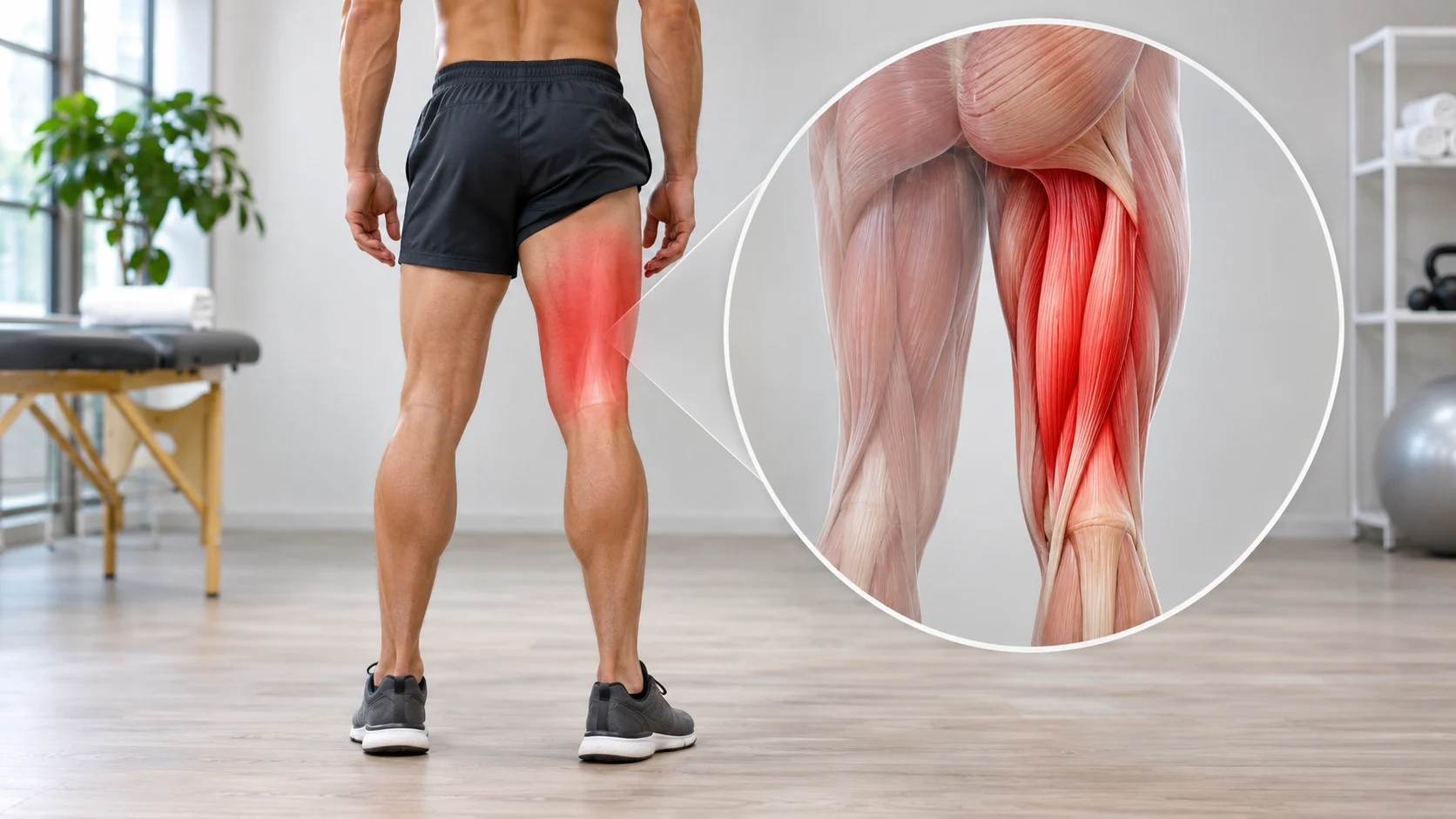
The hamstrings are an important group of muscles located at the back of your upper leg. They help you walk, run, bend your knee, and move your hip during everyday activities. Whether you are climbing stairs, exercising, or simply standing up from a chair, your hamstrings contribute to smooth and controlled lower-body movement.
If you have ever wondered where is the hamstring located, the simple answer is that the hamstring muscles run along the back of your thigh, between your pelvis and the area below your knee. Understanding their location can help you recognize muscle discomfort, learn basic anatomy, and perform exercises more effectively.
This guide explains hamstring anatomy, muscle location, functions, and common injuries in simple language. You will also learn how the hamstrings work with other muscles, why they sometimes feel tight, and how to support healthy movement.
Where Is the Hamstring Located in the Body?
The hamstring muscles are located along the back of the thigh, extending from the lower pelvis toward the knee. Most of the hamstring muscles begin near the sitting bone, also called the ischial tuberosity. They travel downward behind the upper leg and attach to bones around the knee. This position allows them to control movement at the hip and knee joints.
You can roughly identify the hamstring area by placing your hand on the back of your upper leg. The muscles lie underneath the skin and surrounding soft tissues. They become more active when you bend your knee or move your thigh backward. However, their exact boundaries are easier to understand through anatomical illustrations than by touch alone.
The hamstrings form an important connection between the pelvis and lower leg. They work closely with the glutes, quadriceps, and calf muscles during movement. Their location also makes them important for maintaining stability while walking or running. Learning where they are helps explain why hamstring discomfort can affect both the thigh and knee.
What Are the Hamstring Muscles?
The hamstrings are commonly described as three muscles found along the back of the thigh. These are the biceps femoris, semitendinosus, and semimembranosus. The biceps femoris has a long head and a short head. Strictly speaking, the short head is not considered a true hamstring by some anatomical definitions because it does not cross the hip joint.
The semitendinosus and semimembranosus are located toward the inner or medial portion of the back of the thigh. The biceps femoris is positioned more toward the outer or lateral side. These muscles have different attachment points but share important movement functions. Together, they help coordinate knee bending and movements involving the hip.
Each muscle contains fibers that contract to produce movement and tendons that connect muscle tissue to bone. Their structure allows them to generate force while adapting to different activities. The hamstrings also work with nearby muscles to stabilize the lower body. Understanding their individual parts provides a clearer picture of how the entire muscle group functions.
Biceps Femoris: The Outer Hamstring Muscle
The biceps femoris is located on the outer side of the posterior thigh. It consists of two parts known as the long head and short head. The long head begins at the ischial tuberosity of the pelvis, while the short head originates from the femur. Both portions join toward the outside of the knee.
The biceps femoris helps bend the knee and rotate the lower leg outward when the knee is flexed. Its long head also contributes to extending the hip. These actions are useful during walking, running, and changing direction. The short head primarily contributes to knee movement because it does not cross the hip joint.
Discomfort involving the biceps femoris may be felt along the outer back of the thigh or near the outside of the knee. However, pain in this region can have several causes. Muscle strain, tendon irritation, and other conditions may produce similar symptoms. Persistent pain should be assessed rather than diagnosed based on location alone.
Semitendinosus: The Inner Hamstring Muscle
The semitendinosus is a long muscle located toward the inner portion of the back of the thigh. It begins near the sitting bone of the pelvis and extends toward the inside of the upper tibia. Its long tendon contributes to its distinctive appearance. The muscle lies relatively close to the surface compared with some deeper structures.
The semitendinosus helps bend the knee and extend the hip. It also assists with rotating the lower leg inward when the knee is bent. These movements support activities such as walking, climbing stairs, and changing positions. The muscle works alongside other hamstrings rather than performing these functions independently.
The semitendinosus tendon is sometimes used in certain surgical procedures involving ligament reconstruction. This reflects its anatomical structure and location near the knee. However, the muscle remains important for normal movement. Learning about its attachments helps explain why some hamstring-related symptoms are experienced near the inner knee.
Semimembranosus: The Deep Inner Hamstring
The semimembranosus is another hamstring muscle positioned along the inner back of the thigh. It lies deeper than the semitendinosus in much of the thigh. Like several other hamstring structures, it begins near the sitting bone of the pelvis. Its tendon attaches mainly to the back of the inner upper tibia.
This muscle contributes to hip extension, knee flexion, and inward rotation of the lower leg when the knee is bent. It also helps stabilize the knee during movement. Working with nearby muscles, the semimembranosus supports coordinated lower-body actions. These functions are particularly important during walking and other activities involving repeated leg movements.
Because the semimembranosus is located deeper within the thigh, identifying it by touch can be difficult. Problems involving this muscle or its tendon may produce discomfort near the inner back of the knee. However, other conditions can affect the same region. A clinical examination is useful when symptoms persist or interfere with normal movement.
What Is the Main Function of the Hamstrings?
The hamstrings have two major movement functions: bending the knee and extending the hip. Knee flexion brings the lower leg toward the back of the thigh. Hip extension moves the thigh backward relative to the pelvis. Most hamstring muscles participate in both actions, making them important for coordinated lower-body movement.
For example, when you walk, the hamstrings help control the swinging leg and assist with movement around the hip. During running, they experience greater demands because the legs move more quickly. The muscles also contribute to controlling knee position. Their coordinated activity helps the body perform these movements smoothly.
The hamstrings do not work alone during everyday activities. The glutes, quadriceps, calf muscles, and trunk muscles all contribute to lower-body movement. Their combined function allows you to stand, walk, and change direction. Maintaining comfortable strength and mobility across these muscle groups can support everyday physical activity.
How Do the Hamstrings Connect to the Hip and Knee?
Most hamstring muscles begin at the ischial tuberosity, a bony area at the bottom of the pelvis. This attachment is close to the part of the pelvis that supports weight while sitting. From there, the muscles travel down the back of the thigh. Their tendons attach to structures around the knee.
The semitendinosus and semimembranosus attach toward the inner side of the upper tibia. The biceps femoris attaches primarily near the head of the fibula on the outer side of the knee. These attachments help explain the different rotational movements produced by the muscles. The short head of the biceps femoris is an exception because it originates from the femur.
Since most hamstrings cross both the hip and knee joints, their length and tension change with movement at either joint. Straightening the knee while bending the hip generally increases the stretch on these muscles. This anatomical relationship is important when performing flexibility exercises. Comfortable movement should always take priority over forcing a particular stretching position.
Why Do Hamstrings Feel Tight?
Hamstring tightness is a common sensation that may occur after prolonged sitting, exercise, or unfamiliar physical activity. Some people feel a pulling sensation behind the thighs when bending forward. Others notice stiffness after running or strength training. However, a feeling of tightness does not necessarily mean the muscles are physically shortened.
Muscle fatigue, temporary soreness, and sensitivity around the nervous system can influence how the hamstring region feels. Limited hip mobility or discomfort originating from the lower back may also contribute. These factors can overlap, making the sensation difficult to interpret. Stretching may help some people, but it is not always the appropriate solution.
If tightness appears after an ordinary workout, gentle movement and suitable recovery may improve comfort. Avoid aggressively stretching muscles that are painful or recently injured. Persistent tightness accompanied by tingling, numbness, or radiating pain may need medical evaluation. Identifying the cause helps determine whether mobility exercises, strengthening, or another treatment approach is appropriate.
Common Hamstring Injuries and Symptoms
Hamstring strains are among the more familiar injuries involving the back of the thigh. They can occur during running, sprinting, sudden acceleration, or other demanding movements. A strain affects muscle or tendon tissue and may cause pain, tenderness, or difficulty moving comfortably. The severity ranges from mild irritation to more significant injury.
Some people experience sudden pain during physical activity, while others develop discomfort more gradually. Tenderness around the affected area and reduced movement may occur. More significant injuries can make walking or bearing weight difficult. However, symptoms alone do not always reveal the extent of tissue damage.
Other problems may involve hamstring tendons, particularly near their attachment to the pelvis or knee. Persistent tendon-related discomfort can behave differently from an acute muscle strain. A healthcare professional can assess the symptoms and recommend suitable management. Attempting demanding exercise through significant pain may aggravate an existing injury.
Hamstring Pain vs. Sciatica: Understanding the Difference
Hamstring discomfort and sciatica can sometimes feel similar because both may affect the back of the thigh. However, they involve different underlying structures. Hamstring pain commonly originates from muscles or tendons, while sciatica involves irritation of nerve structures associated with the sciatic nerve. The correct treatment depends on the actual cause.
Hamstring strains often develop during physical activity and may cause localized tenderness or pain during muscle contraction. Sciatica can produce pain that travels from the lower back or buttock into the leg. Tingling, numbness, or weakness may also occur with nerve irritation. However, symptoms can overlap, and location alone cannot confirm a diagnosis.
Persistent radiating pain or neurological symptoms deserve medical assessment. Seek emergency care for new bladder or bowel dysfunction, numbness around the groin, or rapidly worsening leg weakness. These symptoms may indicate serious nerve compression. Ordinary muscle soreness usually does not produce these warning signs, making them important distinctions.
Gentle Hamstring Stretches for Flexibility
Gentle hamstring stretching may help improve flexibility and comfortable movement around the hips and knees. Several beginner-friendly variations can be performed without specialized equipment. The goal is to create a mild stretching sensation along the back of the thigh. Stretching should not cause sharp pain, numbness, or increasing discomfort.
One option is a lying hamstring stretch performed on a comfortable surface. Lie on your back and gently raise one leg with the knee slightly bent. Support the thigh with your hands or use an appropriate stretching strap if needed. Move only until you notice a comfortable sensation behind the leg.
Hold the position gently for approximately 15 to 30 seconds before slowly releasing it. Repeat on the opposite side if comfortable. Avoid forcing the knee completely straight or pulling aggressively on the leg. People with existing injuries or nerve-related symptoms should seek professional advice before attempting stretches that aggravate discomfort.
Exercises That Help Strengthen the Hamstrings
Hamstring strengthening can support everyday movement, knee control, and participation in physical activities. Exercises can be selected according to individual ability and experience. Simple movements often provide a useful starting point before more demanding activities. A gradual approach helps muscles adapt without creating unnecessary strain.
Glute bridges are one exercise that involves the hamstrings alongside the glute muscles. Begin by lying on your back with your knees bent and feet supported. Gently lift your hips a comfortable distance before lowering them slowly. The movement should remain controlled without causing pain in the back or legs.
Other strengthening options may include carefully supervised knee-flexion exercises or modified hip-hinge movements. These exercises place different demands on the hamstring muscles. Appropriate resistance and progression depend on existing strength and any injury history. A physical therapist can provide individualized guidance when recovering from pain or returning to demanding activities.
How to Keep Your Hamstrings Healthy
Maintaining hamstring health involves a combination of regular movement, suitable strengthening, and comfortable mobility. Walking, recreational activities, and balanced exercise programs all contribute to lower-body function. The hamstrings benefit from being used through different movements. However, there is no single exercise that guarantees protection from every muscle injury.
Gradually increasing exercise demands can help the body adapt to new activities. Sudden changes in running speed, distance, or training intensity may increase muscular stress. Adequate recovery and appropriate warm-ups are also useful. Choosing activities that match your current abilities helps support consistent participation without unnecessary discomfort.
Pay attention to recurring pain or unusual symptoms around the back of the thigh. Temporary soreness may improve with recovery, but persistent symptoms deserve evaluation. Maintaining strength in the glutes, quadriceps, and surrounding muscles can also support coordinated movement. A balanced approach is generally more useful than focusing only on hamstring flexibility.
When Should You See a Doctor for Hamstring Pain?
Mild muscle soreness after unfamiliar exercise often improves with time and appropriate activity adjustments. However, severe or persistent pain may require medical assessment. Difficulty walking, significant weakness, or inability to use the leg normally can indicate a more serious problem. Symptoms following a sudden injury should be evaluated according to their severity.
A healthcare professional may examine muscle tenderness, movement, strength, and the surrounding joints. Further testing is sometimes needed when a substantial injury is suspected. Treatment recommendations depend on the cause and extent of the problem. Early assessment can help guide appropriate recovery and prevent unnecessary aggravation.
Pain accompanied by numbness, tingling, or weakness may suggest involvement of nearby nerves rather than the hamstrings alone. New bladder or bowel problems or groin numbness require emergency medical care. Persistent symptoms without a clear explanation should also be assessed. Understanding these warning signs helps distinguish ordinary muscular discomfort from conditions requiring additional attention.
Conclusion
The hamstrings are located along the back of the thigh, extending from the pelvis toward the knee. They include the biceps femoris, semitendinosus, and semimembranosus muscles. These structures help bend the knee, extend the hip, and support coordinated lower-body movement. Their anatomical position explains their importance during walking, running, and everyday activities.
Understanding hamstring anatomy can help you recognize where muscular discomfort occurs and how the muscles work with nearby structures. Tightness may result from several factors, including exercise fatigue and prolonged inactivity. Gentle stretching and suitable strengthening exercises may support comfortable movement. However, persistent pain should not automatically be treated as simple muscle tightness.
Maintaining healthy hamstrings involves regular activity, gradual exercise progression, and appropriate recovery. Avoid forcing painful stretches or continuing demanding movements through significant discomfort. Seek professional evaluation when symptoms are severe, persistent, or associated with neurological changes. With a clear understanding of their location and function, you can make more informed decisions about lower-body movement and care.
Frequently Asked Questions
Where exactly is the hamstring located?
The hamstrings are located along the back of the upper leg, between the pelvis and knee. Most begin near the sitting bone and extend downward to attachment points around the knee.
Are the hamstrings in the front or back of the thigh?
The hamstrings are located at the back of the thigh. The quadriceps are positioned mainly at the front. Both muscle groups work together to support movement and stability around the legs.
What are the three hamstring muscles?
The three main hamstring muscles are the biceps femoris, semitendinosus, and semimembranosus. The biceps femoris has two heads, although its short head is sometimes excluded from the strict anatomical definition.
What is the main function of the hamstrings?
The hamstrings primarily help bend the knee and extend the hip. They also contribute to leg rotation, movement control, and stability during activities such as walking, running, and climbing stairs.
How do you know if your hamstring is injured?
A hamstring injury may cause sudden pain, tenderness, weakness, or difficulty moving the leg after physical activity. Significant pain or difficulty walking should be assessed by a healthcare professional.