
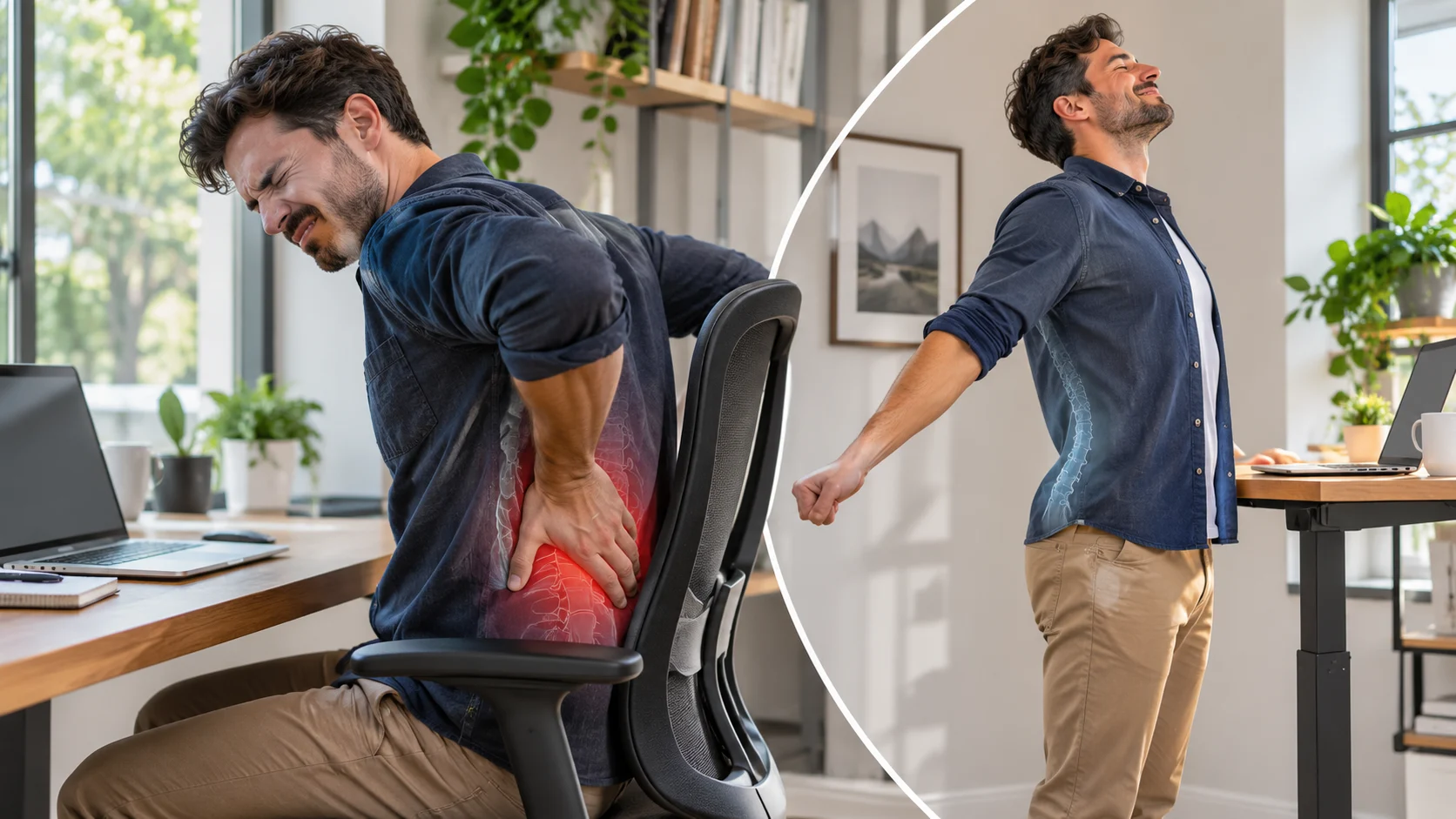
Lower back pain when sitting but not standing can make everyday activities uncomfortable, especially during office work, studying, driving, or relaxing at home. You may notice aching, stiffness, or pressure in your lower back after sitting for a while, only to feel better when you stand or walk. This pattern can occur for several reasons, including muscle strain, spinal disc irritation, and prolonged sitting.
Understanding lower back pain when sitting but not standing can help you recognize possible causes and determine which changes may improve your comfort. Although many cases respond to gentle movement and appropriate self-care, persistent pain sometimes requires medical evaluation. This guide explains common causes, associated symptoms, relief methods, prevention strategies, and warning signs that should not be ignored.
Why Does Your Lower Back Hurt When Sitting but Not Standing?
Sitting changes the position of your pelvis, spine, and surrounding muscles. Depending on your posture and spinal condition, this position can place greater stress on certain lower back structures. Some people experience discomfort when sitting because their muscles, joints, or spinal discs become irritated under sustained pressure, while standing or walking reduces that irritation.
Remaining seated for extended periods can also contribute to muscle stiffness and reduced movement. When the body stays in one position, the surrounding muscles may become uncomfortable or fatigued. Standing allows you to change spinal position, engage different muscle groups, and reduce pressure on tissues that may have become sensitive during prolonged sitting.
However, pain that improves when standing does not automatically identify a specific medical condition. Muscle strains, disc-related problems, nerve irritation, and certain joint disorders can produce overlapping symptoms. The location, duration, and type of discomfort provide useful clues, but a healthcare professional may need to examine your back to identify the underlying cause.
Poor Sitting Posture and Prolonged Sitting
Poorly supported sitting positions are common contributors to lower back discomfort. Sitting with the pelvis tilted backward or the shoulders rounded may increase strain on certain muscles and spinal structures. Although no single posture is perfect for everyone, remaining in an uncomfortable position for long periods can make existing back sensitivity more noticeable.
Office workers, students, and drivers may experience symptoms because they spend substantial time seated without changing position. A chair that lacks suitable support or a workstation that encourages awkward movements can contribute to discomfort. The problem often becomes more noticeable after prolonged sitting, particularly when the person has limited opportunities to move.
Improving sitting comfort does not require maintaining a rigidly straight back throughout the day. Instead, focus on comfortable support, suitable workstation positioning, and regular changes in posture. Alternating between sitting, standing, and walking can reduce sustained pressure and help the back tolerate everyday activities more comfortably.
Herniated Discs and Disc-Related Lower Back Pain
A herniated disc occurs when material within a spinal disc pushes through a weakened portion of its outer structure. Spinal discs act as cushions between the vertebrae and help the back move comfortably. Disc changes can sometimes irritate nearby nerves or surrounding tissues, causing pain that becomes more noticeable in certain positions.
Some individuals with disc-related pain experience increased discomfort during sitting or forward bending. These movements can change mechanical pressure around the affected structures. Symptoms may remain in the lower back or extend into the buttock and leg if nearby nerve roots become irritated.
Not every disc herniation causes pain, and imaging findings do not always explain a person’s symptoms. Many people improve with appropriate conservative treatment, including guided activity and physical therapy. Persistent pain, worsening leg symptoms, or neurological changes should be assessed by a healthcare professional to determine whether additional investigation is necessary.
Sciatica and Nerve Irritation While Sitting
Sciatica describes pain associated with irritation or compression of nerves contributing to the sciatic nerve. Symptoms commonly extend from the lower back or buttock into one leg. Some people experience sharp pain, burning sensations, tingling, or numbness that becomes more noticeable during prolonged sitting.
A herniated lumbar disc is one possible cause of sciatica, although other spinal and nerve-related conditions may produce similar symptoms. Sitting can aggravate certain types of nerve irritation because of changes in spinal position or pressure around sensitive tissues. Standing or walking may provide relief for some individuals, while others notice symptoms with different activities.
Sciatica should not be diagnosed solely because back pain improves after standing. A proper assessment considers where symptoms travel, whether sensation or strength has changed, and how movement affects discomfort. New or progressive leg weakness, significant numbness, or bladder and bowel changes require prompt medical attention.
Muscle Strain and Lower Back Tightness
Muscle strain is another possible explanation for lower back pain that worsens during sitting. Strains can develop after lifting, sudden movements, repetitive activity, or unfamiliar physical demands. The affected muscles may become tender or uncomfortable when maintaining certain positions, particularly after remaining inactive for extended periods.
Muscle-related pain often feels like aching, tightness, or localized soreness rather than pain traveling along a nerve. Some people experience stiffness when rising from a chair, followed by improvement after gentle walking. However, symptom patterns vary, and muscle pain can sometimes resemble discomfort caused by spinal joints or discs.
Many uncomplicated muscle strains improve gradually with suitable activity and time. Avoiding prolonged bed rest and returning to comfortable everyday movement can support recovery. If pain becomes severe, repeatedly returns, or does not improve as expected, a healthcare professional can assess whether another condition is contributing.
Sacroiliac Joint Problems and Sitting Pain
The sacroiliac joints connect the sacrum at the bottom of the spine with the pelvic bones. These joints help transfer forces between the upper body and lower limbs. Irritation involving the joints or nearby tissues may cause discomfort around the lower back, buttocks, or posterior pelvis.
Some people notice sacroiliac-region pain while sitting for extended periods or changing from sitting to standing. The discomfort may occur primarily on one side and sometimes spread toward the thigh. However, several other conditions can cause similar symptoms, making it difficult to identify the sacroiliac joint as the source without appropriate assessment.
Treatment may involve guided exercises, activity modifications, and physical therapy focused on comfortable movement and pelvic control. A clinician may perform specific examination procedures to evaluate possible contributing structures. Because no single symptom confirms sacroiliac joint dysfunction, treatment should follow a careful diagnosis rather than assumptions based on pain location.
Tailbone Pain That Gets Worse While Sitting
Tailbone pain, also called coccydynia, occurs around the coccyx at the bottom of the spine. It often becomes more noticeable when sitting because direct pressure affects the sensitive area. Some individuals experience sharp discomfort when leaning backward in a chair or moving from a seated position to standing.
Possible causes include a previous fall, prolonged pressure on firm surfaces, childbirth-related changes, or local tissue irritation. In other cases, the exact cause remains unclear. Unlike many forms of lumbar back pain, tailbone discomfort is usually concentrated near the very bottom of the spine.
A pressure-relieving cushion with an appropriate coccyx cutout may improve sitting comfort for some people. Avoiding prolonged pressure and changing positions regularly can also help. Persistent tenderness, unexplained swelling, or pain that follows a significant injury should be evaluated to determine whether further treatment is necessary.
How Hip and Pelvic Mobility Affect Sitting Comfort
The hips and pelvis work closely with the lower back during sitting, standing, and walking. Changes in hip mobility or muscular control can influence how the body distributes movement across these regions. When certain positions become uncomfortable, people may compensate through the lower back, potentially increasing irritation of sensitive tissues.
Prolonged sitting can temporarily make the hips and surrounding muscles feel stiff. Some individuals notice improved comfort after standing, walking, or performing gentle movements. However, perceived tightness does not automatically mean that a particular muscle is shortened or that stretching alone will resolve the underlying problem.
A physical therapist can assess hip movement, spinal mobility, and functional activities when symptoms persist. Treatment may involve comfortable mobility exercises, gradual strengthening, or changes to everyday tasks. The most helpful approach depends on individual findings rather than assuming every case of sitting-related back pain results from tight hip flexors.
Best Sitting Positions for Lower Back Pain Relief
A comfortable sitting position generally supports the natural curves of the spine without requiring excessive muscular effort. Keeping the feet supported and the hips in a relaxed position may reduce unnecessary strain. The ideal arrangement depends on chair design, individual anatomy, and the activities being performed.
Some people benefit from placing a small lumbar cushion or rolled towel behind the lower back. Others find relief by slightly reclining the chair or changing the seat height. These adjustments can help redistribute pressure, but no single sitting posture is guaranteed to work for everyone.
The most important strategy is avoiding prolonged exposure to any position that consistently increases pain. Changing posture periodically allows different muscles and joints to share the demands of sitting. If adjustments do not help, an ergonomic assessment or healthcare evaluation may identify additional factors affecting comfort.
Gentle Exercises That May Help Sitting-Related Back Pain
Gentle movement can help many people manage uncomplicated lower back discomfort. Comfortable walking is often a useful starting point because it encourages spinal and hip movement without requiring complex exercises. Short periods of movement throughout the day may be more manageable than remaining seated for several uninterrupted hours.
Certain mobility exercises, such as gentle pelvic tilts or controlled spinal movements, may also improve comfort. However, the suitability of an exercise depends on the cause of pain and individual symptoms. A movement that relieves one person’s discomfort may aggravate another person’s back, particularly when nerve irritation is present.
Strengthening exercises can support the muscles involved in trunk and hip stability over time. A physical therapist may recommend suitable activities based on strength, mobility, and functional needs. Exercises should be introduced gradually, and movements that produce sharp pain, increasing leg symptoms, or neurological changes should be stopped and professionally assessed.
Heat, Cold Therapy, and Other Home Relief Options
Heat therapy may provide temporary relief for lower back pain associated with muscle tension or stiffness. Applying gentle warmth through a suitable heating pad can make uncomfortable muscles feel more relaxed. Always follow product instructions, protect the skin, and avoid prolonged exposure that could cause burns.
Cold therapy may be useful for some recent injuries or areas of localized irritation. A cold pack wrapped in a cloth can provide temporary comfort when applied appropriately. However, heat and cold do not treat every cause of back pain, and neither approach should replace medical assessment when concerning symptoms are present.
Other self-care strategies include adjusting daily activities, taking comfortable movement breaks, and avoiding positions that repeatedly worsen symptoms. Over-the-counter pain medications may help certain individuals but can have side effects and are not suitable for everyone. Ask a pharmacist or healthcare professional about medication safety when needed.
How to Prevent Lower Back Pain During Office Work
Office workers can reduce prolonged sitting by organizing their workspaces around comfort and regular movement. Positioning the monitor at a suitable height, keeping frequently used items within easy reach, and adjusting chair support may reduce unnecessary strain. These changes help create a more comfortable working environment during extended computer use.
Brief movement opportunities can be incorporated naturally into a workday. Standing during suitable tasks, walking between activities, and changing positions can reduce time spent in one posture. There is no universal movement schedule that prevents every episode of back pain, so individuals should respond to their comfort and work requirements.
A supportive work routine also includes appropriate workload planning and opportunities for rest. Stress, fatigue, and insufficient sleep can influence how people experience pain. Combining ergonomic improvements with comfortable physical activity and appropriate recovery habits may support better long-term back comfort.
Lower Back Pain While Driving or Studying
Driving can aggravate lower back pain because it requires maintaining a seated position while using the legs and arms in relatively restricted ways. Seat shape, vibration, and limited opportunities to change posture may contribute to discomfort. Some drivers notice symptoms that improve shortly after leaving the vehicle.
Adjusting the seat position and backrest may help reduce strain during travel. The driver should maintain safe access to pedals, steering controls, and mirrors while finding a comfortable posture. During longer journeys, appropriate rest stops can provide opportunities to walk and change position without compromising driving safety.
Students may experience similar discomfort during prolonged classroom sessions or study periods. A suitable desk setup, comfortable chair, and regular breaks can improve sitting tolerance. If pain repeatedly interferes with studying, sleeping, or other daily responsibilities, medical guidance can help identify the cause and appropriate adjustments.
When to See a Doctor About Sitting-Related Back Pain
Medical evaluation is appropriate when lower back pain persists, worsens, repeatedly returns, or interferes with everyday activities. Symptoms such as pain radiating into the leg, persistent numbness, or difficulty performing normal movements may require further assessment. A clinician can review the history, examine relevant structures, and recommend suitable treatment.
Seek prompt assessment when back pain follows a significant injury or occurs alongside fever, unexplained illness, or other concerning symptoms. People with a history of cancer, osteoporosis, or certain medical conditions may require earlier evaluation. These circumstances can change the likelihood of underlying problems that are not explained by routine muscle discomfort.
Emergency care is necessary when back pain occurs with new loss of bladder or bowel control, inability to urinate, numbness around the groin or saddle area, or significant progressive leg weakness. These symptoms may indicate serious nerve compression. Delaying assessment in such situations can increase the risk of lasting complications.
Conclusion
Lower back pain when sitting but not standing can develop from several causes, including prolonged sitting, muscle strain, spinal disc irritation, nerve-related conditions, and tailbone problems. Sitting may increase pressure on sensitive structures, while standing changes the position and loading of the spine. However, the exact cause cannot be determined from this symptom pattern alone.
Many people experience improvement through comfortable movement, appropriate workstation adjustments, and changes to daily routines. Physical therapy and individualized exercise programs may also help restore function and reduce discomfort. The most effective treatment depends on understanding the underlying problem rather than relying on one universal posture or exercise.
Persistent pain deserves professional assessment, especially when symptoms affect everyday responsibilities or involve the legs. Sudden bladder or bowel changes, saddle numbness, and progressive weakness require emergency attention. With appropriate evaluation and practical management, many individuals can improve sitting tolerance and return to their normal activities more comfortably.
Frequently Asked Questions (FAQs)
Why does my lower back hurt when sitting but not standing?
Sitting may increase pressure on sensitive muscles, spinal discs, joints, or nerves. Standing changes spinal position and muscle activity, which can provide relief. Persistent symptoms may require medical evaluation to identify the cause.
Can a herniated disc cause back pain only when sitting?
Yes, some people with disc-related problems experience greater discomfort during sitting or forward bending. However, this pattern is not specific to herniated discs, and other conditions can produce similar symptoms.
What is the best sitting position for lower back pain?
The best position is one that feels comfortable and provides suitable support. Keeping the feet supported, adjusting the backrest, and changing positions regularly may help reduce discomfort during prolonged sitting.
Should I stretch if my back hurts while sitting?
Gentle stretching or mobility exercises may help some causes of back discomfort. However, movements that worsen pain or trigger leg symptoms should be avoided until a healthcare professional assesses the problem.
When is lower back pain a serious warning sign?
Back pain requires urgent assessment when accompanied by new bladder or bowel dysfunction, saddle numbness, or progressive leg weakness. Persistent pain, fever, significant injury, or worsening neurological symptoms also deserve medical attention.