
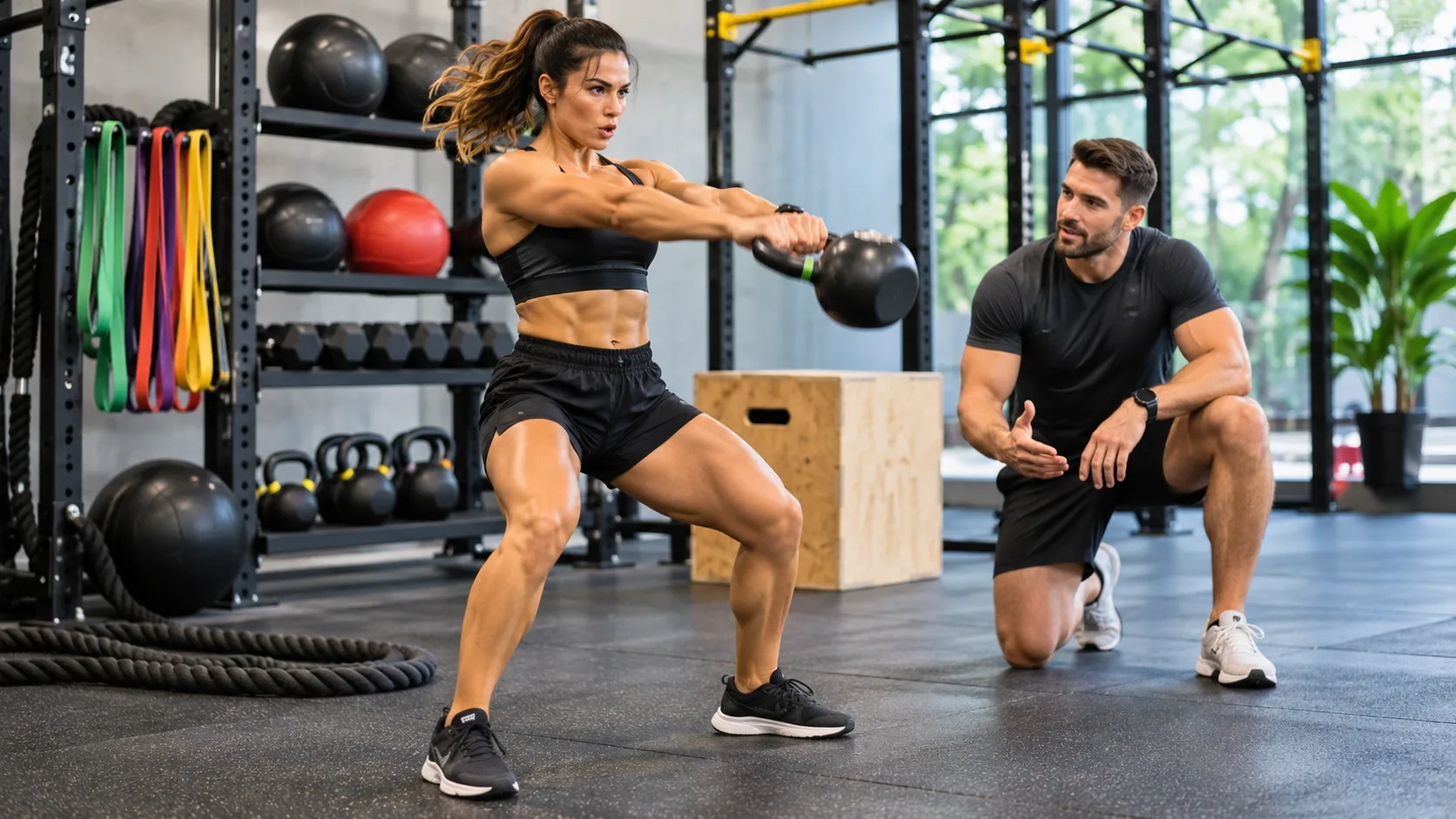
Functional training is a popular approach to exercise that focuses on improving the movements people use in everyday life. Instead of concentrating only on individual muscles, it develops strength, balance, coordination, mobility, and stability through practical movement patterns. Whether you are lifting groceries, climbing stairs, playing sports, or moving around your home, functional exercises can help support these activities.
Unlike workouts that focus primarily on one muscle group at a time, functional training often involves several muscles and joints working together. Common examples include squats, lunges, carries, step-ups, and controlled core exercises. These movements can be adapted for beginners, experienced exercisers, and people with different physical abilities.
Understanding what functional training is can help you decide whether it belongs in your exercise routine. Its benefits extend beyond muscular strength to include movement confidence, coordination, and physical independence. This guide explains how functional training works, its main benefits, common exercises, and practical ways to get started safely.
What Is Functional Training?
Functional training is a form of exercise designed to improve movement patterns used in daily activities, sports, and other physical tasks. It emphasizes movements that involve multiple muscles and joints rather than exclusively isolating individual muscle groups. The goal is to develop physical abilities that transfer to meaningful activities.
For example, a squat resembles the movement used when sitting down and standing up from a chair. A carrying exercise challenges the muscles involved in transporting everyday objects. These activities help explain why functional workouts often focus on practical movements rather than a particular piece of exercise equipment.
However, functional training does not refer to one fixed collection of exercises. A movement becomes functional when it supports the abilities and goals of the person performing it. An exercise useful for an athlete may differ from one chosen for someone who wants greater comfort and independence during everyday activities.
How Does Functional Training Work?
Functional training works by challenging the body to coordinate different muscles and joints during controlled movements. Instead of focusing only on one muscle, an exercise may involve the legs, hips, core, and upper body simultaneously. This encourages the body to develop strength alongside balance and movement control.
Many functional exercises involve familiar movement patterns such as pushing, pulling, squatting, bending, rotating, and carrying. These movements appear in everyday activities and physical recreation. Practicing them with appropriate resistance and technique can improve the body’s ability to perform similar tasks.
Functional training also involves gradual progression based on individual ability. Beginners may start with supported bodyweight exercises, while more experienced individuals may use appropriate external resistance. The objective is not to make every movement complicated but to select exercises that provide useful physical challenges safely.
What Are the Main Benefits of Functional Training?
One of the primary benefits of functional training is improved practical strength. Exercises that resemble everyday movements can help develop the muscles needed for routine tasks. This may make activities such as carrying bags, climbing stairs, or getting up from the floor feel more manageable.
Functional training can also improve balance, coordination, and movement confidence. Many exercises require different body regions to work together while maintaining stability. These skills are useful for recreational activities and may contribute to better physical function across different stages of life.
Another advantage is flexibility in workout design. Functional exercises can be modified according to fitness level, available equipment, and personal goals. However, benefits depend on consistent practice, suitable exercise selection, and recovery rather than the label attached to a workout.
Functional Training vs. Traditional Strength Training
Functional training and traditional strength training share many similarities because both can develop muscular strength and physical capacity. Traditional strength programs may include exercises targeting specific muscles or movement patterns. Functional training places particular emphasis on how those abilities relate to practical activities.
For example, a seated leg extension primarily challenges the muscles at the front of the thigh. A squat involves several muscles and joints while practicing a familiar movement pattern. Neither exercise is automatically better because each can serve different training or rehabilitation purposes.
An effective fitness routine can combine functional movements with more targeted exercises. Isolated strength training may help address specific weaknesses, while multi-joint exercises develop coordination across different muscle groups. Choosing between them should depend on your goals, abilities, and individual needs rather than assuming one approach is universally superior.
Common Functional Training Exercises
Squats, lunges, step-ups, and hip hinges are common functional training exercises because they challenge movements involving the lower body. Squats develop control during sitting and standing patterns. Step-ups resemble climbing stairs, while hip hinges practice bending at the hips with a controlled back position.
Upper-body exercises can include wall push-ups, resistance band rows, and suitable carrying movements. These activities develop pushing, pulling, and load-management abilities. Their difficulty can be adjusted through body position, resistance level, and the amount of movement performed.
Core exercises such as bird dogs and dead bugs are also frequently included in functional training routines. They emphasize controlled limb movement while maintaining a stable torso. A well-designed program uses exercises that match the individual’s goals rather than adding complicated movements simply to make a workout appear advanced.
Functional Training for Core Strength and Stability
Core strength plays an important role in functional training because the trunk connects movements between the upper and lower body. The core includes abdominal, back, and other muscles that help support the spine and pelvis. These muscles contribute to stability during walking, lifting, reaching, and changing positions.
Functional core exercises often emphasize resisting unnecessary movement rather than repeatedly bending the spine. For example, bird dogs challenge torso control while opposite limbs move. Appropriate carrying exercises can also engage trunk muscles as the body maintains a comfortable upright position.
Core training should include a variety of movements suited to individual ability. Excessive abdominal bracing or maintaining rigid posture throughout the day is unnecessary. The goal is to improve muscular coordination and control while allowing the spine and surrounding joints to move naturally.
How Functional Training Improves Balance and Coordination
Balance involves maintaining control of the body’s position during standing, walking, and other movements. Functional training often includes exercises that challenge stability in controlled environments. These activities encourage coordination between muscles, joints, and the nervous system.
A simple example is a supported single-leg balance exercise performed near a stable surface. Step-ups and controlled changes in direction can also challenge coordination. Beginners can adjust the difficulty by using additional support or reducing the movement range.
Balance and coordination improvements require practice and appropriate progression. More difficult exercises are not automatically more effective, particularly when they introduce unnecessary fall risks. A stable exercise performed with good control can be more beneficial than a complicated movement that prevents consistent technique.
Functional Training for Everyday Activities
Functional training is closely associated with everyday movements because it develops abilities that people use outside the gym. Standing from a chair, carrying shopping bags, and reaching for household objects require coordinated muscular activity. Suitable exercises can help support these familiar tasks.
For example, a controlled squat can strengthen muscles involved in standing and sitting. A step-up may develop abilities useful for climbing stairs, while a carrying movement can challenge grip and trunk stability. These exercises can be adjusted according to the person’s comfort and physical capabilities.
The practical benefits of functional training depend on choosing movements that reflect meaningful goals. Someone interested in gardening may benefit from different exercises than a person who regularly participates in recreational sports. Personalizing the routine makes training more relevant and easier to maintain consistently.
Functional Training for Beginners
Beginners can start functional training with simple bodyweight movements that require minimal equipment. Chair squats, wall push-ups, supported step-ups, and gentle core exercises provide accessible examples. These activities allow new exercisers to practice coordination before introducing additional resistance.
Learning correct technique is more important than completing a large number of repetitions. Beginners should move through comfortable ranges and avoid forcing positions that cause pain. A qualified fitness professional can provide guidance when exercise techniques or physical limitations are difficult to assess independently.
Starting gradually also allows time to recognize how the body responds to exercise. Some temporary muscular soreness may occur when learning new movements, but sharp pain is not a normal training goal. Comfortable progression and appropriate recovery provide a stronger foundation than attempting demanding workouts immediately.
Functional Training Equipment and Tools
Functional training can be performed with little or no specialized equipment. Bodyweight exercises provide opportunities to develop strength, mobility, and coordination using familiar movement patterns. A stable chair, exercise mat, or low step may be sufficient for many beginner activities.
Resistance bands, dumbbells, and kettlebells are also used in functional training programs. These tools provide different resistance options and allow exercises to become more challenging when appropriate. However, the equipment should match the user’s experience and ability rather than determine the entire workout.
Some fitness facilities include suspension trainers, medicine balls, and cable machines for additional exercise variations. These tools can support useful movement practice when used correctly. Expensive equipment is not necessary for effective functional training because exercise selection, technique, and gradual progression matter more than the number of available accessories.
How to Build a Functional Training Workout
A functional training workout should begin with identifying a few meaningful physical goals. These might include improving general strength, feeling more comfortable during everyday movements, or developing better balance. The exercises should then address relevant movement patterns without creating unnecessary complexity.
A balanced beginner session might include comfortable squatting, stepping, pushing, pulling, and core stabilization activities. Gentle movements can prepare the body before more challenging exercises. Rest periods and exercise difficulty should reflect individual comfort rather than following a demanding schedule.
Consistency is more important than attempting to perform every movement in a single session. Beginners can start with short workouts and gradually adjust as their skills develop. Including enjoyable activities such as walking, cycling, or recreational sports can also support a well-rounded fitness routine.
Common Functional Training Mistakes to Avoid
One common mistake is choosing exercises that are unnecessarily complicated. Balancing on unstable equipment while performing difficult movements may look impressive, but it does not automatically improve practical strength. Simple exercises performed with appropriate control can provide substantial benefits.
Another mistake involves progressing to heavier resistance before developing comfortable technique. Adding difficulty too quickly can reduce movement quality and increase the likelihood of discomfort. Gradual progression allows muscles and connective tissues to adapt while helping exercisers maintain consistent control.
Some people also overlook recovery and mobility when planning functional workouts. Training the same demanding movements repeatedly without adequate rest may cause unnecessary fatigue. A balanced approach includes appropriate recovery, varied activities, and adjustments based on how the body responds.
Is Functional Training Suitable for Everyone?
Functional training can be adapted for many ages, abilities, and fitness backgrounds because exercises are selected according to individual needs. People interested in general fitness may choose a different routine from athletes or older adults. This flexibility makes functional training a useful concept across several exercise settings.
However, not every exercise is appropriate for every person. Existing injuries, medical conditions, mobility limitations, and balance difficulties may influence which movements are suitable. A healthcare professional or qualified exercise specialist can help identify modifications when additional support is necessary.
The safest approach is to match exercise difficulty with current physical capacity. Movements should feel manageable and allow comfortable breathing and control. Functional training is most useful when it supports individual well-being rather than encouraging comparison or unrealistic expectations.
Functional Training and Injury Prevention
Functional training may help develop strength, balance, and movement control that contribute to physical resilience. These abilities can support everyday tasks and recreational activities. However, no exercise program can guarantee the prevention of injuries.
Injury risk depends on several factors, including previous injuries, physical demands, fatigue, environment, and individual health. Functional exercises may address some of these factors when included in a suitable program. For example, gradual strength training can improve the body’s tolerance for certain physical activities.
Effective injury prevention usually requires a broader approach that includes appropriate training loads, recovery, suitable equipment, and safe environments. People returning from an injury may need an individualized rehabilitation plan. Functional training can support this process, but it should not replace professional assessment when symptoms or limitations persist.
How Often Should You Do Functional Training?
The appropriate frequency of functional training depends on exercise intensity, personal goals, and available recovery time. Some people include functional movements within their regular strength training sessions. Others prefer shorter routines focused on specific movement skills or general mobility.
For general health, adults are commonly advised to include muscle-strengthening activities on at least two days each week, alongside suitable aerobic activity. Younger people have different activity recommendations based on age and development. Individual programs should reflect these differences instead of applying one schedule to everyone.
Allowing enough recovery between demanding workouts helps maintain comfortable movement and consistent participation. Gentle activities can often be performed more frequently, depending on individual needs. The goal is to develop a sustainable routine that supports health without excessive fatigue or pressure to exercise.
Functional Training vs. HIIT Workouts
Functional training and high-intensity interval training, commonly called HIIT, are different exercise concepts. Functional training focuses on movement patterns and practical physical abilities. HIIT describes a workout structure involving challenging exercise intervals separated by recovery periods.
Some functional exercises can appear in interval-based workouts, but they do not need to be performed at high intensity. Squats, step-ups, and carries can all be practiced slowly with attention to technique. Their value does not depend on moving as quickly as possible or reaching exhaustion.
HIIT may be suitable for certain individuals, but it is not necessary for obtaining the benefits of functional movement practice. Beginners can build strength and coordination through comfortable, controlled exercises. Choosing appropriate intensity supports safety and makes regular physical activity easier to maintain.
Can Functional Training Improve Athletic Performance?
Functional training may support athletic performance by developing strength, balance, coordination, and control relevant to a particular sport. Athletes often perform movements that require several muscle groups to work together. Training these abilities can complement sport-specific practice and general strength conditioning.
For example, a recreational runner may benefit from exercises that strengthen the hips and legs while improving single-leg stability. A tennis player may use controlled rotational exercises appropriate to their experience. The most useful exercises depend on the demands of the activity.
However, functional training is not automatically superior to traditional strength programs for every sport. Athletic performance also depends on technique, skill development, recovery, and appropriate conditioning. A well-designed program combines different training methods according to the individual’s goals and physical requirements.
Conclusion
Functional training is an exercise approach that emphasizes practical movement patterns, coordinated muscular activity, and abilities useful in everyday life. It commonly includes squats, lunges, step-ups, pushing, pulling, and core stabilization exercises. These movements can support strength, balance, mobility, and physical confidence when performed appropriately.
One of the main advantages of functional training is its adaptability. Beginners can start with simple bodyweight exercises, while experienced individuals may use additional resistance or more challenging variations. Effective results depend on personal goals, comfortable technique, consistency, and gradual progression rather than complicated equipment.
Whether you want to improve everyday movement, support recreational activities, or develop general physical fitness, functional training can be a valuable part of a balanced routine. Selecting meaningful exercises and allowing appropriate recovery are essential. With consistent practice and suitable guidance, functional training can help develop useful physical abilities for daily life.
Frequently Asked Questions
What is functional training in simple words?
Functional training is exercise that helps improve movements used in everyday life. It develops strength, balance, coordination, and stability through activities such as squats, step-ups, pushing, pulling, and carrying.
What are examples of functional training exercises?
Common examples include chair squats, lunges, step-ups, wall push-ups, resistance band rows, bird dogs, and carrying exercises. Each movement can be adapted according to individual strength, mobility, and experience.
Is functional training good for beginners?
Yes, functional training can be suitable for beginners when exercises are simple and appropriately modified. Starting with controlled bodyweight movements helps develop coordination and confidence before introducing additional challenges.
What is the difference between functional training and strength training?
Functional training emphasizes movement patterns relevant to practical activities, while strength training focuses on developing muscular force. The two approaches overlap considerably and can complement each other within a balanced exercise routine.
Can functional training be done at home?
Yes, many functional training exercises require little equipment and can be performed at home. Chair squats, supported step-ups, wall push-ups, and gentle core exercises provide accessible starting points.