
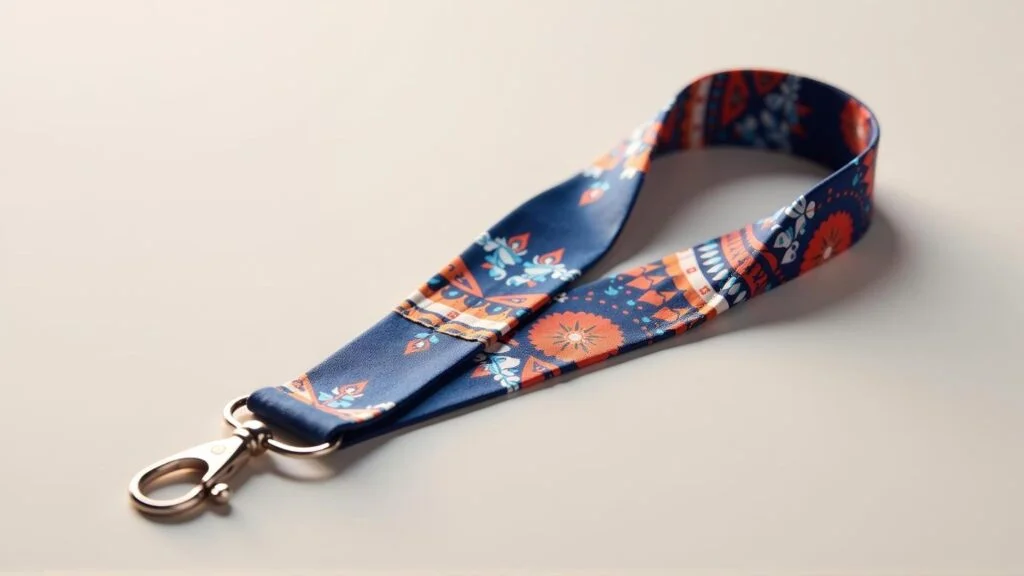
Promotional merchandise does not need to be large to make an impression. In fact, some of the most useful branded products are the ones people can carry without thinking about them. A compact key accessory is a good example: it can become part of a daily routine, travel with its owner and keep a brand visible in situations far beyond the original campaign. The challenge is to make such a simple product feel intentional rather than generic. Colour, print, material, hardware and the way branding is incorporated all influence whether an accessory looks like an ordinary giveaway or a product people genuinely want to keep.
Why does the compact format work?
A short lanyard offers a different experience from a traditional neck lanyard. Its smaller format makes it suitable for objects that need to remain close at hand without requiring the user to wear anything around the neck. Keys are the obvious example, but the same format can be useful for access cards, small tags or other lightweight everyday items. The accessory can be held in the hand, attached to a bag or kept in a pocket while still providing an easy way to find and handle whatever is connected to it. That simplicity is valuable in branded merchandise because there is very little for the recipient to learn and the purpose of the product is immediately clear.
Good design makes a small product more noticeable
Limited size does not mean limited creative potential. With a small lanyard, every visual decision becomes more important because there is less space available for unnecessary elements. Brand colours can provide the main visual signal, while a logo or short message supports recognition. Repeated patterns can also work well, particularly when the accessory changes position during use and only part of the material remains visible. The aim should not necessarily be to make the logo as large as possible. A compact product can feel more refined when branding is integrated into the overall design rather than dominating it. For lifestyle brands, this might mean a subtle pattern. A technology company may prefer a clean, minimal look, while an event brand could use brighter colours and a more expressive graphic concept.
Hardware changes the perception of the product
The textile part is only one component of a compact lanyard. Clips, rings and other attachments influence both functionality and appearance. A carefully selected attachment can make a short key lanyard feel more substantial and better suited to its intended use. Different finishes can also change its character: one combination may look technical and practical, while another feels more lifestyle-oriented. This is why hardware should be considered during the design process rather than added as an afterthought. The attachment needs to work with the object people are expected to carry and visually complement the textile section. Small details often have a disproportionate effect on perceived quality.
Think about where the product will be used
The strongest promotional merchandise usually has a clear context. A compact key accessory can work in employee welcome packs, event kits, conference materials, customer gifts or campaigns connected with travel and everyday mobility. Its usefulness can also extend beyond the original occasion. A product handed out at an event may later be attached to house keys, a backpack or a work bag, giving the branding a much longer lifespan than the event itself. For companies, this is an important advantage. Instead of creating merchandise that only makes sense during one campaign, they can provide an accessory that continues to have a practical role afterwards.
Make the branding worth carrying
One of the most important questions in promotional design is simple: would someone still use this product if they were not being encouraged to display the logo? If the answer is yes, the merchandise has a much better chance of generating repeated exposure. A short key lanyard should therefore be visually appealing enough to function as an accessory in its own right. Excessive slogans, too many graphic elements or branding that overwhelms the product can make it less attractive for everyday use. A restrained approach can often produce better results. Clear colours, a well-positioned logo and consistent finishing may be enough to create a recognisable branded object.
Small merchandise can become part of a wider collection
Compact accessories also work well when they are connected with other promotional products. A short lanyard can use the same colours and visual motifs as wristbands, longer lanyards, bags or other event materials. This creates a stronger visual system and allows brands to adapt merchandise to different users without losing consistency. TEDGIFTED can incorporate short lanyards into this wider approach, allowing the compact format to become part of a coordinated promotional collection rather than an isolated giveaway.
Distinctive does not have to mean complicated
Turning a simple key accessory into effective branded merchandise is less about adding more features and more about making better decisions. The product needs a clear purpose, an attractive visual identity and details that suit the way it will actually be used. When these elements work together, a compact lanyard can achieve something larger promotional products sometimes fail to do: become part of everyday life. That is where its branding value comes from. A useful accessory does not need to demand attention. It simply stays close to the user, remains visible and gives the brand repeated opportunities to be remembered.