
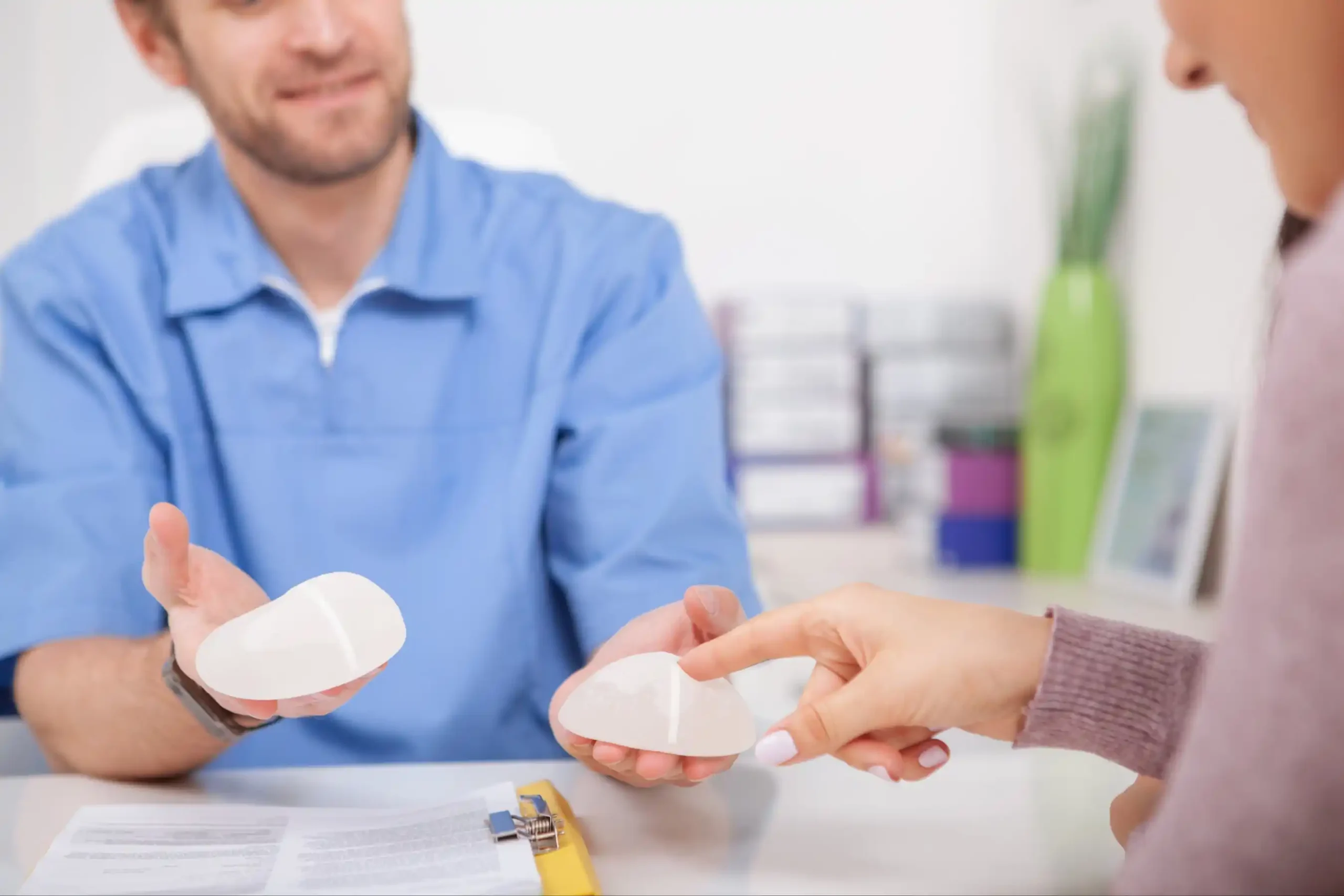
For women facing mastectomy here in Wellington, FL, it can be very comforting to know that breast reconstruction options can restore your contours. To do this well, your surgeon will need to evaluate your individual anatomy and treatment history so you can get back to looking and feeling like yourself.
Exploring Implant-Based and Flap Techniques in Breast Reconstruction
Implant-based reconstruction often begins with the placement of a tissue expander. This is a temporary device that’s positioned beneath the remaining skin or pectoralis muscle during or after mastectomy, and over subsequent weeks, saline or air is added through an integrated port during outpatient visits. This gradually stretches the soft tissues to create a pocket.
Once that expansion is complete, which usually happens in two to six months, the expander is exchanged for a permanent silicone or saline implant during a second, shorter procedure. When residual skin flaps are thick enough and have good vascular volume, a direct-to-implant placement may allow you to eliminate the expansion stage entirely. This shortens the overall recovery time while preserving the inframammary fold and natural skin envelope.
Reconstruction Without Implants
It’s sometimes possible to transfer a patient’s own skin, fat, and sometimes muscle from a donor site to form a breast mound that ages and responds to weight changes similarly to the native tissue. There are a couple procedures that can be used here. The transverse rectus abdominis myocutaneous flap moves abdominal skin and fat, either as a pedicled unit that remains attached to its original blood supply or as a free flap with vessels microsurgically reconnected in the chest.
The deep inferior epigastric perforator flap is similar, but it harvests only the skin and fat while carefully dissecting the perforating vessels free from the rectus muscle. This keeps the abdominal wall strength and reduces the risk of hernia or bulging. Latissimus dorsi flaps relocate skin and fat from the upper back, and this technique is frequently combined with an implant. Gluteal or thigh-based free flaps provide alternatives when abdominal tissue is insufficient or previously scarred.
Factors Influencing Procedure Timing and Outcomes
Immediate reconstruction can be performed in the same operative setting as the mastectomy. However, this combined procedure also lengthens the operative time and elevates the risk of certain complications, such as delayed wound healing. It’s also not a great option for anyone who is expecting to need post-mastectomy radiation. For more information, click here.
Delayed reconstruction can be done months or even years after mastectomy, once all the adjuvant therapies are finished. With this, you have the advantage of knowing the final tissue quality after radiation or chemotherapy has concluded. There’s no need to expose the newly reconstructed tissue to radiation effects that can produce fibrosis, asymmetry, or implant-related complications.
What to Expect Afterward
Recovery timelines vary by technique. If you have implants put in, you’ll have several weeks of restriction on how high you can move your arms. Expect a few weeks of chest tightness, as well. Autologous flap procedures involve longer hospital stays for flap monitoring and more extensive donor-site healing, and abdominal tightness and the need for core rehabilitation will be more pronounced if muscle has been included in the transfer.
If you’re facing a mastectomy, talk to a local reconstruction surgeon today. Look for someone who is board certified and who has a good reputation in the community.