
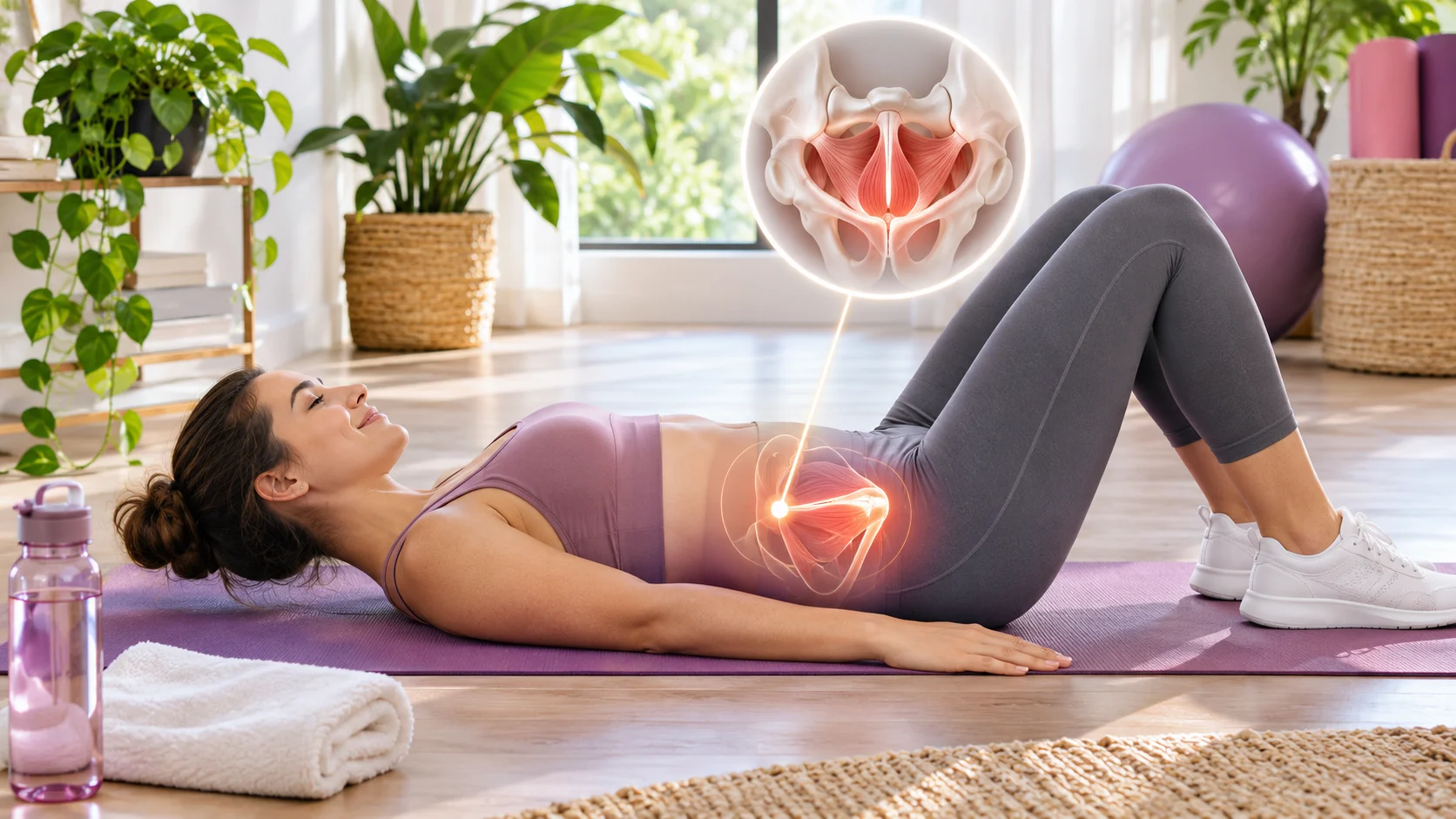
Kegel exercises for women are simple pelvic floor muscle exercises that help improve bladder control, support pelvic organs, and strengthen muscles involved in everyday activities. These exercises involve gently tightening and relaxing the muscles that support the bladder, uterus, and bowel. They can be performed in different positions and usually require no special equipment. However, learning the correct technique is essential for achieving benefits without unnecessary muscle tension.
Many women consider Kegel exercises after pregnancy, childbirth, or changes in bladder control. Others explore pelvic floor training as part of their general health routine. Although these exercises can be beneficial, they are not appropriate for every pelvic floor condition. This guide explains the benefits of Kegel exercises for women, proper technique, common mistakes, and practical recommendations for safe, effective training.
What Are Kegel Exercises for Women?
Kegel exercises are controlled contractions and relaxations of the pelvic floor muscles. These muscles form a supportive structure at the bottom of the pelvis and help maintain bladder and bowel control. They also support pelvic organs and contribute to normal pelvic function. Regular pelvic floor training may improve muscle strength, endurance, and coordination when performed correctly.
The exercises are named after Dr. Arnold Kegel, who helped popularize pelvic floor muscle training during the twentieth century. Unlike many traditional strengthening exercises, Kegels focus on muscles that are not easily visible. The movement involves a gentle inward lifting sensation rather than a large physical motion. Correct identification of these muscles is an important first step.
Kegel exercises can be performed while lying down, sitting, or standing. They do not usually require equipment, although some people benefit from guidance provided by a pelvic health physical therapist. The exercises should involve both controlled contraction and complete relaxation. Their purpose is to improve muscle function rather than encourage constant tightening throughout the day.
How the Female Pelvic Floor Muscles Work
The pelvic floor consists of muscles and connective tissues that support several important structures within the pelvis. These include the bladder, uterus, and rectum. The muscles also help control the openings involved in urination and bowel movements. Their coordinated activity contributes to continence, pelvic stability, and everyday comfort during different physical activities.
Healthy pelvic floor muscles need to contract when support is required and relax when appropriate. For example, they help maintain bladder control during coughing, laughing, or lifting. They must also relax sufficiently during urination and bowel movements. This balance explains why strengthening alone is not always the correct approach for every pelvic floor problem.
Pregnancy, childbirth, aging, surgery, and other factors can affect pelvic floor function. Some women experience weakness or reduced coordination, while others develop excessive muscle tension. These conditions may produce different symptoms despite involving the same muscle group. Understanding the underlying problem helps determine whether Kegel exercises, relaxation techniques, or another treatment would be most appropriate.
Benefits of Kegel Exercises for Women
One of the best-known benefits of Kegel exercises is improved bladder control. Pelvic floor muscle training is commonly recommended for women experiencing stress urinary incontinence. This condition involves urine leakage during activities such as coughing, laughing, sneezing, or exercising. Strengthening and coordinating the pelvic floor muscles may help reduce these episodes over time.
Kegels may also support bowel control in women with certain pelvic floor weaknesses. The muscles surrounding the lower pelvic openings contribute to maintaining continence during everyday activities. When appropriately prescribed, targeted exercises may improve muscle awareness and functional control. However, bowel symptoms have several possible causes, so persistent problems deserve proper medical assessment.
Another potential benefit is improved pelvic floor support and body awareness. Some women notice better control over muscle contractions after following a structured training program. Pelvic floor exercises may also form part of conservative care for certain pelvic organ prolapse symptoms. Results vary, and exercise should complement appropriate medical guidance rather than replace necessary evaluation.
How to Identify the Correct Pelvic Floor Muscles
Before beginning Kegel exercises, it is important to identify the muscles responsible for the movement. Imagine gently stopping yourself from passing gas while lifting the muscles around the pelvic openings inward. You should notice a subtle tightening and lifting sensation. The movement should not require forceful squeezing of your abdominal muscles, thighs, or buttocks.
Another way to understand the movement is to imagine briefly preventing urine from escaping. However, repeatedly stopping urine during actual urination is not recommended as an exercise technique. Doing so may interfere with normal bladder emptying. Use the sensation only as a mental reference rather than making interrupted urination part of your routine.
Some women find it difficult to recognize the correct muscles initially. If you feel yourself holding your breath, pushing downward, or tightening surrounding muscles excessively, the movement may need adjustment. A pelvic floor physical therapist can assess muscle function and provide personalized feedback. Professional guidance is especially useful when symptoms persist or the correct contraction remains unclear.
How to Do Kegel Exercises Correctly
Begin in a comfortable position, such as lying on your back with your knees supported. Relax your shoulders, abdomen, and legs while breathing normally. Gently tighten and lift the pelvic floor muscles without pushing downward. The contraction should feel controlled rather than forceful, and you should remain comfortable throughout the movement.
For a beginner, holding a gentle contraction for approximately three seconds may be a reasonable starting point. Release the muscles completely and allow at least three seconds of relaxation before repeating. Begin with a small number of comfortable repetitions instead of forcing an exhausting session. The appropriate duration and number of contractions depend on individual muscle strength and coordination.
As control improves, some women gradually increase contraction duration and practice in sitting or standing positions. A commonly used goal is working toward ten controlled contractions per set, but this is not a universal requirement. Quality matters more than completing a particular number. Stop if the exercises trigger pelvic pain, pressure, or worsening urinary symptoms.
Best Kegel Exercise Positions for Beginners
Lying down is often a comfortable starting position because it reduces the need to manage body weight while learning pelvic floor contractions. You can lie on your back with bent knees and relaxed legs. Focus on gentle lifting and complete release without holding your breath. This position may make it easier to recognize the correct muscles.
Sitting provides another convenient option once you understand the movement. Sit comfortably with your feet supported and your shoulders relaxed. Gently contract the pelvic floor without tightening your buttocks or shifting your pelvis. Allow the muscles to relax fully before beginning another repetition, keeping the movement slow and controlled.
Standing Kegel exercises can be useful when progressing toward everyday functional activities. Stand comfortably with balanced weight and relaxed breathing while performing a gentle pelvic floor contraction. Some women find standing exercises more challenging because the muscles work against different physical demands. Progress gradually rather than assuming every position must be included immediately.
How Often Should Women Do Kegel Exercises?
The ideal frequency of Kegel exercises depends on muscle function, symptoms, and professional recommendations. Some structured pelvic floor training programs use several short sessions throughout the day. However, women who are just learning the movement may benefit from starting with fewer comfortable repetitions. Training should feel manageable and should not create persistent discomfort.
Consistency is generally more useful than performing a large number of contractions during one session. Pelvic floor muscles, like other skeletal muscles, need appropriate recovery between efforts. Repeatedly squeezing without allowing relaxation may contribute to unnecessary tension. A balanced routine should include controlled contractions, adequate rest, and attention to how the body responds.
Improvement in bladder control or muscle coordination often takes several weeks or months of appropriate training. Results depend on the underlying condition, exercise quality, and consistency. Some women require supervised treatment to achieve meaningful progress. If symptoms are not improving, a clinician can reassess the diagnosis and determine whether the program needs adjustment.
Common Kegel Exercise Mistakes to Avoid
One common mistake is tightening the abdominal muscles, thighs, or buttocks instead of focusing on the pelvic floor. This may create the sensation of effort without effectively targeting the intended muscles. Try reducing the strength of the contraction and concentrating on a gentle inward lift. If the movement remains confusing, professional feedback can help.
Another mistake is holding your breath while performing each contraction. Breath-holding can increase pressure through the abdomen and make coordinated pelvic floor movement more difficult. Instead, breathe naturally and avoid forcefully pushing downward. Some women find it helpful to exhale gently during the contraction, although breathing patterns should remain comfortable.
Overtraining is another important concern, particularly for women who already experience pelvic floor tightness or pain. More repetitions do not automatically produce better results. Excessive contractions may worsen discomfort when the muscles need relaxation rather than additional strengthening. Painful Kegels, increasing pelvic pressure, or new urinary difficulties are reasons to stop and seek individualized advice.
Kegel Exercises During Pregnancy and After Childbirth
Pregnancy places changing demands on the pelvic floor as the body supports a growing uterus. Pelvic floor muscle training during pregnancy may help prevent or reduce certain types of urinary leakage. Many women can practice gentle contractions safely during an uncomplicated pregnancy. However, individual medical circumstances may affect which exercises are appropriate.
After childbirth, pelvic floor muscles may feel different because of stretching, tissue changes, or birth-related injury. Some women notice reduced control, while others experience tenderness or muscle tension. Gentle pelvic floor awareness may be useful during recovery, but exercise progression should reflect symptoms and healing. A healthcare professional can advise when and how to begin.
Women recovering from significant perineal injury, pelvic surgery, or complicated childbirth may require additional assessment. Pain, heaviness, urinary problems, or difficulty relaxing the muscles should not be ignored. A pelvic health physical therapist can help determine whether strengthening, relaxation, or other rehabilitation is needed. Individualized recovery is more important than following an aggressive exercise schedule.
Can Kegel Exercises Help with Urinary Incontinence?
Kegel exercises are commonly used as a first-line conservative treatment for stress urinary incontinence. This type of leakage occurs when pressure increases during coughing, sneezing, running, or lifting. Strengthening the pelvic floor can improve support around the bladder outlet. A supervised training program may be particularly helpful when a woman struggles to perform the movement correctly.
Women experiencing urgency urinary incontinence may also benefit from pelvic floor training as part of a broader bladder management program. Urgency involves a sudden, difficult-to-control need to urinate. Treatment may include bladder training, behavioral strategies, and other medical interventions. The most appropriate approach depends on the specific type of urinary symptoms.
Not every bladder problem is caused by weak pelvic floor muscles. Infection, medication effects, nerve conditions, and other factors can contribute to urinary changes. Persistent leakage, pain during urination, or difficulty emptying the bladder requires assessment. Identifying the cause helps prevent unnecessary exercises and supports more effective treatment.
When Kegel Exercises May Not Be Appropriate
Although Kegel exercises offer benefits for many women, they are not suitable for every pelvic floor condition. Some women experience overly tense pelvic floor muscles that have difficulty relaxing. Symptoms may include pelvic pain, painful intercourse, urinary hesitancy, or difficulty with bowel movements. Repeated strengthening contractions can sometimes worsen these problems.
Pelvic floor dysfunction can involve weakness, excessive tension, poor coordination, or a combination of these factors. Similar symptoms may arise from different underlying problems. For example, urinary urgency does not always mean the muscles need additional strengthening. A professional assessment can help distinguish between conditions requiring strengthening and those benefiting from relaxation-focused treatment.
Women should stop Kegel exercises if they consistently cause pain or worsen existing symptoms. Continuing through discomfort may increase muscle guarding or interfere with normal pelvic floor function. A pelvic health specialist can recommend alternatives such as relaxation exercises, breathing techniques, or targeted rehabilitation. Effective pelvic floor care focuses on restoring normal function rather than strengthening every muscle indiscriminately.
Best Practices for Long-Term Pelvic Floor Health
Maintaining pelvic floor health involves more than performing isolated Kegel contractions. Regular comfortable physical activity, appropriate recovery, and healthy bowel habits also contribute to everyday pelvic function. Avoiding unnecessary straining during bowel movements may help reduce excessive pelvic pressure. Managing persistent constipation can be particularly important for women experiencing pelvic floor symptoms.
Breathing patterns and movement habits can also influence how pelvic floor muscles respond to physical demands. During activities such as lifting, coordinated breathing may help reduce unnecessary tension. Women with leakage during exercise may benefit from learning how to coordinate pelvic floor contractions with movement. A physical therapist can provide guidance based on individual activities and symptoms.
Long-term improvement depends on selecting exercises that match the body’s actual needs. Some women benefit from regular strengthening, while others require relaxation, coordination training, or medical treatment. Paying attention to symptoms helps determine whether a routine remains appropriate. Pelvic floor health is best supported through balanced muscle function, comfortable movement, and timely professional guidance when problems develop.
Conclusion
Kegel exercises for women can help improve pelvic floor muscle strength, coordination, and bladder control when performed correctly. They involve gentle contractions followed by complete relaxation of the muscles supporting the pelvic organs. Their benefits are particularly relevant for certain types of urinary incontinence. However, the exercises should be tailored to individual needs rather than performed forcefully.
Learning proper technique is essential for making pelvic floor training comfortable and effective. Beginners can start with short contractions in a supported position and gradually progress according to their abilities. Breathing naturally and allowing adequate relaxation are equally important. Women experiencing pain or worsening symptoms should seek professional guidance before continuing.
A healthy pelvic floor needs both strength and the ability to relax appropriately. While Kegel exercises can be valuable, they are not the right solution for every pelvic health concern. Persistent bladder symptoms, pelvic pain, or difficulties with muscle coordination deserve appropriate evaluation. With suitable guidance and consistent practice, many women can improve pelvic floor function and everyday comfort.
Frequently Asked Questions (FAQs)
What are the main benefits of Kegel exercises for women?
Kegel exercises may improve pelvic floor strength, bladder control, and muscle coordination. They are particularly useful for certain types of urinary leakage and may support pelvic organ function when performed appropriately.
How many Kegel exercises should a woman do daily?
The appropriate number depends on individual muscle function and symptoms. Some programs gradually work toward several short daily sets, but beginners should prioritize correct contractions and complete relaxation over repetition counts.
How long does it take to see results from Kegel exercises?
Some women notice improvement after several weeks, while meaningful changes may take around three months of consistent training. Results vary according to the condition, exercise technique, and individual response.
Can Kegel exercises be harmful if done incorrectly?
Yes, repeated incorrect contractions or excessive tightening may worsen pelvic floor discomfort in some women. Stop if exercises cause pain, increasing pressure, or urinary difficulties, and seek professional assessment.
Are Kegel exercises safe during pregnancy?
Gentle pelvic floor exercises are generally safe during uncomplicated pregnancy and may help reduce urinary leakage. However, women with pregnancy complications, pelvic pain, or specific medical restrictions should seek individualized guidance.