
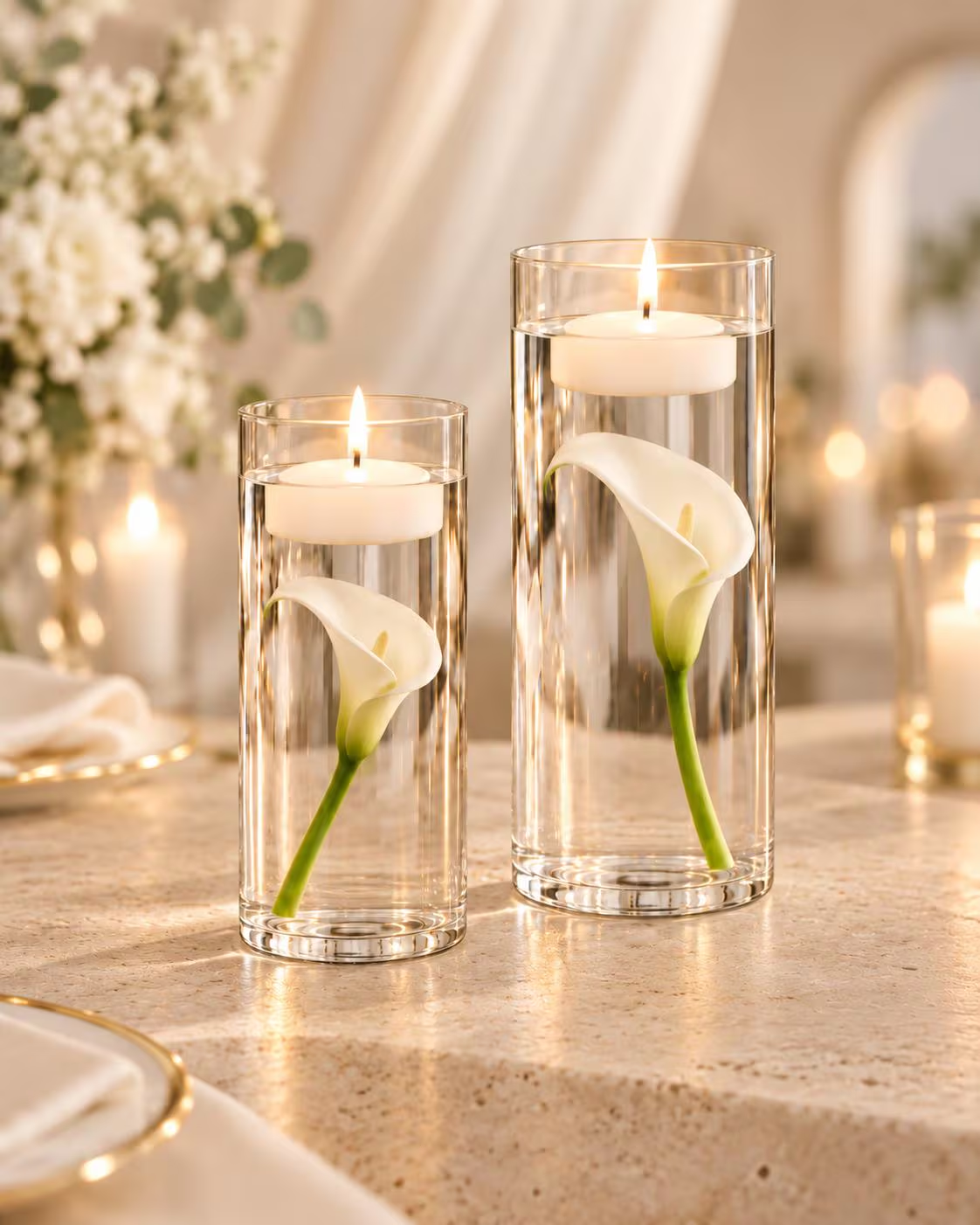
Event coordinators, venue managers, and floral designers who work at volume know that décor procurement is rarely straightforward. Unlike consumables that can be reordered on short notice, glassware requires lead time, consistent quality across units, and careful cost management—especially when a single event might require dozens or hundreds of matching pieces. Hurricane vases sit at the center of this challenge. They are among the most frequently used decorative vessels in the event industry, appearing at weddings, corporate dinners, galas, and seasonal installations alike. Yet despite their ubiquity, ordering them in quantity without running into budget overruns, inconsistency, or logistical delays is something many professionals still find difficult to manage well.
The problem is not a lack of suppliers. The problem is that bulk glassware procurement involves a set of decisions that, when made without structure, tend to compound costs rather than reduce them. Choosing quantity before confirming compatibility, prioritizing unit price without accounting for shipping weight, or ordering from multiple sources to fill a gap—each of these choices quietly erodes the budget. This guide addresses those decisions in sequence, so that event professionals can approach bulk hurricane vase orders with a process that holds up under real working conditions.
Understanding What Bulk Ordering Actually Means in the Event Context
The term “bulk” is used loosely in retail and trade contexts, but for event professionals, it carries a specific operational meaning. Ordering hurricane vases bulk is not simply about purchasing a larger quantity—it is about aligning volume, timing, storage capacity, and per-unit cost in a way that serves the actual workflow of a working event business. When those four elements are misaligned, the savings that bulk pricing promises rarely materialize in practice.
For planners who need a reliable starting point, reviewing a curated category of hurricane vases bulk options can help clarify what standard size ranges, case quantities, and style groupings look like before entering into vendor negotiations. Understanding what the market offers at volume gives buyers a reference point that makes subsequent conversations more grounded.
Bulk procurement in this industry also carries responsibility for consistency. Event clients expect that every table in a room will carry a vase that looks identical to every other. Even small variations in glass clarity, wall thickness, or base width can become visible under event lighting, and visible inconsistency reflects directly on the planner or designer responsible for the room. This is why sourcing from a single batch or a single vendor for a given event is almost always preferable to piecing together orders from multiple channels, even when individual prices elsewhere look attractive.
Minimum Order Quantities and How They Shape Your Budget
Most wholesale and trade suppliers apply minimum order quantities (MOQs) to glassware, and those thresholds exist for reasons that directly affect how you plan your purchasing. Suppliers set MOQs to manage warehouse movement, packing efficiency, and shipping consolidation. For buyers, these minimums create a structural pressure: if you need eighty units but the MOQ is one hundred and twenty, you either absorb the cost of the overage or you seek a supplier with a lower threshold—often at a higher per-unit price.
Working professionals typically resolve this tension in one of two ways. The first is to build a shared inventory across multiple events, ordering above the immediate need and spreading the cost across the season or year. The second is to identify suppliers whose MOQ structure aligns more closely with actual event volumes, accepting that flexibility sometimes costs more per piece. Neither approach is universally correct; the right choice depends on storage space, event frequency, and how confident the buyer is that a given style will remain relevant across future bookings.
Evaluating Quality Before Committing to Volume
Committing to a large quantity of glassware without handling it first is one of the most common and costly mistakes in event procurement. Glass is a material where photographs are genuinely unreliable. Online images are often taken under controlled lighting conditions, using pieces selected for their visual appeal, and they may not represent the standard of what arrives in a bulk shipment. Seam lines, minor distortions in the glass wall, and variations in base flatness are all things that only become apparent when the product is in hand.
Before placing any substantial order, the standard practice among experienced buyers is to request samples. Most reputable wholesale suppliers offer this, sometimes at a nominal cost that is refunded or credited against the main order. The sample review should focus not just on aesthetics but on structural details: whether the base sits flat and stable, whether the glass is sufficiently clear and consistent in color, and whether the proportions match what was described or shown. These details matter because hurricane vases are typically used in combination with candles, floral inserts, or decorative fillers, and any inconsistency in the vessel itself will affect how those elements sit and display.
Why Thickness and Weight Matter Beyond Aesthetics
Glass thickness in hurricane vases is not just a quality signal—it is a functional consideration that affects both durability and shipping cost. Thicker glass is more resistant to chipping and cracking during transit and repeated use, which is important for any business that rents rather than sells its inventory. Over time, the replacement rate for thinner glassware tends to be significantly higher, which quietly undermines the savings made at the time of purchase.
Weight also affects freight cost, and this relationship is more significant than most first-time bulk buyers expect. Glassware is dense. A pallet of hurricane vases can reach freight weights that trigger dimensional or actual weight pricing thresholds, particularly when shipping across longer distances. Understanding the unit weight of a given product before finalizing an order allows buyers to calculate total landed cost—the real cost of the goods once freight, handling, and any import duties are included—rather than making decisions based on the product price alone.
Structuring the Order to Protect Your Budget
Budget protection in bulk glassware procurement is less about negotiating the lowest possible price and more about eliminating the decisions that create unexpected costs after the order is placed. The most reliable method is to establish a clear total budget ceiling before beginning supplier outreach, and then work backward from that ceiling to determine what quantity, quality level, and delivery timeline are realistic within it.
This approach requires knowing not just the unit price but also the freight terms, any packaging or pallet charges the supplier applies, and the expected timeline from order placement to delivery. Suppliers sometimes offer attractive unit pricing but apply freight surcharges or extended lead times that erode the value of the deal. Asking these questions at the outset—before becoming committed to a specific vendor—keeps negotiation options open and prevents the common experience of discovering additional costs after an agreement has already been reached.
Timing Orders Around Event Calendars, Not Reactive Needs
One of the most reliable ways to overspend on bulk glassware is to order under time pressure. Expedited freight for heavy items like glass carries significant premiums, and short-notice orders may not allow time for quality review or supplier comparison. Event professionals who plan their procurement around a forward-looking calendar—anticipating peak seasons, booking patterns, and inventory gaps several months in advance—consistently manage lower costs than those who order reactively.
According to research published through the Event Industry Council, advance planning and standardization of supplier relationships are among the most consistent factors in reducing operational costs across event businesses of all sizes. This applies directly to décor procurement, where the difference between a planned order and a reactive one can represent a meaningful percentage of the total event supply budget.
Managing Inventory After Delivery
Receiving a bulk shipment of glassware is not the end of the procurement process—it is the beginning of an inventory management responsibility that affects the long-term value of the purchase. Glassware that is stored improperly, stacked without protection, or left in environments with significant temperature or humidity fluctuation is more likely to develop micro-cracks, surface dulling, or structural weakness over time. These issues may not be visible immediately but tend to surface at the worst possible moment—during an event setup or packing process.
For rental-based businesses, a straightforward intake and inspection process at the point of delivery is standard practice. Each unit is checked against the order specification, inspected for damage from transit, and catalogued. This step creates an accurate starting inventory, establishes accountability with the supplier in the event of damage claims, and gives the business a clear picture of what is actually available rather than what was theoretically ordered.
Reorder Planning and Maintaining Style Continuity
Style continuity across events is a practical concern that bulk buyers sometimes overlook in the initial purchasing phase. If a particular hurricane vase design proves popular with clients and becomes a regular part of the rental or décor offering, the ability to reorder that same product in the same finish, dimension, and glass quality is important. Suppliers discontinue products, change manufacturers, or adjust specifications without always notifying existing customers.
Building a reorder note into the inventory system—flagging items when stock falls below a certain threshold—helps avoid the situation where a sold-out or discontinued item creates a gap in what the business can offer. This is particularly relevant for event businesses that build signature looks around specific décor elements, where substituting a different vase style mid-season could affect client expectations or create visual inconsistency across an event series.
Closing Thoughts
Ordering hurricane vases in bulk without overspending is not a matter of finding the lowest price—it is a matter of making well-sequenced decisions that account for quality, total landed cost, delivery timing, and long-term inventory value. For event professionals who work at volume, the difference between a structured procurement approach and an ad hoc one tends to be visible not just in the budget but in the reliability of the product and the consistency of the final result.
The steps outlined here—clarifying what bulk ordering actually means for your business, evaluating quality before committing to volume, understanding all cost components, timing orders proactively, and managing inventory with discipline after delivery—are not complicated in isolation. The challenge is applying them consistently across the pressures of a working event calendar. Professionals who build these habits into their standard operating process tend to find that bulk procurement becomes a genuine cost advantage rather than a recurring source of budget friction.