
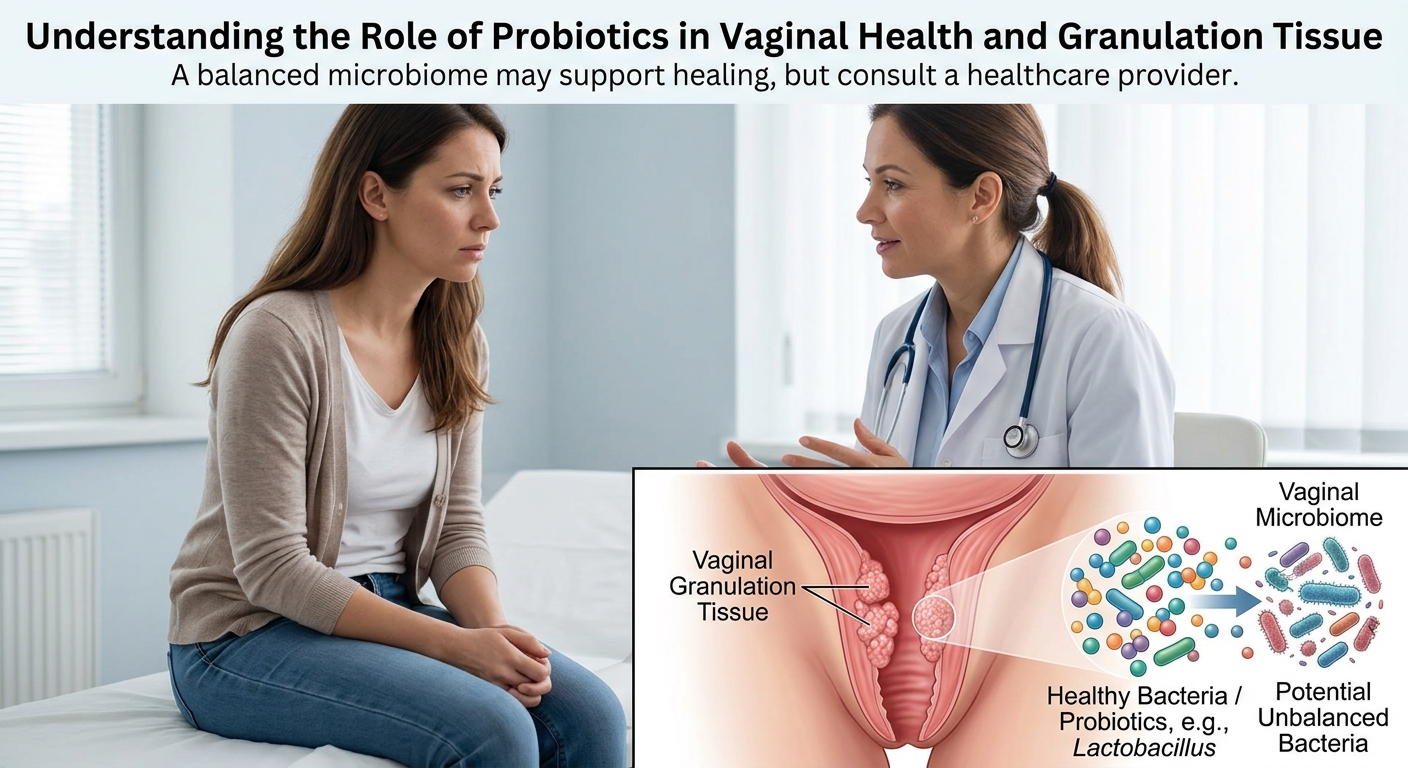
Healing after childbirth, vaginal surgery, or an injury doesn’t always follow a perfectly smooth path. Sometimes, the body produces extra granulation tissue as part of the normal repair process, which can lead to discomfort, spotting, or lingering irritation.
While the tissue itself is created to help wounds heal, too much of it can become a problem that requires medical attention. Because vaginal health is closely connected to the balance of beneficial bacteria living in the microbiome, many people wonder whether probiotics for women can make recovery easier.
While probiotics are not a treatment for granulation tissue, they may support a healthy vaginal environment. Understanding what they can and cannot do can help set realistic expectations during the healing process.
What Is Vaginal Granulation Tissue?
Granulation tissue is new connective tissue and tiny blood vessels that form as your body repairs a wound. It’s a completely normal part of healing and helps replace damaged tissue while encouraging new skin to grow over the area.
Occasionally, however, the body produces more granulation tissue than necessary. This excess tissue may remain raised, appear bright red or pink, and bleed easily when touched. It can also cause tenderness during daily activities, exercise, or sexual intercourse.
Vaginal granulation tissue most commonly develops after vaginal childbirth, episiotomies, perineal tears, or gynecological procedures, although it can occur after other types of vaginal injuries as well. Healthcare providers often treat persistent cases with options such as silver nitrate or minor in-office procedures.
How the Vaginal Microbiome Supports Healing
The vagina is home to billions of beneficial bacteria, with Lactobacillus species serving as the dominant microbes in most healthy individuals. These bacteria help maintain an acidic environment that discourages the growth of harmful microorganisms and maintains pH balance.
A balanced microbiome also helps support the vagina’s natural protective barrier. While healing involves many complex processes, maintaining a healthy bacterial community may help create an environment that supports normal tissue recovery and overall vaginal wellness.
Can Probiotics Help With Vaginal Granulation Tissue?
Current research has not shown that probiotics can treat or eliminate vaginal granulation tissue itself. Because granulation tissue is part of the body’s wound-healing process, persistent cases often require evaluation and treatment by a healthcare provider.
That said, probiotics may still offer indirect benefits. By supporting a healthy balance of beneficial bacteria, they may help maintain the vaginal environment during recovery, particularly after events such as childbirth or certain medical procedures that can temporarily disrupt the microbiome.
Researchers continue to study the relationship between the vaginal microbiome and tissue healing. While the findings are promising for overall vaginal health, more research is needed before probiotics can be recommended as a specific therapy for vaginal granulation tissue.
When Medical Treatment Is Necessary
While mild discomfort may improve as healing continues, persistent symptoms should not be ignored. Ongoing spotting, pain, bleeding after intercourse, or excess tissue that does not seem to be shrinking are all good reasons to schedule an evaluation with a healthcare provider.
If excess granulation tissue is present, treatment is often straightforward. Many cases respond well to a quick application of silver nitrate, which helps remove the excess tissue and encourages normal healing.
In some situations, a provider may recommend trimming the tissue during a brief in-office procedure. Following your provider’s recommendations gives your body the best chance to heal comfortably.
Other Ways To Support Vaginal Healing
Healthy healing depends on more than just one supplement or treatment. Giving your body the nutrients and rest it needs can make a meaningful difference during recovery. Eating a balanced diet that includes plenty of protein, vitamins, and minerals helps support the body’s natural repair processes.
Gentle hygiene is equally important. Avoid douching, using heavily scented products, or introducing anything else that could irritate sensitive tissues while they heal. Staying hydrated, wearing breathable cotton underwear, and following any postpartum or post-surgical care instructions can also help create a healthier environment for recovery.
Supporting Healing With a Whole-Body Approach
Vaginal granulation tissue is a common part of healing that occasionally requires medical treatment when excessive tissue forms. Although probiotics cannot remove granulation tissue or replace professional care, they may help support a healthy vaginal microbiome throughout the recovery process.
The best approach is a balanced one. Work closely with your healthcare provider to address any persistent symptoms while supporting your overall health with nutritious foods, healthy habits, and appropriate probiotic use. By focusing on the entire healing environment rather than just one symptom, you can help your body recover and maintain long-term vaginal wellness.