
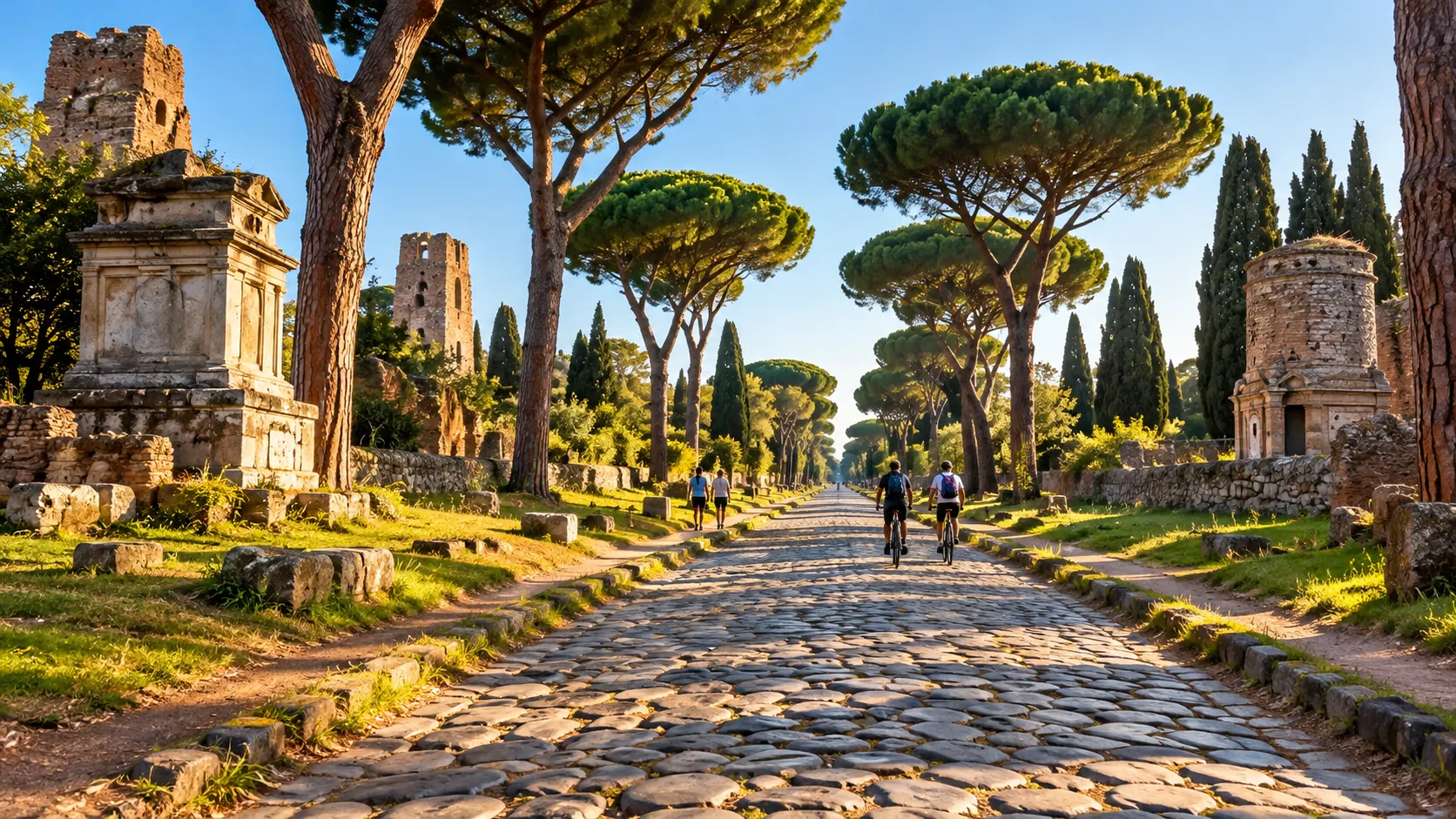
The Appian Way in Rome is one of the most fascinating ancient roads in the world. Known as Via Appia Antica, this historic route offers travelers a peaceful escape from the busy streets of central Rome. Visitors can explore Roman ruins, underground catacombs, historic monuments, and beautiful countryside while discovering thousands of years of history.
Unlike Rome’s crowded attractions, the Appian Way provides an opportunity to experience ancient history in a quiet outdoor setting. Its original stone surfaces, tall pine trees, and archaeological sites create a memorable atmosphere. Whether you enjoy walking, cycling, photography, or historical sightseeing, there are plenty of interesting places to discover.
This Appian Way Rome travel guide covers the best things to do and see, important historical attractions, transportation options, and practical travel tips. It also explains when to visit, how much time to spend, and how to organize your experience.
What Is the Appian Way in Rome?
The Appian Way is one of the oldest and most important roads built during ancient Roman times. Construction began in 312 BC under the Roman official Appius Claudius Caecus. Originally connecting Rome with Capua, the road was eventually extended to Brindisi in southern Italy, becoming an important route for transportation, communication, and military movements.
Ancient Romans called the Appian Way the Regina Viarum, meaning Queen of Roads. Its advanced construction helped Roman armies, merchants, and travelers move efficiently between major settlements. Large stone paving blocks and carefully planned drainage systems made the road remarkably durable, allowing sections to survive for more than two thousand years.
Today, parts of the historic route pass through the Appian Way Regional Park, known locally as Parco Regionale dell’Appia Antica. Visitors can explore archaeological remains, ancient tombs, and scenic countryside along the road. The area combines Roman history, natural landscapes, and outdoor activities, making it a distinctive destination beyond central Rome.
Why the Appian Way Is Worth Visiting
The Appian Way offers a different experience from famous Roman attractions such as the Colosseum and Roman Forum. Instead of spending the day surrounded by large crowds, travelers can explore open landscapes and peaceful historical surroundings. The combination of ancient ruins, green fields, and old stone pathways creates an atmosphere unlike anywhere else in Rome.
One of the biggest attractions is the opportunity to walk along surviving sections of an ancient Roman road. Visitors can see original paving stones and impressive historical monuments without traveling far from the city center. Many archaeological remains are visible from the roadside, making the area particularly interesting for independent sightseeing.
The Appian Way is also an excellent destination for outdoor enthusiasts and families who enjoy exploring historical places together. Its walking paths, cycling opportunities, and nearby parks provide an enjoyable alternative to traditional museum visits. Travelers looking for unique experiences in Rome will find that the area combines education, relaxation, and beautiful scenery.
Walk Along the Ancient Roman Road
Walking along Via Appia Antica is one of the best ways to appreciate the road’s historical importance. Some sections feature large, uneven basalt paving stones that have survived for centuries. Tall umbrella pine trees, cypress trees, and ancient stone walls create a beautiful setting where visitors can imagine how travelers once moved through the Roman countryside.
The most enjoyable walking areas are generally found farther from the busy roads near central Rome. Around the Mausoleum of Cecilia Metella and beyond, visitors encounter quieter stretches with historical ruins and open landscapes. Although some sections restrict ordinary vehicle traffic, occasional authorized vehicles may still pass, so pedestrians should remain attentive.
Comfortable walking shoes are essential because ancient paving stones can be irregular and difficult to navigate. Travelers should bring drinking water, especially during warmer months, and allow enough time for photography and short breaks. Exploring at a relaxed pace provides a better experience than attempting to cover every historical attraction in one visit.
Explore the Catacombs of San Callisto
The Catacombs of San Callisto are among the most important early Christian burial sites near the Appian Way. These underground passages contain ancient burial chambers and historical spaces associated with Rome’s early Christian communities. The site offers an opportunity to understand religious traditions, burial practices, and the development of Christianity during the Roman Empire.
Visitors explore the catacombs through organized guided tours that explain the history and significance of the underground cemetery. Guides describe important burial areas and the symbols used by early Christians. The underground setting provides a fascinating contrast to the sunny countryside above, making this attraction particularly memorable for history enthusiasts.
Because the catacombs contain narrow passages and underground stairs, visitors should wear comfortable footwear and follow their guide’s instructions. The temperature below ground can feel cooler than the surrounding outdoor areas. Travelers should check tour availability and opening days before visiting because access arrangements can change throughout the year.
Visit the Catacombs of San Sebastiano
The Catacombs of San Sebastiano are another major historical attraction along the Appian Way in Rome. These ancient underground burial areas are connected with early Christian history and traditions surrounding Saint Sebastian. The site also includes the Basilica of San Sebastiano, creating an interesting combination of religious architecture and archaeological discoveries.
A guided visit introduces travelers to underground passages, burial chambers, and important historical features. The experience helps visitors understand how burial practices developed outside Rome’s ancient city walls. Unlike large museums with extensive displays, the catacombs allow travelers to experience historical spaces in their original underground environment.
The Catacombs of San Sebastiano are conveniently located along Via Appia Antica and can be combined with nearby attractions. Visitors interested in religious history may enjoy exploring both the basilica and the underground cemetery. Checking opening hours and guided tour schedules is recommended because access is organized separately from other archaeological sites.
Discover the Mausoleum of Cecilia Metella
The Mausoleum of Cecilia Metella is one of the most recognizable monuments along the ancient Appian Way. This impressive circular tomb was constructed during the late Roman Republic for Cecilia Metella, a member of an influential Roman family. Its massive stone structure demonstrates the wealth and importance associated with prominent Roman households.
The monument stands beside the historic road and remains an impressive example of ancient Roman funerary architecture. During the medieval period, the surrounding area became part of a fortified complex associated with the Caetani family. Visitors can appreciate how the structure reflects different periods of Roman history, from ancient burial traditions to medieval fortifications.
Exploring the Mausoleum of Cecilia Metella is particularly rewarding for travelers interested in architecture and photography. The surrounding landscape provides attractive views of ancient stonework and the historical countryside. Visitors can admire the exterior while walking along the road, although entering the archaeological complex requires a valid admission ticket.
See the Circus and Villa of Maxentius
The archaeological complex of Maxentius is another fascinating historical site near the Appian Way. Built during the early fourth century AD, the complex includes the remains of an imperial villa, a large circus, and a family mausoleum. These structures were associated with Emperor Maxentius, who ruled during a turbulent period of Roman history.
The Circus of Maxentius was designed for chariot racing and remains one of the best-preserved examples of its type from ancient Rome. Although its original seating and decorations have largely disappeared, the surviving layout reveals the impressive scale of the venue. Visitors can imagine the excitement of competitions that once entertained audiences during the Roman Empire.
The surrounding archaeological landscape offers a peaceful place to explore without the atmosphere of Rome’s busiest attractions. Open spaces and historical remains provide excellent opportunities for learning about imperial architecture. Travelers can combine this site with the nearby Mausoleum of Cecilia Metella to discover two important locations during the same visit.
Explore the Ancient Villa dei Quintili
Villa dei Quintili is one of the largest and most impressive Roman villa complexes near the Appian Way. Originally associated with the wealthy Quintili brothers during the second century AD, the estate later became imperial property. Its extensive ruins offer insight into the luxurious lifestyles enjoyed by powerful families during ancient Roman times.
Visitors can explore the remains of grand residential spaces, thermal baths, courtyards, and other structures across the archaeological landscape. Although much of the original decoration has disappeared, surviving architectural features reveal the scale of the historic estate. The surrounding countryside provides attractive views and creates a peaceful environment for exploring the ruins.
Because Villa dei Quintili covers a large area, travelers should allow sufficient time to explore its pathways and historical structures. The archaeological site has access points from both Via Appia Antica and Via Appia Nuova. Visitors should check the available entrance, opening hours, and ticket arrangements before including the villa in their itinerary.
Discover the Archaeological Site of Capo di Bove
Capo di Bove is a lesser-known archaeological site that provides another interesting stop along Via Appia Antica. Excavations have revealed remains of an ancient Roman bath complex with evidence of different construction phases. The site offers visitors an opportunity to learn about everyday life and building practices during the Roman period.
The surviving structures include foundations, floor remains, and areas associated with the historical bathing complex. Informational displays help explain the archaeological discoveries and the development of the site. Although Capo di Bove is smaller than Villa dei Quintili, its historical features make it a worthwhile attraction for travelers interested in Roman archaeology.
Capo di Bove is particularly convenient for visitors exploring the Appian Way on foot or by bicycle. Its location allows travelers to combine the site with nearby tombs, monuments, and scenic road sections. Visiting smaller archaeological attractions can also provide a more complete understanding of the area’s remarkable historical importance.
Enjoy Cycling Along the Appian Way
Cycling is one of the most popular ways to explore the Appian Way and its surrounding countryside. The extended historical route allows visitors to cover greater distances than they might manage on foot. Along the way, cyclists can discover ancient ruins, tree-lined roads, peaceful landscapes, and archaeological attractions scattered throughout the park.
Several bicycle rental services and organized cycling tours operate around the Appian Way area. Some visitors prefer standard bicycles, while others choose electric bikes for a more comfortable experience over longer distances. Guided cycling tours can be particularly helpful for travelers who want historical explanations and assistance navigating the area’s different paths.
However, cycling on the original Roman paving stones can be challenging because the surface is uneven and sometimes slippery. Beginners should choose suitable routes and use smoother parallel paths where permitted. Wearing a helmet, following local traffic restrictions, and cycling at a comfortable pace will make the experience safer and more enjoyable.
Explore Caffarella Park and the Roman Countryside
Caffarella Park, also called Valle della Caffarella, is a beautiful green area connected with the wider Appian Way Regional Park. The landscape features open meadows, walking trails, streams, and historical remains. It offers a peaceful escape from Rome’s busy streets while preserving elements of the countryside that once surrounded the ancient city.
Visitors can explore scenic paths while discovering historic structures, archaeological remains, and traditional rural landscapes. The park is especially enjoyable for travelers interested in photography, nature, and relaxing outdoor activities. Its combination of green spaces and cultural heritage creates a distinctive experience beyond the major Roman monuments.
Families and independent travelers often appreciate the park’s quieter atmosphere and opportunities for leisurely walks. Comfortable shoes and drinking water are useful because some paths cross natural terrain rather than paved streets. Visitors with additional time can combine Caffarella Park with nearby sections of the ancient Appian Way for a varied day outdoors.
How to Get to the Appian Way from Central Rome
The Appian Way is located southeast of central Rome and can be reached using public transportation, taxis, or organized tours. Bus route 118 is a useful option for reaching several attractions along Via Appia Antica. Travelers should check current bus stops, service schedules, and route changes before leaving their accommodation.
Visitors can also use Rome’s metro network and connect with local buses to reach different parts of the archaeological park. The best transportation option depends on whether you plan to visit the catacombs, walk along the ancient road, or explore Villa dei Quintili. Because the area is extensive, selecting a starting point beforehand saves time.
Taxis and guided tours may be convenient for travelers who prefer direct transportation to specific attractions. However, public buses are generally a more economical choice for independent visitors. Remember that the Appian Way stretches across a large area, so reaching one historical site does not necessarily place every other attraction within a short walking distance.
Best Time to Visit the Appian Way in Rome
Spring and autumn are generally the best seasons to explore the Appian Way because temperatures are often comfortable for walking and cycling. From March through May, the countryside becomes greener and outdoor sightseeing is particularly enjoyable. September and October also provide pleasant conditions for exploring ancient monuments without the intense summer heat.
Summer visits can still be enjoyable, but high temperatures may make long walks uncomfortable during the middle of the day. Starting early in the morning helps travelers avoid the strongest afternoon sunshine. Winter offers fewer crowds and a quieter atmosphere, although shorter daylight hours and occasional rain may affect outdoor sightseeing plans.
Sundays and public holidays are especially popular because ordinary motor vehicle traffic is restricted along much of the historic route during designated hours. These restrictions can create a more comfortable environment for pedestrians and cyclists. Travelers should remember that archaeological attractions operate their own opening schedules, which may differ from access to the public park.
Plan the Perfect Appian Way Day Trip
A half-day visit is suitable for travelers who want to experience the ancient road and explore a few major attractions. Start near the Catacombs of San Sebastiano, then continue toward the Circus of Maxentius and Mausoleum of Cecilia Metella. This route introduces several important historical locations without requiring visitors to cover the entire Appian Way.
Travelers with a full day can explore additional archaeological attractions and quieter stretches of Via Appia Antica. Consider including Capo di Bove or extending the journey toward Villa dei Quintili, depending on available time and transportation. A bicycle can make longer routes more practical, although visitors should allow time for breaks and individual site visits.
An enjoyable itinerary should balance historical sightseeing with opportunities to appreciate the surrounding countryside. Bring water and snacks, and check whether refreshments are available along your chosen route. Avoid scheduling too many attractions because travel distances, uneven roads, and individual opening hours can make the experience longer than expected.
Essential Travel Tips for Visiting the Appian Way
Before visiting the Appian Way, prepare for outdoor conditions and the limited facilities available along some sections. Wear comfortable footwear, carry drinking water, and consider sun protection during warmer months. A downloaded map can be useful because historical attractions are spread across a large area and mobile reception may vary.
Access to the public regional park is free, but individual archaeological sites and guided catacomb tours may require paid tickets. Many state-managed archaeological attractions operate from Tuesday through Sunday, with Monday closures and seasonal hours. Checking official visitor information before traveling helps avoid arriving at an attraction when admission is unavailable.
Visitors should respect archaeological remains and avoid climbing on fragile historical structures or removing stones from the landscape. Some sections have limited lighting, making daytime exploration preferable to late-night walking. Travelers should also remain aware of occasional vehicle traffic, particularly near roads connecting the historical park with surrounding neighborhoods.
Conclusion
The Appian Way is one of Rome’s most rewarding destinations for travelers interested in ancient history, outdoor activities, and peaceful landscapes. Its historic road, archaeological monuments, underground catacombs, and surviving Roman villas offer a memorable alternative to the crowded attractions of central Rome.
Whether you choose to walk through the countryside, explore historical ruins, or enjoy a guided cycling tour, the Appian Way provides plenty of interesting experiences. Planning your route carefully and allowing enough time for each attraction will help you appreciate the area’s remarkable cultural heritage.
This Appian Way Rome travel guide provides the essential information needed to organize an enjoyable visit. With comfortable shoes, suitable transportation, and a little preparation, you can discover one of Italy’s most significant ancient roads while experiencing a quieter and historically rich side of Rome.
Frequently Asked Questions
Is the Appian Way in Rome worth visiting?
Yes, the Appian Way is worth visiting for its ancient Roman road, fascinating archaeological sites, peaceful countryside, and outdoor activities. It is particularly enjoyable for travelers who appreciate history, walking, cycling, and quieter attractions.
How long does it take to explore the Appian Way?
Most visitors should allow three to five hours for a few major attractions and a scenic walk. A full day is better for exploring additional archaeological sites or cycling along longer sections.
Is visiting the Appian Way in Rome free?
Walking along the public sections of the Appian Way is free. However, some archaeological sites, underground catacombs, museums, and guided tours require separate admission tickets, with prices depending on the attraction.
Can you walk along the Appian Way in Rome?
Yes, visitors can walk along many sections of the ancient Appian Way. Comfortable shoes are recommended because some original paving stones are uneven, and certain stretches may still have authorized vehicle traffic.
What is the best day to visit the Appian Way?
Sunday is often an excellent choice because regular motor traffic is restricted along much of the historic route during designated hours. Weekdays can also be enjoyable, especially when visiting archaeological sites with scheduled opening hours.