
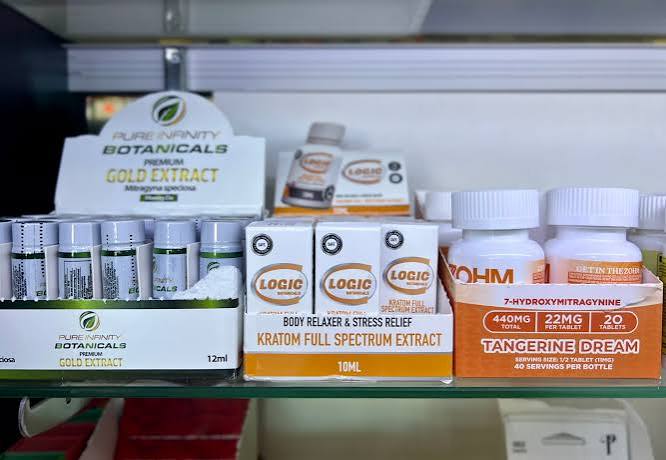
Walk the kratom shelf in any wellness shop and you’ll find the same plant sold half a dozen ways. A pouch of green powder. A bottle of capsules. Pressed tablets in a blister pack. A two-ounce shot sitting next to the energy drinks. They look like variations on one product. They aren’t, and the differences matter more than the price tags suggest.
Whole leaf vs. extract: the split that matters most
Powder and most capsules are the same thing in different packaging: dried kratom leaf, ground fine. Nothing has been removed or concentrated. Shots, tinctures, and most gummies start from an extract, where alkaloids are pulled out of the leaf with a solvent and concentrated. Tablets can go either way.
That split changes what you’re comparing. Leaf varies naturally from batch to batch, and extraction multiplies whatever differences were in the starting material. University of Florida researchers who quantified ten alkaloids in kratom products used by US consumers in a nationwide study are part of a growing body of work showing why the label alone isn’t enough.
How each format compares
Powder
Powder is the cheapest way to buy kratom by the gram and the most direct: what’s in the pouch is the leaf. It’s also the least pleasant. The taste is bitter and grassy, and it doesn’t dissolve, so people stir it into juice or yogurt or brew it as tea, the way it was traditionally prepared in Southeast Asia. If the taste doesn’t bother you, powder offers the lowest cost and the most ways to prepare it.
Capsules
Capsules are powder with the taste problem solved. The same milled leaf goes into a gelatin or plant-cellulose shell, which makes it portable and easy to count. You pay for that. Capsules cost noticeably more per gram of leaf than the same strain as loose powder, because encapsulation is an extra manufacturing step. Check the fill weight per capsule, and the shell material if you avoid gelatin.
Tablets
Tablets are where the label starts doing more work. Pressing powder into a tablet takes binders and flow agents, ingredients like microcrystalline cellulose or magnesium stearate that hold it together. They’re common in supplements, but they mean a tablet is no longer pure leaf. Some tablets are also made from extract instead of leaf, and the front of the package doesn’t always say so. Tablets are also the format most often used for concentrated 7-OH products, which regulators are moving against, so this is the format where reading the full ingredient panel matters most.
Shots, tinctures, and gummies
Extract shots are the most concentrated format and the one that varies most between brands. A small bottle holds alkaloids drawn from a much larger amount of leaf, usually flavored to cover the bitterness. That’s the appeal: no powder, no pills. It’s also why the label should state alkaloid content in milligrams instead of just saying “extract,” and why the batch report should show both mitragynine and 7-OH. Gummies sit in the same category: usually extract-based, and only as trustworthy as their lab report.
The formats side by side
| Format | What’s inside | Taste | Cost per gram of leaf | What to check |
| Powder | Whole dried leaf | Bitter, grassy | Lowest | Batch lab report, strain and vein labeling |
| Capsules | Whole dried leaf in a shell | Neutral | Higher than powder | Fill weight, shell material, batch report |
| Tablets | Leaf or extract, plus binders | Neutral | Varies | Full ingredient panel; leaf or extract |
| Shots, tinctures, gummies | Concentrated extract | Flavored | Not directly comparable | Alkaloids in mg, 7-OH result on the batch report |
Which format fits which situation
Budget is the easiest call. Powder is the least expensive per gram, and buying a larger pouch lowers the cost further. If you can’t get past the taste, capsules are the obvious trade, and they travel better than a pouch of loose powder in a bag.
If you want to avoid additives entirely, stick with powder or capsules and skip tablets, since the binders come with the format. And if convenience matters more than anything, a shot is the most convenient of the lot, which is exactly why it deserves the closest look at the label.
Storage differs too. Powder and capsules keep best in an airtight container away from light, heat, and humidity, since moisture is what degrades dried leaf fastest. Shots and gummies carry printed expiration dates, and those dates are worth taking literally.
What to check, whatever format you pick
Format changes the experience, not the basics. Every kratom product should come with a batch-specific lab report covering contaminants (heavy metals and microbes) and alkaloid content, and the batch number on the report should match the one on your package. FDA’s labeling guide spells out what a supplement facts panel is supposed to include, and the NIH’s Dietary Supplement Label Database is a handy place to see what complete panels look like across product types. A product that skips the basics there is probably cutting corners elsewhere too.
If you buy kratom online, the simplest filter is a seller that lets you look up the lab report before you check out, not one that sends it on request. Pick the format that fits how you’ll actually use it. Then read the report. That part doesn’t change.
Statements in this article have not been evaluated by the Food and Drug Administration. These products are not intended to diagnose, treat, cure, or prevent any disease.