
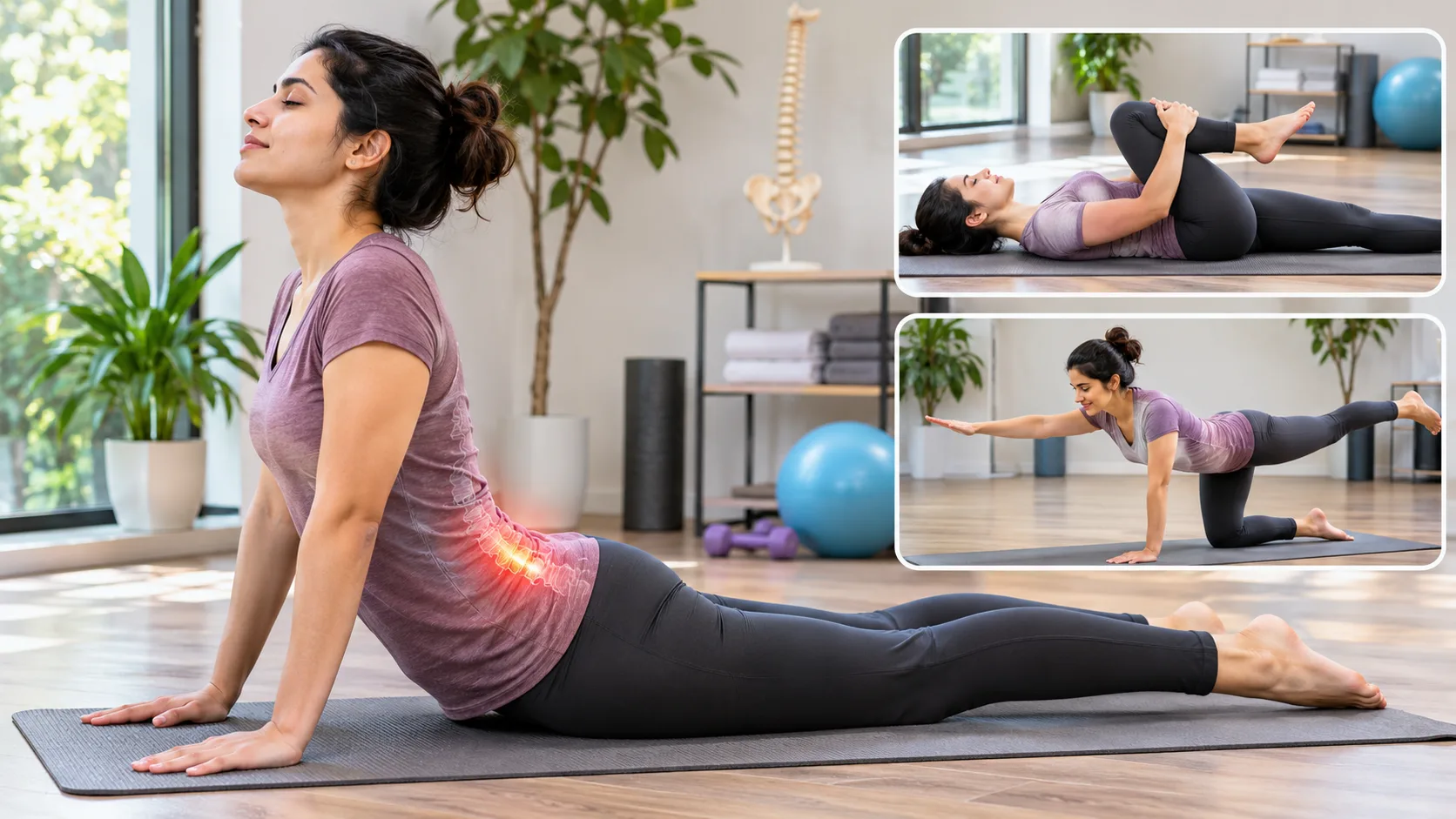
A herniated disc can cause back pain, stiffness, tingling, and discomfort that spreads into the arms or legs. These symptoms may make everyday activities such as walking, sitting, bending, and lifting more difficult. Although rest may feel helpful initially, appropriate movement and guided exercise can play an important role in managing symptoms and maintaining physical function.
Learning the right exercises for herniated disc can help you understand how gentle movements, core strengthening, and improved mobility may support recovery. However, not every exercise is suitable for every disc problem, and certain movements can make symptoms worse. This guide explains beginner-friendly exercises, proper form, potential benefits, safety precautions, and practical tips for building a comfortable routine.
What Is a Herniated Disc and How Does It Affect Movement?
A herniated disc occurs when part of the softer material inside a spinal disc pushes through a weakened or damaged area of its outer covering. Spinal discs act as cushioning structures between the vertebrae and help the spine manage everyday movement. Herniation can occur in different spinal regions, although the lower back and neck are commonly affected.
Some herniated discs cause no noticeable symptoms, while others irritate nearby nerves and produce pain. A lumbar disc herniation may cause discomfort that travels into the buttock or leg, sometimes accompanied by tingling or numbness. Cervical disc problems can cause symptoms extending into the shoulder, arm, or hand, depending on which nerves are involved.
The effects on movement vary according to the location, severity, and individual response to the condition. Some people feel worse during prolonged sitting or bending, while others experience discomfort when standing or extending the spine. Understanding your particular symptoms is important because an exercise that helps one person may aggravate another person’s condition.
Benefits of Exercises for Herniated Disc Recovery
Appropriate exercise may help improve movement confidence, maintain muscle strength, and reduce the effects of prolonged inactivity. Gentle activity can support everyday function while allowing people to gradually return to comfortable movement. Exercise is commonly included in conservative treatment programs, although results depend on the specific diagnosis and severity of symptoms.
Strengthening the abdominal, hip, and back muscles can help improve control during activities that involve the spine. Mobility exercises may also reduce stiffness associated with staying in one position for extended periods. These benefits do not mean that exercises physically push a herniated disc back into place or guarantee relief from nerve irritation.
A carefully selected routine can also support gradual recovery and help people maintain regular physical activity. Progress is often more useful when measured by comfort and function rather than exercise difficulty alone. Working with a physiotherapist can help ensure that movements match your symptoms, physical abilities, and stage of recovery.
Important Safety Tips Before Starting Herniated Disc Exercises
Before beginning a new exercise routine, consider whether your herniated disc has been professionally assessed. Symptoms that appear similar can have different causes, including muscular problems, joint conditions, and nerve disorders. A healthcare professional can help determine whether exercise is appropriate and identify movements that may need modification.
Avoid forcing your spine into positions that cause sharp pain or increase symptoms traveling into your arms or legs. Some exercises may feel comfortable in one direction but painful in another, making individual responses important. Gentle movement should not produce progressive weakness, persistent numbness, or worsening nerve-related discomfort.
Seek emergency medical attention if you develop new loss of bladder or bowel control, numbness around the groin or saddle area, or significant or rapidly worsening leg weakness. These symptoms can indicate serious nerve compression requiring urgent assessment. People with recent trauma, fever, or other concerning symptoms should also seek medical advice before exercising.
Walking as a Gentle Exercise for a Herniated Disc
Walking is a simple activity that may help maintain mobility without requiring specialized exercise equipment. It encourages natural movement through the hips, legs, and trunk while supporting general physical health. For some people with a lumbar herniated disc, comfortable walking is easier to tolerate than prolonged sitting or certain bending activities.
Begin with a short walk on a level, stable surface at a pace that feels manageable. Keep your shoulders relaxed, allow your arms to move naturally, and avoid deliberately exaggerating your posture. Focus on smooth, comfortable steps rather than walking quickly or attempting to complete a particular distance.
Increase walking time gradually only when your symptoms remain stable or improve. If discomfort spreads farther down your leg, numbness increases, or weakness develops, stop and seek appropriate guidance. Walking is useful for many people, but it is not universally comfortable, particularly when other spinal conditions affect standing or movement.
Pelvic Tilts for Gentle Lower Back Movement
Pelvic tilts are small, controlled movements that can help improve awareness of your lower back and abdominal muscles. They are often used in beginner rehabilitation programs because they require little equipment and can be modified easily. However, their suitability depends on whether gentle spinal flexion feels comfortable with your particular disc symptoms.
Lie on your back with your knees bent and your feet resting on a supportive surface. Slowly tighten your abdominal muscles and gently tilt your pelvis so your lower back moves slightly toward the floor. Keep the movement small, breathe naturally, and avoid pushing through discomfort or forcing your spine flat.
Return to your starting position with control before repeating a few comfortable movements. The purpose is to improve coordination rather than perform a strong abdominal contraction or large pelvic motion. Stop if the exercise increases back pain, tingling, or symptoms traveling into your leg, and consider professional guidance.
Prone Lying and Gentle Back Extension
Some people with lumbar disc-related pain find that lying on their stomach or performing carefully selected extension movements reduces symptoms. These positions are sometimes included in directional-preference rehabilitation approaches. However, spinal extension can aggravate other conditions, so it should not be assumed to be suitable for every herniated disc.
If lying on your stomach is comfortable, begin by resting on a supportive surface with your arms relaxed. You may gently support your upper body on your forearms if that position has been recommended and does not increase symptoms. Keep your hips relaxed and avoid forcing your back into a deeper arch.
Pay attention to whether discomfort improves, remains unchanged, or travels farther into the leg. Worsening radiating symptoms are a reason to stop rather than continue increasing the movement. A physiotherapist can help determine whether extension exercises are appropriate and whether they should form part of your rehabilitation routine.
Bird Dog Exercise for Spinal Stability
The bird dog exercise challenges coordination between your core, hips, shoulders, and back muscles. It encourages controlled movement while limiting unnecessary twisting through the trunk. This exercise may be useful during rehabilitation when you can comfortably support yourself on your hands and knees without aggravating symptoms.
Begin on a stable exercise mat with your hands positioned beneath your shoulders and knees beneath your hips. Gently extend one leg backward while keeping your trunk as steady as possible. If comfortable, you can also reach the opposite arm forward without lifting either limb higher than necessary.
Return slowly to the starting position and repeat on the other side. Beginners can practice moving one arm or one leg at a time before combining the movements. Avoid arching or rotating your back, and stop if the exercise causes increased nerve pain, tingling, or other uncomfortable symptoms.
Modified Dead Bug Exercise for Core Strength
The modified dead bug exercise helps develop abdominal control while you lie on your back. It focuses on maintaining comfortable trunk stability as your arms or legs move. For some people recovering from a lumbar disc problem, this controlled approach may be more manageable than traditional sit-ups or demanding abdominal exercises.
Lie on your back with your knees bent and feet resting on the floor. Gently engage your abdominal muscles, then slowly lift one foot a small distance or slide it forward while keeping your trunk comfortable. Return to the starting position and repeat with the opposite leg without holding your breath.
Keep the movement small enough to maintain control without increasing back discomfort. You can gradually explore more challenging variations when recommended by a qualified professional and when your symptoms permit. The goal is coordinated movement and stability, not maximum abdominal effort or completing repetitions through pain.
Glute Bridges for Hip and Core Support
Glute bridges strengthen the muscles around your hips and encourage coordinated movement between your pelvis and trunk. Strong hip muscles can support activities such as standing, walking, and climbing stairs. However, some people with a herniated disc may find bridging uncomfortable, especially when the movement creates excessive spinal extension.
Lie on your back with your knees bent and feet placed comfortably apart. Gently engage your hip muscles and slowly lift your pelvis a small distance from the floor if the movement feels comfortable. Keep your trunk controlled and avoid pushing your hips excessively high or arching your lower back.
Lower your pelvis slowly and rest before another repetition. If a full bridge causes discomfort, try a smaller movement or choose a different exercise recommended by your physiotherapist. Stop when pain increases or begins traveling into your leg, since maintaining comfortable movement is more important than completing the exercise.
Gentle Knee-to-Chest Stretch for Lower Back Comfort
A knee-to-chest stretch may help reduce feelings of stiffness in some people with lower back discomfort. It involves controlled bending through the hips and lower spine, which can feel relaxing for certain individuals. However, spinal flexion may aggravate some disc-related conditions, particularly when symptoms worsen during forward bending or sitting.
Lie on your back with both knees bent and your feet resting on the floor. Slowly bring one knee toward your chest only as far as comfortable, supporting the leg gently with your hands. Keep your shoulders relaxed and avoid pulling forcefully or lifting your head toward your knee.
Hold the position briefly if it feels comfortable, then lower your leg and repeat on the opposite side. Avoid drawing both knees tightly toward your chest unless that movement has been recommended for your condition. Stop immediately if the stretch increases radiating pain, numbness, or tingling in your leg.
Common Exercise Mistakes That Can Make Disc Symptoms Worse
One common mistake is assuming that every back stretch or strengthening exercise is suitable for a herniated disc. Deep forward bending, forceful twisting, and heavy lifting may aggravate symptoms in some people. Exercise selection should reflect your specific condition rather than a general routine designed for ordinary muscle stiffness.
Another mistake is attempting difficult movements before developing comfortable control of simpler exercises. Rushing through repetitions or using excessive resistance can make it harder to recognize changes in pain or nerve symptoms. Gradual progression allows you to evaluate your response and adjust the routine before adding more physical demands.
Ignoring symptoms that spread into the arms or legs is also a concern. Increased radiating pain, new numbness, or weakness may indicate nerve irritation that needs reassessment. Stop exercises that produce these changes and seek professional guidance instead of assuming that worsening pain is a necessary part of recovery.
How to Build a Safe Herniated Disc Exercise Routine
A beginner routine should be based on movements that you can perform comfortably and that suit your diagnosis. Walking, gentle stability exercises, and selected mobility movements may provide useful starting points. You do not need to complete every available exercise, especially when certain positions increase your symptoms.
Start with a few controlled movements and allow time to notice how your back responds during and after activity. For example, a routine might include a comfortable walk followed by a small number of approved core stability exercises. Keep the effort manageable, breathe normally, and avoid extending the session when discomfort begins increasing.
As your symptoms improve, a physiotherapist may recommend additional strengthening, mobility, or functional movement exercises. Progress can involve better movement control, improved activity tolerance, or a gradual return to everyday tasks. The most effective routine is individualized and adaptable rather than based on completing a fixed number of exercises regardless of symptoms.
Conclusion
Appropriate exercises for herniated disc may help improve mobility, maintain core strength, and support everyday function during recovery. Gentle walking, carefully selected stability movements, and suitable strengthening exercises can be useful for some individuals. However, the benefits depend on the location of the disc problem, associated symptoms, and whether the movements are appropriate for the condition.
Proper form and symptom awareness are essential when performing exercises for a herniated disc. Avoid forcing movements that increase radiating pain, numbness, or weakness, and do not assume that every popular back exercise will provide relief. Professional assessment can help identify an appropriate exercise approach and reduce the risk of aggravating existing symptoms.
Recovery often involves balancing comfortable activity with suitable rest and medical guidance when necessary. Start with manageable movements, progress gradually, and seek help when symptoms worsen or new neurological changes develop. A thoughtful, individualized routine can support a safer return to daily activities while maintaining confidence in your body’s ability to move.
Frequently Asked Questions
What are the best exercises for a herniated disc?
Walking, bird dogs, modified dead bugs, and selected mobility exercises may help some people with lumbar disc problems. The best choices depend on symptoms, disc location, and professional assessment.
Can exercise help a herniated disc heal?
Appropriate exercise may improve movement, strength, and function while symptoms recover. However, exercises do not guarantee that a herniated disc will return to its original position, and individual recovery varies.
What exercises should I avoid with a herniated disc?
Avoid movements that worsen pain, tingling, numbness, or weakness. Forceful bending, twisting, and heavy lifting may aggravate some conditions, although specific restrictions should be based on individual assessment.
Is walking good for a herniated disc?
Walking can be beneficial when it feels comfortable and does not increase nerve-related symptoms. Begin with short, manageable distances and adjust activity according to your response and medical guidance.
When should I stop exercising with a herniated disc?
Stop if exercise causes worsening radiating pain, new numbness, or weakness. Seek emergency care for new bladder or bowel control problems, saddle-area numbness, or significant progressive leg weakness.