
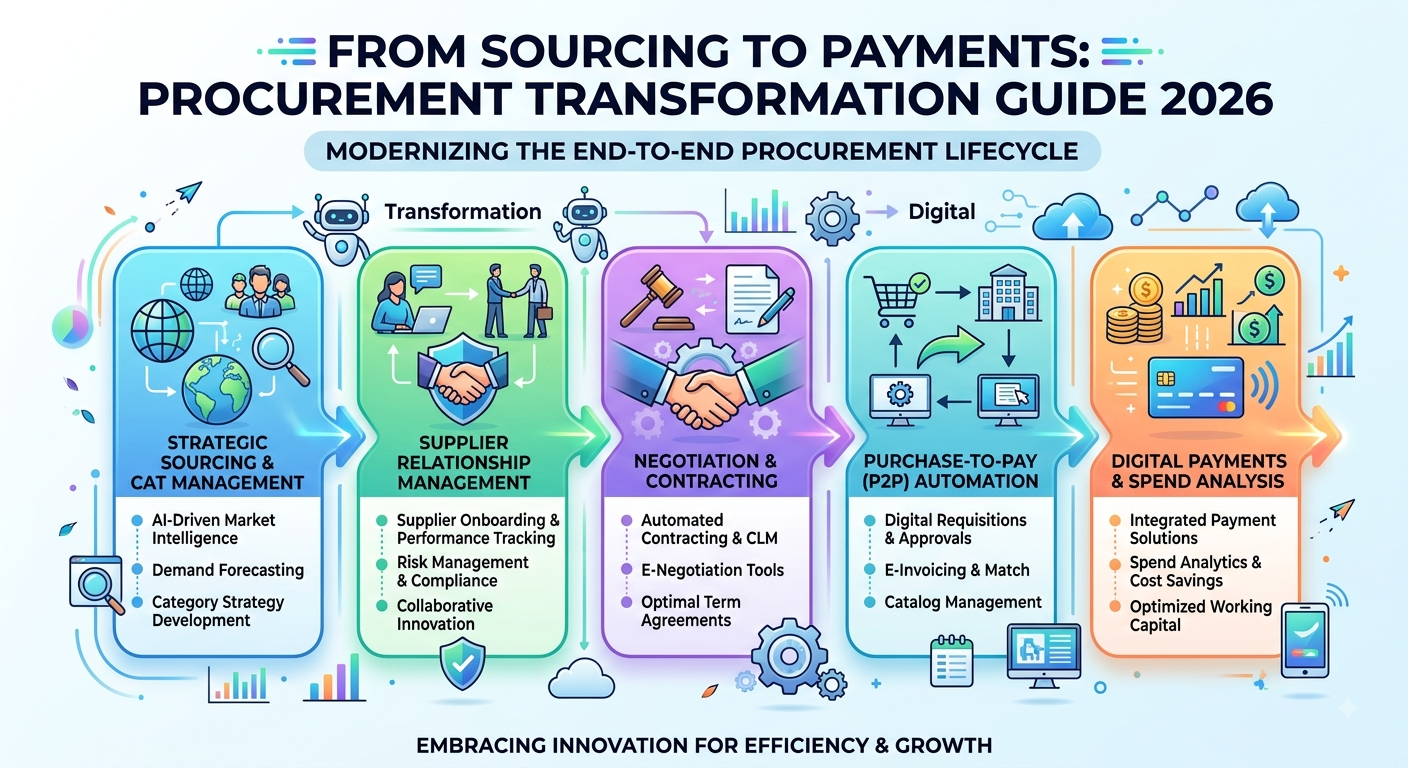
As the demands of procurement processes continue to change, procurement processes are getting increasingly connected and strategic, with businesses looking for innovative ways to manage their sourcing, purchasing, supplier management, and payments processes. Source- to -Pay software allows organizations to bring together various procurement processes into one unified process.
Considering the new demands of businesses in 2026, companies are working to adopt digital procurement practices that can help cut down manual efforts, increase compliance, and enhance decision-making.
Building a Connected Procurement Ecosystem Through Digital Transformation
Procurement processes using conventional methods usually need multiple systems, manual approval steps, and separate communication channels. The issues caused by such approaches can lead to delays and inefficiencies in maintaining an efficient procurement process.
The integration of a digital procurement ecosystem connects the different stages in procurement, such as sourcing, managing suppliers, purchases, and payments. This ensures that businesses manage to integrate procurement and financial operations and maintain control at each procurement stage.
Key Areas Driving Procurement Transformation in 2026
Transforming procurement in 2026 is all about making it efficient and collaborative using advanced digital tools. Companies have been integrating tools and processes that would make their procurement processes simpler and easier for decision-making.
- Automated sourcing and supplier assessment
- Centralised procurement data management
- Simplified purchase approvals
- Effective supplier collaboration
- Better visibility and control of spending
This will help companies build adaptable procurement systems that would cater to their business needs in an efficient manner. It allows procurement professionals to concentrate on other strategic issues apart from managing redundant administrative tasks.
Improving Procurement Visibility Through Integrated Platforms
Visibility is one of the key elements in successful procurement management. When procurement data is scattered over several systems, companies might find it hard to manage the performance of their suppliers, track the spending, and measure the effectiveness of the procurement process.
Integrated procurement systems will enable managers to get access to supplier data, contractual agreements, purchase data, and data on payments made. Such an approach will enable the team to get more accurate data and take better-informed decisions.
By using the source -to- pay software solution, companies will be able to link their sourcing decisions to the actual results of the purchasing process.
Strengthening Supplier Relationships Through Digital Procurement
Successful procurement management requires effective working relationships with suppliers. Manually managing suppliers may cause issues such as lack of communication, improper evaluation, and difficulty in keeping proper supplier records.
A digital procurement management system facilitates better cooperation with suppliers through proper means of communication and storage of supplier data in one place. Businesses using source- to- pay software will be able to track the performance of suppliers.
1. Centralised Supplier Data Management
Digital platforms collect supplier data such as profiles, agreements, certificates, and performance history in one place. It increases access and assists procurement personnel in making better-informed decisions during supplier selection and management.
2. Improved Supplier Performance Monitoring
The performance of the supplier may be rated according to several factors such as delivery, quality, cost, among others. Supplier performance monitoring will ensure that companies select reliable suppliers and build relationships with suppliers.
3. Better Contract Visibility
Digital contract management enables businesses to oversee the contracts, renewal dates, and other aspects of the contract. It decreases the risks linked to deadlines, outdated documents, and other problems associated with the contract.
4. Enhanced Supplier Communication
Connecting technologies help businesses better communicate with suppliers by means of notifications or other communication methods. It helps avoid delays and makes the procurement process transparent.
- Consistent Supplier Evaluation
Using the same method for evaluating suppliers allows companies to make comparisons and choose suppliers that fit best.
Enhancing Compliance and Procurement Governance
Efficient governance is required to ensure that procurement operations are conducted in an open and controlled manner. Organisations require defined processes to control approval, documentation, and procurement processes according to internal regulations.
With a digital procurement process, organizations can achieve compliance through efficient workflow definition and proper record-keeping of all procurement transactions. It becomes easy for organisations to audit the processes.
Different types of procurement audit enable organisations to assess their procurement processes from various perspectives such as compliance, accuracy, efficiency, and supplier performance.
Enabling Data-Driven Procurement Decisions
Data is essential in enhancing procurement strategy. Firms need good data to conduct their financial analysis, review suppliers, and recognize areas of improvement.
Modern procurement solutions have tools that gather and structure purchasing data, making it easier for the teams to interpret and base their decisions. The process results in better management of costs, selecting suppliers, and planning procurement strategy.
By leveraging the source- to- pay software, firms will link their procurement data from their sourcing process to the payment process.
Preparing Procurement Operations for Future Growth
With the growing size of companies, procurement becomes more complicated because of more suppliers involved, larger purchase volume, and changing market dynamics. Digital procurement allows being flexible enough to cope with such needs.
Automation, analysis, and integration allow being productive and having control over the whole operation. Thus, procurement departments can develop a scalable process that will assist in company development.
Another way to ensure the efficiency of procurement is the evaluation of procurement performance. Types of procurement audit allow understanding gaps in the process and improving compliance standards.
Conclusion
The digital transformation of procurement has been aiding companies in creating more effective and transparent procurement processes. Ranging from better collaboration among suppliers to visibility and compliance, modern procurement systems ensure that a business gets everything to have smarter processes.
For organizations that want to transform their procurement systems, they can rely on a robust system such as Procol, which is equipped with intelligent tools that make sourcing, purchasing, and payment tasks easy. Through the automated and analytical tools in Procol, businesses can harness the maximum benefits of source to pay software. In addition to digital transformation, knowledge about the types of procurement audit will help firms understand their procurement process.