
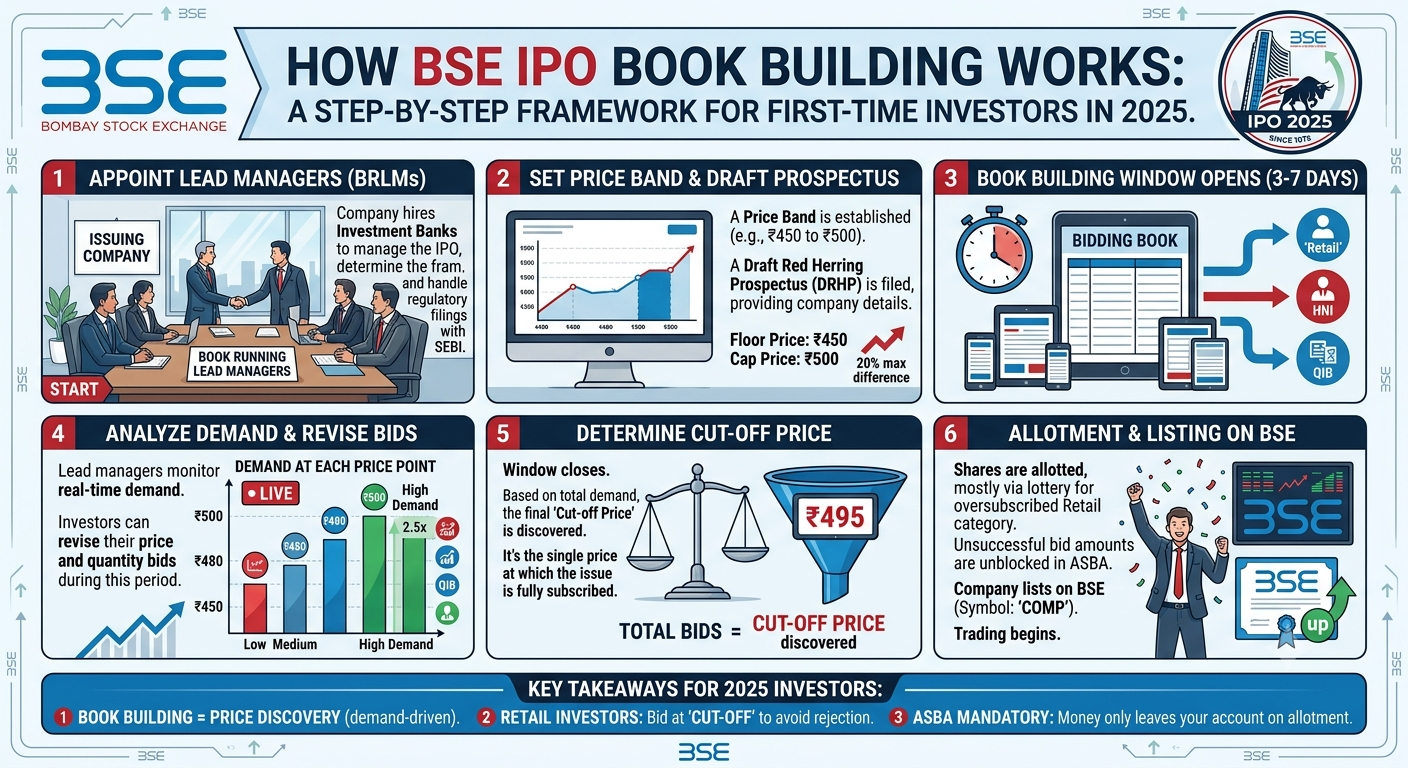
The process of BSE IPO book building is a crucial step for investors looking to enter the stock market. Unfortunately, many investors often make common mistakes during this process, which can lead to missed opportunities or losses. In this article, we will explore these mistakes, offering insight into what to avoid when participating in the BSE IPO book building process.
By understanding these pitfalls and learning from others’ experiences, investors can navigate the complexities of the book building process more effectively. For detailed information on the BSE IPO book building.
Understanding BSE IPO Book Building
Before diving into the common mistakes, it’s essential to grasp what BSE IPO book building entails. This is a systematic process where issuers gauge demand for their shares and set an optimal price.
Here are some critical aspects:
- Price Band: The range within which the shares will be offered. A well-defined price band helps ensure that shares are neither undervalued nor overvalued, giving investors a solid range for their bidding.
- Bidding Period: The timeline during which investors can place their bids. This period typically lasts between 3 to 7 days, and during this time, both institutional and retail investors can express their demand.
- Allocation: Shares are allocated to investors based on the bids received. In cases of oversubscription, allocation may occur through a lottery system or proportionate basis.
Understanding these components will help you avoid errors and make informed decisions during the bidding process. Additionally, being knowledgeable about the mechanisms involved can enhance your overall investment strategy.
Common Mistakes to Avoid
1. Ignoring Research and Analysis
One of the biggest mistakes investors make is not conducting adequate research before bidding. Failing to analyze the company’s fundamentals, market conditions, or its financial health can lead to poor investment choices.
What to do:
- Examine the company’s financial statements and recent performance, including revenue growth, profitability margins, and historical financial data.
- Look into industry trends and competitive positioning for deeper insights. Understanding the market environment can help predict how the company will perform post-IPO.
- Read analyses from financial experts and consider multiple viewpoints. Specialized reports and investment advisories can provide valuable insights.
2. Misunderstanding the Price Band
Investors often misinterpret the price band set during the book building process. They may either bid at the upper end of the band without understanding the valuation or fail to capitalize on a lower bid.
What to do:
- Familiarize yourself with how the price band is determined and the rationale behind it, including the company’s growth prospects and market demand.
- Analyze previous IPO valuations within the industry for context. Understanding how similar companies have performed can inform your bidding strategy.
- Be cautious about your bid within the price band to avoid overpaying or undervaluing the shares.
3. Underestimating the Importance of Bid Timing
The timing of your bid can significantly impact your allocation of shares. Some investors make the mistake of waiting until the last minute to place their bids, which can lead to missing out on the opportunity altogether.
What to do:
- Bid early to secure your desired shares before the allocation gets oversubscribed. Early bidding can help establish a stronger likelihood of receiving your targeted allocation.
- Monitor the bidding trends throughout the bidding period. Keeping an eye on how demand shifts can help you make a more informed decision.
4. Overlooking the Rationale Behind the IPO
Many investors participate in an IPO simply because it’s popular or has garnered attention. However, this superficial interest can result in overlooking critical information regarding the company’s objectives and growth plans.
What to do:
- Read the IPO prospectus thoroughly and focus on the use of proceeds section. Understanding how the company intends to use funds can give you insight into its future strategy.
- Ensure that the investment aligns with your financial goals. Consider whether the company presents a long-term investment opportunity or if it is more speculative.
5. Failing to Look at Subscription Levels
Paying attention to subscription levels can be a key indicator of demand. Ignoring this data can lead to missed cues about the popularity or commercial viability of the offering.
What to do:
- Monitor subscription levels throughout the bidding process, particularly looking at different investor categories (institutional vs. retail).
- Compare the response with past IPOs in the sector for context. A high subscription rate can suggest strong market interest, while low levels may indicate caution.
6. Not Considering the Lock-In Period
Investors might forget about the lock-in period required for certain categories of investors, which can restrict liquidity post-IPO.
What to do:
- Familiarize yourself with the lock-in restrictions to understand how they may affect your investment strategy. Different classes of investors—like promoters or institutional investors—may have varying lock-in requirements.
- Plan your investment horizon accordingly, considering how this period impacts your liquidity and access to cash.
7. Ignoring Broader Market Conditions
External market conditions play a vital role during the book building process. Factors like political instability, economic indicators, and market sentiment can influence investor decisions and company performance.
What to do:
- Keep abreast of current market trends and economic news. Subscribe to financial news outlets and platforms that provide real-time insights.
- Adjust your bidding strategy based on macroeconomic indicators, such as interest rates and inflation, which can significantly impact stock performance.
8. Relying Solely on Broker Recommendations
Many investors place too much trust in their brokers, assuming that their recommendations are infallible. However, this can lead to overlooking personal judgment and tailored analysis.
What to do:
- Use broker advice as one of several data points, not the sole decision-maker. Consider contrasting their suggestions with your research to gain more perspective.
- Conduct your own research to validate recommendations. This process can empower you to make more informed investment choices.
9. Being Unaware of the Refund Process
Another common oversight is being uninformed about the refund process if a bid is unsuccessful or if the IPO doesn’t go ahead as planned.
What to do:
- Familiarize yourself with the refund policies outlined in the IPO prospectus. Understand the timelines and methods—such as bank transfers or cheque issuances—related to refunds.
- Ensure that your banking details are up-to-date to avoid payment delays. Incorrect account information can lead to frustration and financial inconveniences.
10. Neglecting to Assess Risk
Investing in IPOs inherently carries risks, and failing to assess these risks can lead to significant losses. Some investors get swept away by the excitement and fail to consider their risk appetite.
What to do:
- Evaluate your risk tolerance before participating in an IPO. Factor in your overall financial situation and investment goals.
- Diversify your portfolio to mitigate risk. Investing in multiple sectors or asset classes can help cushion against losses from any one investment.
Frequently Asked Questions
What is a BSE IPO book building process?
The BSE IPO book building process allows companies to determine the price of their shares through investor demand. It includes setting a price band and inviting bids from investors.
How long is the BSE IPO book building period?
Typically, the BSE IPO book building period lasts for 3 to 7 days, during which investors can place their bids.
Can retail investors participate in book building?
Yes, retail investors can participate in the book building process, subject to allocation limits and regulatory norms.
What happens if the IPO is oversubscribed?
If an IPO is oversubscribed, shares will be allocated based on a proportionate distribution method to ensure fair allocation among all bidders.
What factors influence the success of a BSE IPO?
Factors such as company valuation, market conditions, investor sentiment, and overall economic health influence the success of an IPO.
How can I make an informed bid during an IPO?
To make an informed bid, conduct thorough research on the company, understand market trends, and stay updated on subscription levels during the bidding process.
Conclusion
Avoiding common mistakes in the BSE IPO book building process can significantly enhance your investment success. By conducting thorough research, understanding market dynamics, and being cautious with your bids, you can navigate this complex process more effectively. Additionally, awareness of the various factors affecting your investment, such as market conditions and personal financial goals, is crucial. For further insights into how to optimize your experience with the BSE IPO book building, consider exploring more resources, connecting with experts, and staying informed. This proactive approach can ultimately lead to smarter investment decisions and improved financial outcomes.