
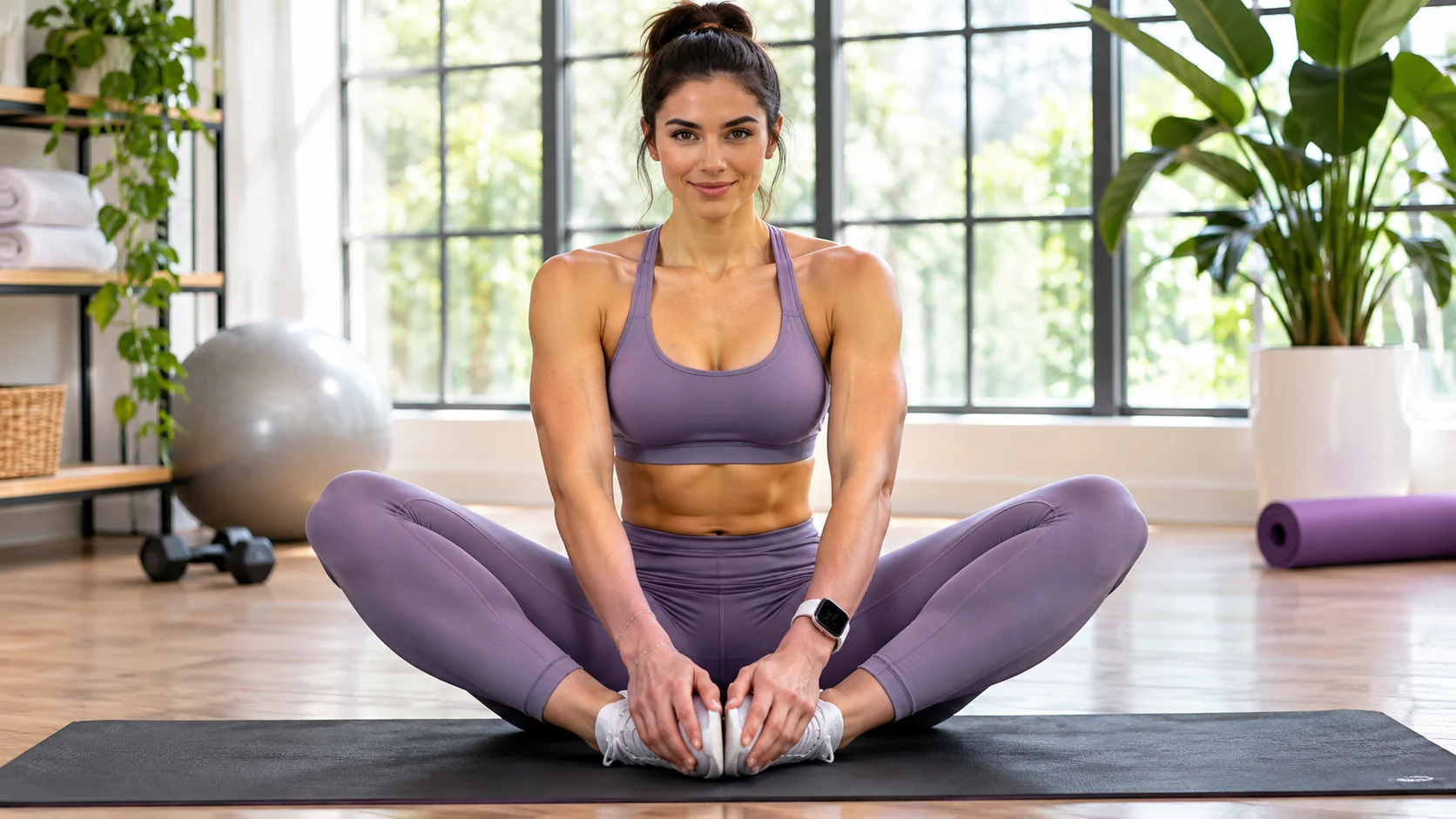
What Is an Inner Thigh Stretch?
An inner thigh stretch is a flexibility exercise that targets the muscles along the inside of your thighs, commonly called the hip adductors. These muscles help bring your legs together and support movements involving your hips and pelvis. Stretching them gently can improve comfort during everyday activities and support a healthy range of motion.
The inner thigh muscles work during walking, running, climbing stairs, and changing direction. When these muscles feel tight, certain hip movements may become uncomfortable or restricted. Gentle stretching can help maintain flexibility, especially when combined with regular physical activity and appropriate strengthening exercises.
Learning how to perform an inner thigh stretch correctly is important for avoiding unnecessary strain. Several beginner-friendly variations require no equipment and can be performed at home. The best approach involves moving slowly, maintaining comfortable positions, and avoiding any stretch that causes sharp pain or unusual discomfort.
Understanding the Inner Thigh Muscles
The inner thigh contains several muscles collectively known as the hip adductors. These include the adductor longus, adductor brevis, adductor magnus, gracilis, and pectineus. Together, they help control movement at the hip joint and contribute to stability during activities such as walking, standing, and changing direction.
Although these muscles are often associated with bringing the legs together, their functions are more complex. Depending on hip position, individual adductors may also contribute to hip flexion, extension, or rotation. This coordinated activity makes them important for everyday movement and many athletic activities.
Understanding the anatomy of the inner thigh helps explain why different stretches create different sensations. Some positions emphasize muscles closer to the groin, while others affect a broader area along the inner leg. Choosing comfortable movements allows you to explore your flexibility without forcing the muscles beyond their natural limits.
Key Benefits of Inner Thigh Stretches
One important benefit of inner thigh stretching is improved or maintained flexibility around the hips. Regular gentle stretching can help muscles tolerate comfortable movement through a greater range of motion. This may make everyday activities such as bending, sitting, and stepping sideways feel easier.
Stretching can also provide temporary relief from ordinary muscular tightness after prolonged sitting or certain physical activities. Gentle movement encourages awareness of how your hips and legs feel. However, stretching is not a guaranteed treatment for injuries, and persistent discomfort may require assessment by a qualified healthcare professional.
Another benefit is the opportunity to improve movement control when stretching is combined with strengthening exercises. Flexible muscles and appropriate strength both contribute to comfortable joint function. A balanced routine can support daily activities, recreational exercise, and general mobility without requiring complicated equipment or demanding workouts.
How to Do a Basic Standing Inner Thigh Stretch
The standing inner thigh stretch is a simple exercise that can be performed without special equipment. It involves shifting your body weight toward one leg while keeping the opposite leg extended. This position gently lengthens the inner thigh muscles and allows you to adjust the intensity according to your comfort.
Start by standing with your feet wider than hip-width apart and your toes pointing comfortably forward. Slowly bend one knee while shifting your hips toward that side, keeping the other leg relatively straight. Stop when you notice a gentle stretching sensation along the inner thigh of your extended leg.
Maintain an upright, controlled posture and avoid bouncing or forcing yourself into a deeper position. Hold the stretch comfortably while breathing normally, then return to the starting position. Repeat on the opposite side, making sure the movement feels smooth and does not cause pain around your hips, knees, or groin.
Butterfly Stretch for Inner Thigh Flexibility
The butterfly stretch is a popular seated exercise that targets the inner thigh and groin muscles. It is commonly included in gentle flexibility routines because it requires minimal space and no equipment. Beginners can adjust the position of their feet and knees to find a comfortable stretching sensation.
Sit on the floor with your knees bent and bring the soles of your feet together. Allow your knees to move outward naturally while keeping your back in a comfortable, upright position. Hold your feet or ankles gently without pulling your legs into an uncomfortable position.
Avoid pressing your knees forcefully toward the floor, as this can place unnecessary stress on your hips or knees. If sitting upright is difficult, place a folded towel or cushion beneath your hips. Focus on relaxed breathing and allow the stretch to remain gentle throughout the movement.
Seated Wide-Leg Inner Thigh Stretch
The seated wide-leg stretch is another useful way to target the hip adductor muscles. This exercise involves sitting with your legs extended apart and maintaining a comfortable posture. It can help you explore hip flexibility while allowing you to control the distance between your legs.
Begin by sitting on a supportive surface with both legs extended in front of you. Slowly move your legs apart until you feel a mild stretch along your inner thighs. Keep your knees pointing comfortably upward and avoid forcing your legs into an excessively wide position.
You may lean forward slightly from your hips if the movement feels comfortable and controlled. However, reaching toward the floor is not necessary for the exercise to be effective. Maintain steady breathing and adjust your position whenever you notice discomfort in your lower back, hips, or knees.
Side Lunge Stretch for the Inner Thigh
The side lunge stretch combines gentle hip movement with a comfortable inner thigh stretch. It resembles the standing adductor stretch but may involve a slightly larger movement of the hips. This exercise can be useful when preparing for activities involving sideways stepping and directional changes.
Stand with your feet apart and slowly shift your weight toward one side. Bend the supporting knee while keeping the opposite leg extended within a comfortable range. Your hips should move backward slightly as you lower, allowing you to maintain balance and avoid unnecessary pressure on the knee.
Keep your supporting foot firmly on the floor and avoid twisting the knee inward. Move only as far as your current flexibility and balance allow. If the exercise feels unstable, hold a sturdy support and use a smaller range of motion until you become more comfortable.
Frog Stretch for Hip and Groin Mobility
The frog stretch is a floor-based movement that can create a noticeable stretching sensation along the inner thighs. It involves positioning the knees apart while supporting the upper body with the arms. Because this position can place considerable stress on the hips and knees, it should be approached carefully.
Begin on your hands and knees on a comfortable exercise mat. Gradually move your knees apart while keeping them bent, stopping well before any discomfort develops. Maintain a supported position through your hands or forearms, depending on what feels stable and comfortable.
Avoid pushing your hips backward aggressively or trying to achieve an extremely wide knee position. A mild stretch is sufficient, especially when you are unfamiliar with the exercise. If you experience knee pressure, groin pain, or difficulty controlling the position, choose a gentler alternative such as the butterfly stretch.
Supine Inner Thigh Stretch While Lying Down
A lying inner thigh stretch offers a comfortable alternative for people who prefer exercises performed on the floor. This variation reduces the need to maintain standing balance and allows controlled movement of the legs. It may be particularly convenient during a relaxed mobility routine at home.
Lie on your back with your knees bent and feet resting on the floor. Slowly allow your knees to move outward within a comfortable range while keeping the soles of your feet together. Support your legs with cushions if necessary to avoid excessive pressure around the hips.
Keep your lower back relaxed and avoid forcing your knees toward the ground. The stretch should create gentle tension rather than discomfort. Return your knees toward the center slowly, using your hands for assistance if needed, and adjust the position according to your mobility and comfort.
Dynamic Inner Thigh Stretches Before Exercise
Dynamic stretching involves moving muscles and joints through controlled ranges rather than holding one position for an extended period. It is commonly used during warm-ups before running, sports, and other physical activities. Dynamic inner thigh movements can help prepare the hips for sideways stepping, walking, and changing direction.
Side steps are a simple example of a dynamic movement that involves the inner thigh muscles. Stand comfortably and take slow steps from one side to the other while maintaining balance. You can gradually increase the movement range as your muscles become more comfortable and your coordination improves.
Controlled lateral weight shifts are another practical warm-up option. Move your weight gently between your legs without lowering into an uncomfortable position. Dynamic stretching should feel smooth and manageable, and it works best after a few minutes of general movement such as walking or marching in place.
Static vs. Dynamic Inner Thigh Stretching
Static stretching involves holding a comfortable position for a short period while allowing the targeted muscles to lengthen gently. Butterfly stretches and seated wide-leg stretches are common examples. These movements are often included after exercise or during dedicated flexibility sessions because they encourage slower, more relaxed movement.
Dynamic stretching uses repeated controlled movements to prepare muscles and joints for physical activity. Side steps, gentle lateral lunges, and hip movements are examples of dynamic exercises. They can be especially useful before activities requiring coordination, direction changes, or a wider range of hip movement.
Both stretching methods have practical benefits when used appropriately. Dynamic movements generally fit well into activity warm-ups, while static stretches can support flexibility training at other times. The best choice depends on your goals, current comfort, and the physical activities you plan to perform.
How Long Should You Hold an Inner Thigh Stretch?
The appropriate holding time depends on the stretch, your comfort, and your experience with flexibility exercises. Many adults use approximately fifteen to thirty seconds as a starting point for gentle static stretches. However, there is no need to force a position simply to reach a particular number of seconds.
Beginners may prefer shorter holds while learning how different positions feel. As movement becomes more comfortable, the holding time can be adjusted gradually. Maintaining relaxed breathing and gentle muscular tension is more important than remaining in a difficult position for an extended period.
For dynamic stretching, focus on several smooth, controlled repetitions rather than holding the movement. Avoid bouncing aggressively or using momentum to increase your range. A comfortable routine that you can perform consistently is generally more useful than stretching intensely during occasional sessions.
How Often Should You Stretch Your Inner Thighs?
Inner thigh stretches can be included in a regular flexibility routine several days per week. The appropriate frequency depends on your mobility needs, physical activities, and response to stretching. Gentle movements may fit comfortably into daily routines, provided they do not cause pain or irritation.
People who spend considerable time sitting may appreciate occasional movement breaks throughout the day. Standing, walking, and performing light hip movements can help reduce the feeling of stiffness associated with remaining in one position. Stretching should complement regular physical activity rather than replace it.
Consistency matters more than performing complicated flexibility sessions. Choose a few comfortable stretches and adjust their frequency according to your schedule. If your inner thighs remain persistently painful or unusually tight despite appropriate movement, a healthcare professional can help identify possible contributing factors.
Common Mistakes During Inner Thigh Stretches
One common mistake is stretching too aggressively in an attempt to increase flexibility quickly. Forcing the legs apart can place unnecessary stress on muscles, tendons, and surrounding joints. A gentle pulling sensation is generally sufficient, while sharp pain or pinching suggests that you should stop or modify the movement.
Another mistake involves bouncing repeatedly at the deepest point of a stretch. Sudden movements may reduce your ability to control the position and increase discomfort. Slow, steady movements allow you to monitor how your muscles respond and make adjustments before reaching an uncomfortable range.
Poor positioning can also affect the experience of stretching. Twisting the knees, rounding the back excessively, or losing balance may shift stress toward other areas. Focus on comfortable alignment, controlled breathing, and stable support rather than trying to copy an extreme stretching position.
Inner Thigh Stretching for Runners
Runners use their hip adductor muscles to help control leg movement and stabilize the pelvis during repeated steps. Although running mainly involves forward motion, the inner thigh muscles contribute to coordinated hip function. Gentle stretching can support comfortable mobility as part of a broader running routine.
Before running, begin with walking or easy movement and include controlled dynamic exercises if appropriate. Light lateral steps and comfortable hip movements can help prepare the body for activity. Avoid forcing deep static stretches immediately before running, particularly when your muscles feel cold or unprepared.
After running, gentle static stretching may feel comfortable for some people. However, stretching does not reliably prevent delayed-onset muscle soreness, and it should not be treated as a substitute for recovery. Appropriate training progression, rest, and overall conditioning remain important parts of a sustainable running routine.
Inner Thigh Stretches for People Who Sit Long Hours
Prolonged sitting may contribute to feelings of stiffness around the hips and surrounding muscles. The inner thigh muscles can feel uncomfortable when changing positions after remaining seated for extended periods. Gentle movement breaks and appropriate stretching may help improve comfort during everyday activities.
A standing inner thigh stretch is convenient because it requires little equipment and can be performed in a suitable open space. Side steps and controlled weight shifts are additional options for introducing movement. These exercises may feel more comfortable after walking briefly rather than moving directly into a deep stretching position.
Adjusting your daily routine can also support comfortable hip movement. Change sitting positions occasionally, stand when practical, and include regular walking breaks. If discomfort continues despite these changes, consider professional assessment to determine whether another issue is contributing to your symptoms.
Can Inner Thigh Stretches Help With Groin Tightness?
Inner thigh stretching may help with ordinary muscular tightness around the groin when the discomfort is related to limited flexibility. Gentle adductor stretches can improve tolerance for certain hip movements. However, groin discomfort has several possible causes, and stretching is not appropriate for every condition.
A recent groin strain, for example, may become more painful when the affected muscles are stretched aggressively. In such situations, appropriate recovery and individualized rehabilitation are more important than trying to increase flexibility immediately. Persistent or worsening symptoms should be evaluated by a qualified healthcare professional.
Pay attention to how your body responds during and after each stretch. Mild muscular tension is different from sharp pain, sudden pulling, or discomfort that interferes with walking. If these symptoms occur, stop the exercise and avoid forcing movement until the cause is better understood.
Inner Thigh Stretching and Hip Mobility
Hip mobility involves the ability to move your hip joints comfortably through different directions. The inner thigh muscles contribute to this movement alongside the hip flexors, glutes, and other surrounding muscles. Stretching the adductors can support certain ranges of hip motion, particularly movements that separate the legs.
However, flexibility is only one component of healthy hip function. Muscular strength, coordination, joint structure, and individual anatomy also influence how comfortably your hips move. Someone with naturally limited hip rotation may not benefit from attempting to force a position that does not suit their joint structure.
A balanced mobility routine may include gentle stretching, controlled strengthening, and ordinary physical activity. Exercises that improve coordination can complement flexibility work and help you use your available range comfortably. Prioritize movement quality rather than trying to achieve an exaggerated range of motion.
Best Inner Thigh Stretch Routine for Beginners
A beginner-friendly inner thigh routine can include three simple exercises performed at a comfortable pace. Start with a standing adductor stretch, continue with a seated butterfly stretch, and finish with gentle lateral weight shifts. These movements introduce different hip positions without requiring advanced flexibility or specialized equipment.
Begin with a few minutes of walking or other comfortable movement before stretching. Hold each static position briefly while breathing normally, and perform the dynamic movement slowly. You can repeat the exercises if they remain comfortable, but there is no need to continue once your muscles begin feeling tired or irritated.
Keep the routine manageable and adjust the exercises according to your available mobility. Some people may prefer supported standing movements, while others find seated stretches more convenient. The most effective routine is one that feels appropriate for your body and can be performed consistently without pain.
When Should You Avoid Inner Thigh Stretches?
Inner thigh stretching should be avoided or modified when it causes sharp pain, unusual joint pressure, or worsening symptoms. Recent muscle injuries, unexplained groin pain, and certain hip conditions may require individualized guidance. Stretching aggressively under these circumstances could increase irritation rather than improve comfort.
People recovering from hip surgery or significant groin injuries should follow instructions from their healthcare professionals. Specific movements may be restricted during certain stages of recovery. A physical therapist can recommend suitable exercises based on the injury, healing process, and current ability to move comfortably.
Seek medical attention if groin discomfort is severe, develops suddenly, or is associated with significant swelling, fever, or difficulty walking. These symptoms may indicate a problem that requires assessment rather than a stretching routine. Recognizing when to stop helps make flexibility exercises safer and more appropriate.
Conclusion
An inner thigh stretch is a simple way to support flexibility and comfortable movement around the hips. The hip adductor muscles contribute to walking, standing, and controlling leg movement during various activities. Gentle stretching can help maintain a comfortable range of motion when included in a balanced activity routine.
Exercises such as the butterfly stretch, standing adductor stretch, and seated wide-leg stretch offer accessible options for beginners. Dynamic movements can also help prepare the hips before physical activity. Proper technique, relaxed breathing, and manageable stretching intensity are more important than achieving extreme positions.
Regular flexibility work is most useful when combined with strengthening exercises and everyday movement. Avoid forcing stretches or ignoring persistent pain, especially after an injury. With a gradual and comfortable approach, inner thigh stretching can become a practical part of maintaining healthy hip mobility.
Frequently Asked Questions
What is the best stretch for tight inner thighs?
The butterfly stretch and standing adductor stretch are popular options for gently stretching the inner thighs. Choose the movement that feels comfortable and avoid forcing your hips or knees into painful positions.
How long should I hold an inner thigh stretch?
Many adults begin by holding a gentle static inner thigh stretch for approximately fifteen to thirty seconds. Adjust the duration based on comfort, and stop if the movement causes sharp pain.
Can I stretch my inner thighs every day?
Gentle inner thigh stretching can be included in a daily routine when it feels comfortable and does not aggravate symptoms. Balance stretching with regular movement, strengthening, and appropriate recovery.
Do inner thigh stretches help with hip mobility?
Yes, inner thigh stretches can support certain hip movements by improving or maintaining adductor flexibility. However, overall hip mobility also depends on joint structure, muscular strength, and movement coordination.
Should inner thigh stretching hurt?
No, stretching should create gentle muscular tension rather than sharp pain or significant discomfort. Stop or modify the movement if you experience pinching, sudden pulling, or worsening groin symptoms.