
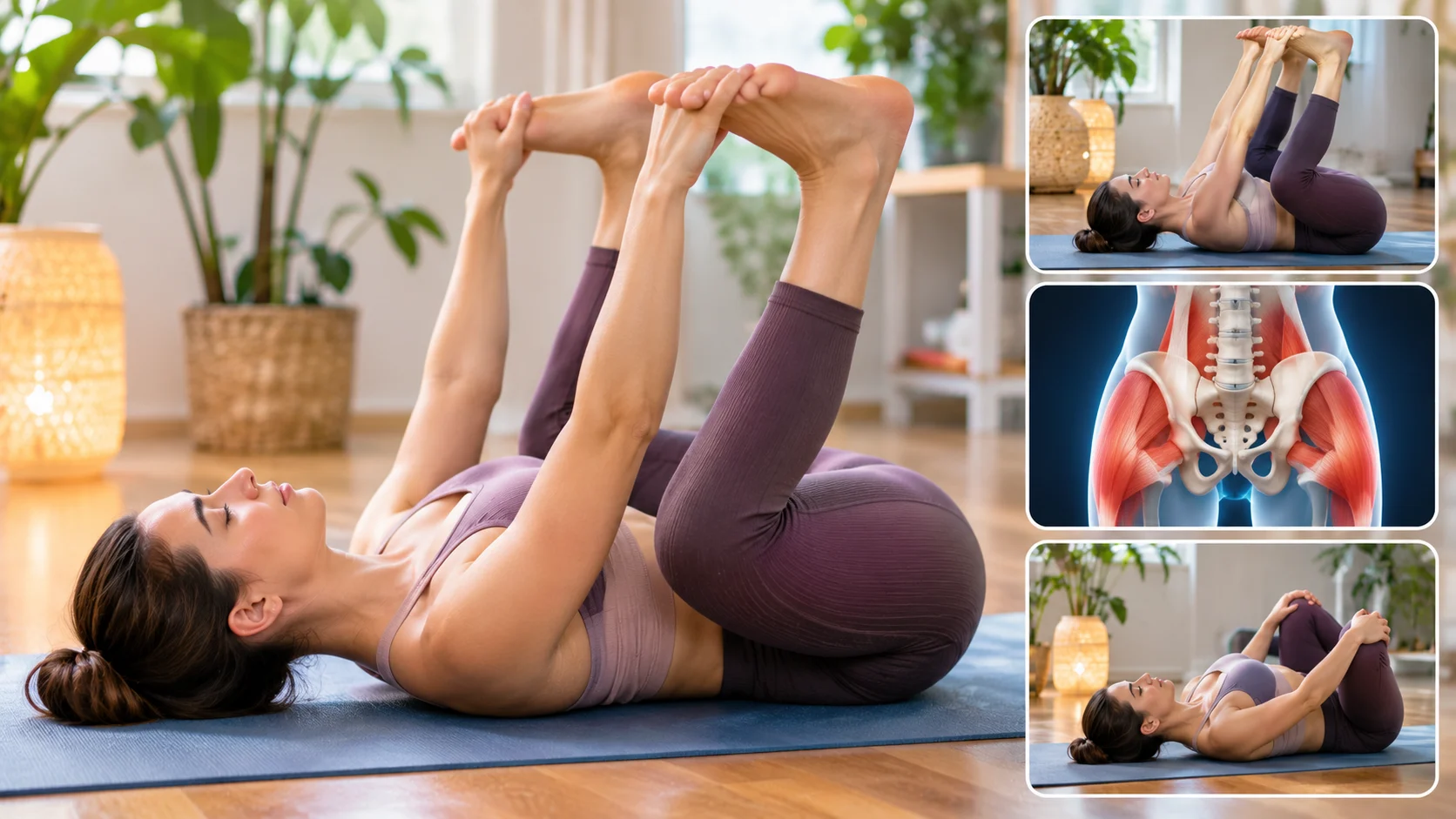
Happy Baby Yoga is a gentle yoga pose that encourages comfortable movement through the hips, lower back, and inner thighs. It is commonly included in stretching routines, yoga classes, and relaxation sessions because of its supported position on the floor. Whether you are new to yoga or have practiced for years, this pose offers an opportunity to explore mobility without complicated movements.
Also known as Happy Baby Pose or Ananda Balasana, this yoga posture involves lying on your back while bringing your knees toward your upper body. The position resembles a baby holding its feet, which explains its familiar name. This guide explores Happy Baby Yoga benefits, proper technique, common mistakes, helpful modifications, and practical tips for performing the pose safely.
What Is Happy Baby Yoga?
Happy Baby Yoga is a reclining yoga posture that gently stretches the hips, groin, and surrounding muscles. In traditional yoga terminology, the pose is called Ananda Balasana, often translated as Blissful Baby Pose. It involves lying on your back with bent knees and holding your feet or legs. The position encourages comfortable hip movement while keeping the upper body supported.
The pose is frequently practiced during slower yoga sequences, cool-down routines, and relaxation sessions. Unlike standing balance positions, Happy Baby allows you to remain supported by the floor throughout the movement. This makes it approachable for many beginners. However, the amount of hip movement required can still feel challenging for individuals with limited flexibility.
Happy Baby Yoga does not require advanced strength or special equipment. A yoga mat or another comfortable surface is usually sufficient for practice. The position can also be modified using a strap or by holding the thighs instead of the feet. These adjustments help people explore the movement without forcing their joints into uncomfortable positions.
Understanding the Muscles Used in Happy Baby Pose
Happy Baby Pose involves several muscles surrounding the hips, pelvis, and lower back. The inner thigh muscles, also called hip adductors, may experience a gentle stretching sensation as the knees move apart. The gluteal muscles and other tissues surrounding the hip joints also contribute to the position. Individual sensations depend on anatomy and flexibility.
The hip flexors help control movements that bring the thighs toward the torso. During Happy Baby Yoga, the hips remain deeply flexed while the knees are bent. This positioning may create stretching sensations in some surrounding muscles, although it is not primarily a hip flexor stretch. The exact muscles experiencing tension vary between individuals.
The abdominal and back muscles also contribute to maintaining a comfortable position. Because the body rests on the floor, the pose generally requires less postural effort than unsupported standing exercises. However, gentle muscular control can help prevent excessive pulling or unwanted spinal movement. The goal is to create a supported stretch rather than an intense muscular challenge.
Benefits of Happy Baby Yoga for Flexibility
One potential benefit of Happy Baby Yoga is improved flexibility around the hips and inner thighs. The position encourages hip flexion and a comfortable outward movement of the knees. Regular practice may help maintain or gradually improve available range of motion. However, flexibility changes depend on individual anatomy, stretching frequency, and the overall movement routine.
The pose can also introduce gentle movement through areas that may feel stiff after prolonged sitting. Some people notice tightness around their hips after working at a desk or remaining inactive for extended periods. Happy Baby offers an opportunity to explore a different position. It should feel manageable rather than creating intense pressure in the hip joints.
Another advantage is that the pose can be adapted to different mobility levels. Holding behind the thighs provides one option when reaching the feet is uncomfortable. Yoga straps can also make the position more accessible. These modifications allow people to focus on gentle movement without forcing their bodies into a particular shape.
How to Do Happy Baby Yoga Correctly
Begin by lying on your back on a comfortable yoga mat. Bend your knees and gradually bring them toward your chest. Separate your knees to a comfortable distance while keeping your upper body relaxed against the floor. Allow your neck and shoulders to remain supported throughout the movement.
Reach toward your feet and hold their outer edges if you can do so comfortably. Alternatively, hold behind your thighs or use a yoga strap around each foot. Guide your knees gently toward the sides of your torso while keeping your ankles in a relaxed, controlled position. Avoid pulling forcefully or creating sharp sensations around the hips.
Breathe naturally while maintaining the position for approximately 15–30 seconds, if comfortable. Keep your head supported and allow your lower back to rest in a natural, comfortable position. There is no need to force your tailbone against the floor. To release the pose, let go of your legs and slowly return your feet to the mat.
Proper Happy Baby Pose Alignment Tips
Comfortable alignment is more important than achieving a particular visual appearance in Happy Baby Pose. Your shoulders and head should remain supported while the hips move within their available range. Allow the knees to open only as far as feels natural. Different hip structures mean the position will not look identical for everyone.
Pay attention to the relationship between your knees and ankles during the stretch. The feet often point upward while the knees remain bent, but exact angles can vary. Avoid twisting your knees or pulling your feet into uncomfortable positions. Adjusting your hand placement may help you maintain a more relaxed posture.
Your lower back should also remain comfortable throughout the movement. Some people naturally experience gentle rounding, while others maintain a small space beneath the lumbar spine. Neither position needs to be forced into an ideal shape. If your back becomes uncomfortable, reduce the depth of the stretch or support your legs differently.
Happy Baby Yoga for Hip Mobility
Hip mobility describes the ability to move the hip joints through comfortable ranges of motion. Happy Baby Yoga explores hip flexion, abduction, and external rotation in a supported position. These movements occur during various everyday activities, although their required ranges differ. Practicing controlled mobility may help you become more comfortable with certain hip positions.
The pose may be particularly useful as one part of a broader hip mobility routine. Other movements, such as gentle hip circles and comfortable seated stretches, can explore different directions. Strengthening exercises also help support control through available movement ranges. A balanced approach is generally more useful than relying on one stretching position.
Some people experience pinching in the front of the hips during deep flexion. This sensation should not be ignored or treated as something to push through. Moving the knees slightly closer together or holding the thighs may reduce discomfort. Persistent hip pain or restricted movement deserves professional assessment before continuing challenging stretches.
Can Happy Baby Pose Help Lower Back Discomfort?
Happy Baby Pose may feel comfortable for some individuals experiencing mild lower back stiffness. Bringing the knees toward the body changes the position of the pelvis and lower spine. This can create a gentle stretching sensation through parts of the back. However, the response varies, and the pose is not suitable for every type of back pain.
A supported floor position can make it easier to relax surrounding muscles without maintaining an upright posture. Some people prefer gentle rocking while holding the pose, although remaining still is equally acceptable. Movement should remain small and comfortable. Strong pulling or aggressive rocking may aggravate sensitive tissues rather than provide relief.
Lower back pain can involve muscles, joints, nerves, and other structures. Therefore, Happy Baby Yoga should not be considered a specific treatment for an undiagnosed condition. Stop if the position causes sharp pain, numbness, or symptoms spreading into the legs. Persistent or worsening discomfort should be discussed with a healthcare professional.
Happy Baby Yoga for Relaxation and Stress Relief
Happy Baby Yoga is often practiced near the end of a yoga session because it allows the body to rest on the floor. The supported position can provide an opportunity to slow down and focus on breathing. Some people find this calming after a busy day. However, relaxation responses differ, and no single pose works equally well for everyone.
Slow, comfortable breathing may help create a greater sense of relaxation during the stretch. You can inhale gently and exhale without holding your breath or forcing a particular rhythm. Allow your shoulders and facial muscles to remain relaxed. The aim is to maintain a comfortable experience rather than achieve a specific breathing pattern.
Yoga can also provide a useful break from prolonged mental or physical activity. Taking a few minutes for gentle movement may help people feel more settled. However, Happy Baby Pose alone is not a treatment for anxiety or other mental health conditions. It is best viewed as one optional part of a broader approach to well-being.
Happy Baby Yoga for Beginners
Beginners may find it difficult to reach their feet while maintaining a comfortable position. This is normal because hip mobility, arm length, and body proportions vary. Instead of forcing the position, begin by holding behind your thighs. This allows you to explore the basic movement while keeping your shoulders and neck relaxed.
You can also keep your knees closer together when a wide position feels uncomfortable. There is no requirement to bring your thighs against your torso or lower your knees toward the floor. A smaller movement range still provides an opportunity to practice controlled hip mobility. Focus on how the position feels rather than how closely it resembles a demonstration.
Starting with brief holds may make the pose easier to manage. For example, you might remain in a comfortable position for 10–20 seconds before slowly releasing. You can gradually adjust the duration as your confidence and comfort improve. Beginners should prioritize steady breathing, supported positioning, and freedom from pain throughout the practice.
Happy Baby Pose With a Yoga Strap
A yoga strap can make Happy Baby Pose more accessible when reaching the feet feels difficult. Begin on your back with your knees bent toward your body. Place a strap around each foot, using separate loops or a suitably arranged strap. Hold the ends securely without pulling strongly or restricting circulation.
The straps allow your arms to remain in a more comfortable position while your legs move gently. Keep your shoulders relaxed and adjust the strap length as needed. You should still be able to control the movement without relying on excessive tension. If the straps create pressure around your feet, loosen them or choose another modification.
Using a prop does not make the stretch less useful. Props can improve accessibility and help you maintain a comfortable position. Over time, you may prefer to continue using them or explore another variation. The best option is the one that supports gentle movement without unnecessary effort or discomfort.
Happy Baby Yoga Variations to Try
A simple variation involves holding one leg at a time instead of lifting both feet. Begin on your back with one knee bent toward your chest and the other foot resting on the floor. Hold behind the raised thigh or around the foot if comfortable. This approach may reduce the demands on the hips and lower back.
Another variation involves gentle side-to-side rocking while holding the standard position. The movement should be small enough to maintain control without creating pressure against the spine. Some people enjoy this sensation, while others prefer remaining still. Neither approach is required, and you can stop rocking whenever it becomes uncomfortable.
A supported variation uses the hands behind the knees instead of gripping the feet. This reduces the need for deep hip flexion and may feel easier for people with limited mobility. You can also adjust how far apart the knees move. These options demonstrate that Happy Baby Yoga can be adapted without forcing one exact posture.
Common Happy Baby Pose Mistakes to Avoid
One common mistake is pulling the feet downward too forcefully. Excessive pressure can create discomfort around the hips, knees, or lower back. The pose should produce gentle stretching rather than intense strain. Allowing the legs to move within a comfortable range helps maintain control and reduces unnecessary stress on sensitive joints.
Another mistake is lifting the head or shoulders in an attempt to reach the feet. This can create additional tension around the neck and upper back. Instead, support your head on the mat and modify your grip if necessary. Holding the thighs or using straps can make the position easier without compromising comfort.
Some people also hold their breath or remain in the pose after discomfort develops. Steady breathing helps maintain a relaxed approach to stretching. If you notice pinching, sharp pain, or unusual sensations, release the position slowly. Stretching should be adjustable rather than something you endure to achieve a particular result.
How Long Should You Hold Happy Baby Yoga?
The appropriate duration depends on your comfort, experience, and reason for practicing. Beginners may start with a brief hold of approximately 10–20 seconds. Others may find 15–30 seconds comfortable during a general flexibility routine. There is no requirement to remain in the position for an extended period.
Some yoga sessions include longer supported holds for relaxation. However, a longer duration is not automatically more beneficial. If your hips, knees, or back begin to feel uncomfortable, release the pose rather than continuing. Gentle movement performed consistently is generally more practical than forcing prolonged stretching sessions.
You may repeat the stretch once or twice if it remains comfortable. Taking a short break between repetitions allows you to assess how your body feels. Flexibility improvements develop gradually and depend on several factors beyond a single pose. The most useful routine is one that fits your abilities and can be practiced without unnecessary discomfort.
Happy Baby Yoga Before and After Exercise
Happy Baby Yoga can be included in a movement routine, but its timing should reflect your activity goals. Before exercise, gentle dynamic movements are often useful for preparing the body for activity. Short, controlled versions of the pose may feel comfortable for some people. However, a full warm-up should include movements relevant to the planned workout.
After exercise, Happy Baby can serve as an optional stretching or relaxation position. Its supported nature may feel pleasant following activities involving the hips and lower body. You can hold the pose briefly while breathing comfortably. Nevertheless, stretching after exercise is not guaranteed to prevent soreness or improve recovery speed.
Yoga practitioners may also use Happy Baby near the end of a session before resting poses. It can provide a transition from more active movements to slower breathing and relaxation. Choose the timing that feels appropriate for your routine. The pose should complement general movement, strengthening, and recovery rather than replace them.
Can Happy Baby Yoga Support Pelvic Floor Relaxation?
Happy Baby Yoga is sometimes included in gentle mobility programs that focus on relaxation around the pelvis. The position allows the hips to move outward while the body remains supported. Some individuals may find that comfortable breathing helps reduce a sensation of tension in the surrounding muscles. However, the pose does not directly measure or guarantee pelvic floor relaxation.
The pelvic floor consists of muscles that support pelvic organs and contribute to urinary, bowel, and other bodily functions. These muscles work with the diaphragm, abdominal muscles, and surrounding structures. Their behavior cannot be determined simply by how flexible the hips feel. Pelvic floor symptoms may require more specific assessment and individualized care.
People with pelvic pain, persistent pressure, or discomfort should avoid forcing deep hip stretches. A pelvic health physical therapist can help determine whether a movement is appropriate for their symptoms. Some individuals benefit from gentle mobility, while others need different approaches. Happy Baby Yoga should be adapted to personal comfort rather than used as a universal treatment.
When Should You Avoid Happy Baby Yoga?
Happy Baby Yoga may need to be avoided or modified when hip, knee, or lower back injuries make the position painful. Recent surgery or medical restrictions may also affect whether deep hip flexion is appropriate. General yoga instructions cannot account for every individual condition. Seek personalized guidance when you are unsure about movement restrictions.
People with significant hip impingement symptoms or joint instability may find certain positions uncomfortable. Pulling the knees toward the torso can sometimes increase pinching or pressure around the hip joint. Do not force the stretch when this occurs. A smaller range or different mobility exercise may be more appropriate depending on the underlying condition.
During pregnancy, modifications may be necessary depending on comfort, pregnancy stage, and individual medical guidance. People with persistent pelvic pain or significant balance and movement limitations may also require adjustments. Stop immediately if the pose produces sharp pain, dizziness, numbness, or unusual symptoms. A qualified healthcare professional can provide advice tailored to your situation.
Best Practices for a Safe Happy Baby Yoga Routine
Begin with a comfortable surface that supports your back and allows easy movement. A yoga mat provides cushioning, but another stable surface may also work. Choose a quiet space where you can move without obstacles. Comfortable clothing can help you explore the position without unnecessary restriction.
Focus on smooth transitions into and out of the pose. Bring your legs toward your body gradually and select a hand position that does not strain your shoulders. Allow your breathing to remain natural throughout the stretch. If your body feels tense, reduce the range rather than forcing yourself to relax.
Happy Baby Yoga works best as one part of a balanced mobility routine. Gentle hip movements, comfortable walking, and appropriate strengthening exercises can support overall physical function. You do not need to practice the pose perfectly or hold it for long periods. Consistency, comfort, and respect for your body’s movement limits are more important than appearance.
Conclusion
Happy Baby Yoga is a gentle reclining posture that encourages movement through the hips, inner thighs, and surrounding muscles. Its supported position makes it accessible to many people, especially when appropriate modifications are used. The pose may contribute to flexibility, relaxation, and comfortable movement. However, individual experiences vary according to anatomy, mobility, and physical condition.
Proper technique involves lying comfortably on your back, bending your knees, and holding your feet or thighs without excessive pulling. Keeping the shoulders supported and breathing naturally helps maintain a relaxed position. Beginners can use shorter holds, smaller movements, or yoga straps. The goal is comfortable stretching rather than achieving an exact posture.
Including Happy Baby Yoga in a balanced movement routine can provide a simple opportunity to explore hip mobility. Combine it with other suitable exercises and adjust the position whenever discomfort occurs. Persistent pain or medical concerns should be evaluated by a qualified professional. A safe and enjoyable practice focuses on gradual movement, comfort, and personal needs.
Frequently Asked Questions (FAQs)
What Is Happy Baby Yoga Good For?
Happy Baby Yoga encourages gentle stretching around the hips, groin, and inner thighs. It may improve flexibility and provide a comfortable relaxation position, although benefits vary according to individual mobility and physical condition.
How Do You Perform Happy Baby Pose Correctly?
Lie on your back, bend your knees toward your torso, and gently hold your feet or thighs. Keep your head supported, breathe naturally, and avoid pulling your legs beyond a comfortable range.
How Long Should You Hold Happy Baby Yoga?
Beginners may start with 10–20 seconds, while others may prefer comfortable holds of approximately 15–30 seconds. Adjust the duration according to your flexibility and stop if discomfort develops.
Can Happy Baby Yoga Help With Lower Back Pain?
Some people find that Happy Baby provides temporary comfort for mild lower back stiffness. However, it is not suitable for every cause of back pain, and persistent symptoms require professional evaluation.
Is Happy Baby Yoga Suitable for Beginners?
Yes, many beginners can practice Happy Baby Yoga using comfortable modifications. Holding behind the thighs, using straps, or keeping the knees closer together can make the pose more accessible without forcing flexibility.