
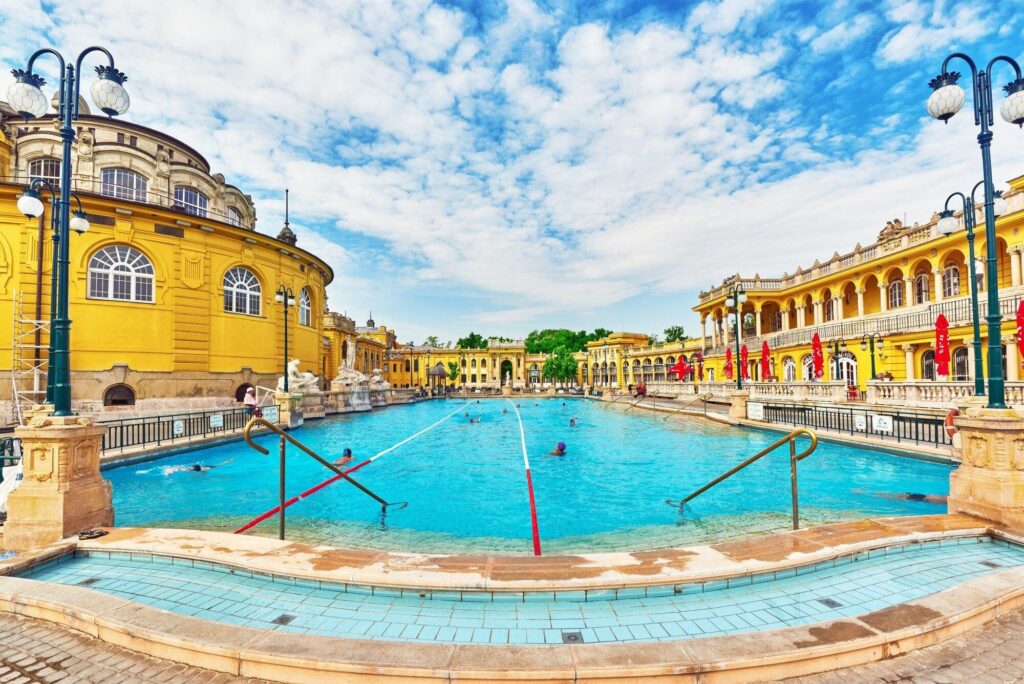
Budapest truly deserves its nickname as the “City of Spas.” With over 100 thermal springs supplying millions of liters of mineral-rich water every single day, hitting up these historic spots will probably be the highlight of your trip. Every bathhouse has its own unique vibe and architectural style, so whether you’re looking for a lively social scene or just a quiet sanctuary to clear your head, you’ll easily find a spot that matches your mood.
The History Behind Hungary’s Bathing Tradition
Thermal springs have long been a key part of social life, from Roman times to the modern Sunday morning dip. You can trace the roots of this culture back to the Romans, who were the first to recognize the therapeutic value of the springs in the region then known as Pannonia. They established elaborate bath complexes, the ruins of which you can still explore today in the northern parts of Budapest. However, it was during the 150-year Ottoman occupation in the 16th and 17th centuries that the bathing culture truly flourished and took on a new architectural dimension.
The blending of these different historical influences created a modern spa culture that is unique to this part of Europe. The Turks introduced the concept of the hamam, characterized by octagonal pools and domed ceilings that allowed shafts of natural light to dance on the steam. After the Ottomans left, the 19th and early 20th centuries saw a massive revival during the Austro-Hungarian Empire. This era brought grandiose, palace-like structures in Neo-Baroque and Art Nouveau styles, turning simple bathing into a high-society social event. Today, you can experience all these layers of history simultaneously, moving from an ancient Turkish pool to a majestic imperial hall within a single afternoon.
Budapest’s Finest Historic Bathhouses You Can’t Miss
If you want the ultimate classic experience, you’ve got to check out Széchenyi Thermal Bath. It’s one of the largest medicinal bath complexes in Europe, and you seriously can’t miss its iconic, bright yellow Neo-Baroque buildings. The real highlight is hanging out in the outdoor pools, where you can watch locals casually playing chess on floating boards—even in the dead of winter, completely wrapped in clouds of rising steam.
If you’re more into stunning design, Gellért Thermal Bath is an absolute jaw-dropper. Located inside the famous Hotel Gellért, this place is an Art Nouveau masterpiece. You’ll find yourself swimming around intricate mosaics, gorgeous stained-glass windows, and famous turquoise Zsolnay ceramics. Honestly, it makes total sense why architects and travelers always rank its main indoor pool as one of the most beautiful swimming spots on Earth.
For a vibe that feels like stepping back in time, Rudas Thermal Bath delivers a seriously authentic experience. Its Turkish section dates all the way back to 1566, featuring a central octagonal pool tucked under a massive stone dome that’s supported by eight ancient pillars. Its historic atmosphere is complemented by modern facilities if you prefer a little modern luxury, they also have a rooftop pool that offers some of the best panoramic views of the Danube and the city skyline you can find.
Beyond Budapest: World-famous Spas and Hidden Gems
While the capital offers incredible variety, the true heart of Hungarian spa culture often beats in the countryside. Beyond the city limits, you will discover specialized wellness towns that have built their entire infrastructure around specific healing springs. These destinations provide a much more serene, nature-focused escape compared to the urban bathhouses, often featuring expansive parklands and unique natural formations that you won’t find anywhere else in Europe.
One of the most remarkable locations is Hévíz, home to the world’s largest biologically active natural thermal lake. Here, you can float among water lilies in water that is naturally replenished every few days. Another essential stop is Hajdúszoboszló, often called the “Mecca of rheumatics,” which hosts a massive complex including a tropical-themed beach and an indoor “Aqua-Palace.”
If you want to visit famous countryside spa towns like Hévíz or Hajdúszoboszló, choosing to rent a car in Hungary will provide you with the fastest and most comfortable journey. Having your own vehicle allows you to bypass the constraints of public transport schedules and discover smaller, hidden gems like the salt hill of Egerszalók or the cave baths of Miskolctapolca at your own pace.
The Healing Properties of Hungarian Spas
The waters you soak in are not just warm; they are naturally rich in dissolved minerals. Based on results from balneological research, the water can contain a unique “cocktail” of elements that assist with various health issues. This is why many Hungarians visit these baths not just for relaxation, but as part of a medically supervised rehabilitation process. The high mineral content works through your skin and via inhalation, offering benefits for both your physical and mental state. Depending on which spring you’re soaking in, the specific mineral mix in the water targets different areas of your body to give your well-being a serious boost.
For starters, water packed with calcium and magnesium is an absolute lifesaver for your bones and skeletal system. It is super effective at soothing chronic joint inflammation and spinal issues, which means you’ll walk out feeling way more mobile and with a lot less aches and pains.
Then there’s sulfur, which you’ll probably notice right away because of its distinct, love-it-or-hate-it smell. Even though it’s a bit stinky, it does wonders for keeping your joint cartilage healthy and strong. On top of that, it’s amazing for your skin, helping to clear up and soothe annoying conditions like psoriasis or eczema.
Finally, if you end up in a pool fed by carbonated springs, you’ll be soaking in carbon dioxide. It sounds pretty scientific, but it basically works behind the scenes to dilate your blood vessels. This gives your blood circulation a great kick and does wonders for your overall cardiovascular health while you just sit back and chill.
Beyond the physical benefits, the weightlessness of floating in warm water provides significant stress reduction. Studies suggest that soaking in warm water can help reduce cortisol levels and allow your nervous system to reset, making it a powerful tool for combating modern burnout and anxiety.
Smart tips for your first Hungarian spa experience
Entering a Hungarian bath for the first time might feel a bit overwhelming, as each facility has its own set of rules and traditional etiquette. To ensure your visit is seamless and enjoyable, it helps to be prepared with the right gear and an understanding of the local customs. Most baths operate with a “proxy” system—a waterproof wristband that acts as your locker key and sometimes as a payment method for onsite services.
Before you head out, use this checklist to prepare for your spa day:
- Bring flip-flops: Wearing sandals or flip-flops is mandatory in most areas for hygiene and safety reasons, as floors can be slippery.
- Pack a swimming cap: If you plan on using the dedicated swimming lanes or lap pools, a cap is strictly required. It is usually not necessary for the thermal soaking pools.
- Always shower first: It is a basic rule of etiquette to shower thoroughly before entering any of the communal pools.
- Maintain the peace: While some outdoor pools are social hubs, the indoor thermal rooms are generally spaces for quiet relaxation. Keep your voice low to respect those seeking tranquility.
- Bring your own towel: While many places offer rentals, bringing your own large towel or bathrobe is more convenient and cost-effective.
By following these simple guidelines, you can focus entirely on the warmth of the water and the rich history surrounding you, making your Hungarian wellness experience truly unforgettable.