
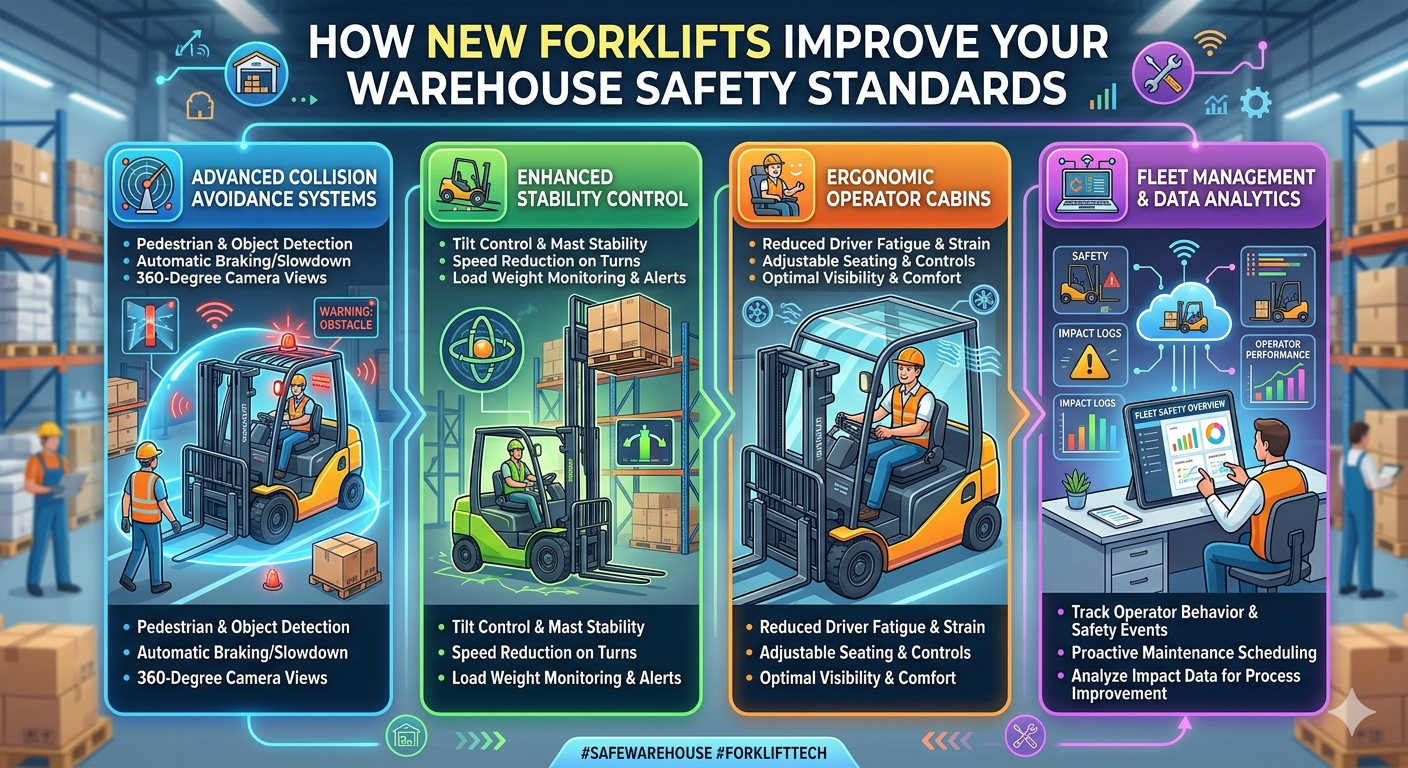
The older machines generally don’t have the highly effective safety technology that is common practice today. Maybe your crew can be adaptable, but those little mechanical inconsistencies can be the cause of danger during a bustling shift.
Replacing your equipment isn’t just about speed and efficiency; it is about providing the safest environment for your operators. This blog examines how bringing new machinery into your workflow can dramatically increase the safety threshold for your facility.
Enhanced Visibility and Blind Spot Reduction
At a crowded warehouse, what you can’t see can certainly hurt you or your colleagues. Older forklift layouts featured heavy pillars and lumbering masts, which covered the driver’s vision during key manoeuvres. Such designs made operators lean out, or assume their position, which is a recipe for disaster in tight aisles.
When you purchase new forklifts for sale, you enjoy “clear-view” masts and slim-profile overhead guards. Most of the new models include integrated camera systems and high-intensity LED lighting that illuminates the floor even in dim corners. Visual aids like these ensure your team constantly has a full 360-degree awareness of their surroundings.
Advanced Stability and Tilt Control Systems
Tip-overs are one of the most frequent cases of forklift accidents in the industrial realm. Modern forklifts feature active stability systems that monitor the centres of gravity in real-time. If the machine detects a hazardous turn or an unbalanced load, it can automatically limit speed or adjust the tilt.
This digital intervention forms a safety net for your drivers, particularly when they are carrying large loads at maximum height. Reducing the human error of sharp turns can save both the staff and the inventory from expensive damage. It creates a stable foundation for a high-performance, incident-free workplace.
Ergonomic Design to Prevent Fatigue
A comfortable driver is a safe driver who has a much greater probability of staying alert. Today’s forklifts are fitted out with adjustable steering columns, premium suspension seats, and intuitive fingertip controls. It is these features that reduce the physical exertion and vibration that result in operator fatigue.
When your team doesn’t fight back pain or tight joints, they can keep their focus over the course of their entire shift. Fatigue is a leading cause of lapses in judgment, so ergonomic gear is a key component of your safety plan.
Integrated Speed and Zone Limiting
In a high-traffic area, it is challenging for warehouse managers to set speed limits on equipment in a warehouse. New lift trucks typically include programmable speed controllers, which give you the capability to decide how fast you want to control your facility in a particular region. This means that machines can automatically slow down in pedestrian-heavy areas or at intersections.
These systems reduce drivers’ temptation to speed up while ensuring everyone follows a consistent safety protocol. You can even put low speed limits for inexperienced drivers yet to pick up the trade. It’s a potent way to bake safety directly into the mechanical performance of your fleet.
Automated Warning and Pedestrian Detection
In the past, a simple beep was the only warning a pedestrian heard that a forklift was nearby. Modern equipment uses blue spotlights and red “zone” lasers that indicate clear safety boundaries on the ground. This is a visual signal for people walking nearby, keeping them well away from the machine’s path.
Some sophisticated models even have sensors that notice humans and automatically shut down the forklift. It’s a level of “interaction” between the machine and the environment that provides an extra level of protection that older ones simply can’t match. Your warehouse transforms into an intelligent environment that actively prevents accidents.
Build a Culture of Total Protection
An upgrade to your fleet clearly communicates to your employees that you value their physical well-being above all else. New technology equips them with the tools they need to carry out their work with confidence and precision.
Invest in the time to assess your current safety data and explore where new technology might provide better safety. When you have a focus on those latest safety features, you’re not just doing regulatory compliance—you are setting a new benchmark for your industry.