
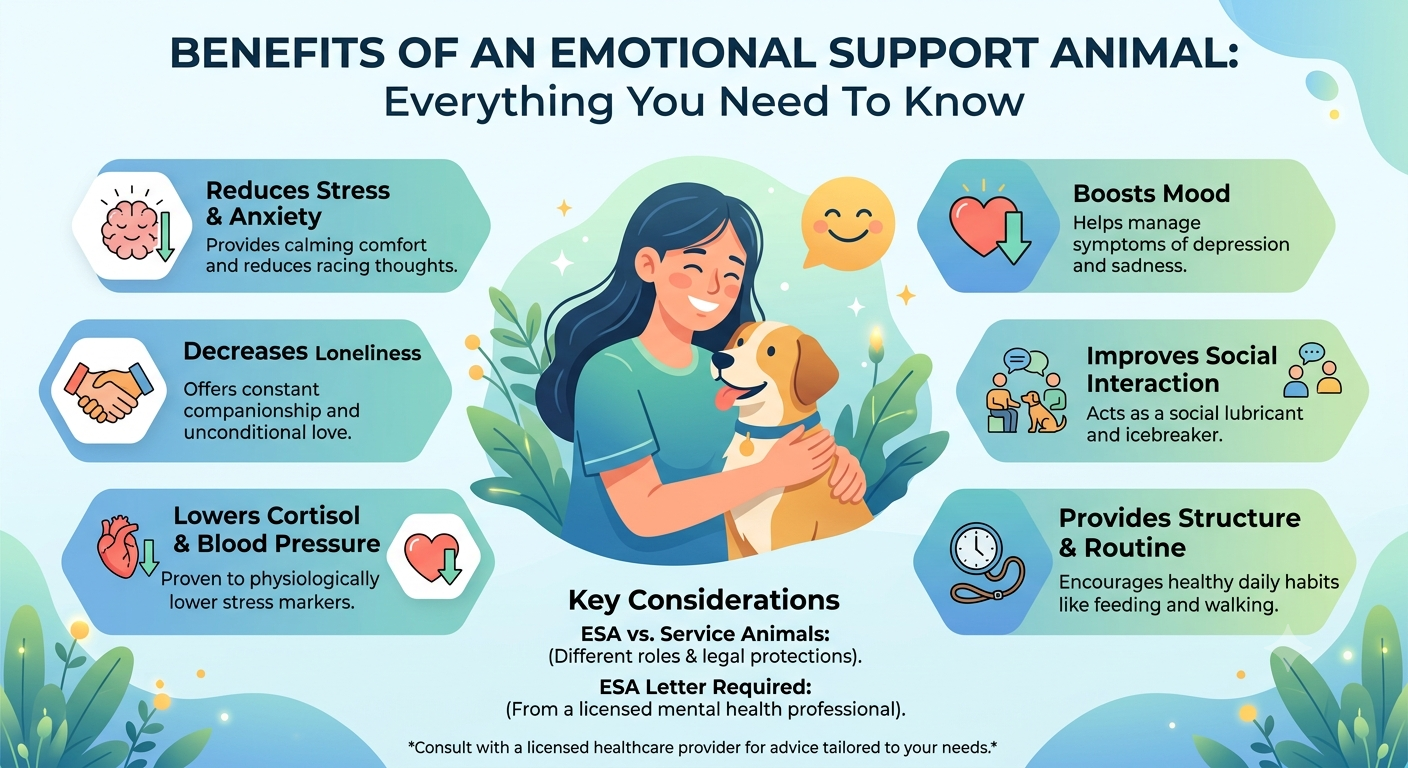
If you’ve ever struggled with intense loneliness or felt overwhelmed by anxiety attacks, you might have considered getting an emotional support animal (ESA). These animals provide emotional stability and comfort to people with mental or emotional disabilities.
Licensed mental health professionals often recommend that a person keep an ESA by their side to get additional support in dealing with certain mental health conditions. There are many benefits of an emotional support animal that we’ll go through in this article.
What Are the Benefits of an Emotional Support Animal?
ESAs aren’t trained to perform specific tasks like service animals, but they still play an important part in supporting your mental and emotional condition. Here are some ways having an ESA can benefit you:
They Provide Comfort During Depressive Episodes
The presence of an emotional support animal can help alleviate loneliness and create a calming environment if you’re going through a tough time. Even just petting a dog or hearing a cat purr has been shown to lower stress levels, which makes it easier to cope with intense, overwhelming emotions.
This is why therapists and mental health practitioners specifically recommend that patients dealing with tough conditions get an ESA. Golden retrievers, for example, are very affectionate dogs that are sensitive to the needs of their owners. If your retriever notices your heightened anxiety, they’ll stay by your side or curl up next to you to soothe your senses.
They Encourage You to Maintain a Daily Routine
Experiencing depression or anxiety can make even routine tasks feel absolutely exhausting. Having an ESA can create a sense of responsibility that encourages you to have a consistent routine.
Dogs need regular walks, feeding schedules, and playtime, whereas cats need daily feeding, a clean litter box, and an enriching environment. Going outside with your ESA can also expose you to fresh air and sunlight, which can greatly improve your mood. Overall, tending to the needs of your ESA can help you establish a much healthier and more consistent routine, which is essential for your emotional well-being.
They Prevent Isolation and Improve Your Social Connections
It’s common for people living with anxiety, trauma, or depression to withdraw from society intentionally or unintentionally. ESAs can provide you with a gentle sense of comfort and companionship at home.
Dogs, especially, can even become natural conversation starters out in your neighborhood or when visiting a park. You can also participate in online communities and local adoption events to meet like-minded people. These interactions are important for reducing loneliness and strengthening your support network.
How Can You Get Started With an ESA?
Your psychologist or licensed counselor will evaluate your daily challenges and treatment goals to determine whether an ESA could be a beneficial part of your mental health care plan.
If they believe an ESA would help, they’ll provide an ESA letter that states that the animal is part of your treatment. You can then choose an animal that matches your lifestyle and emotional support needs. Afterward, you can then explore options like registering your ESA, which can have immense benefits in addition to having a valid ESA letter, such as additional documentation and legal support.
Keep in mind that building a strong bond with your ESA is a gradual process! You’ll need to provide them with consistent care and affection, which will eventually translate into a loving, supportive relationship.
Start Enjoying the Benefits of an Emotional Support Animal
Rather than just providing temporary comfort, emotional support animals contribute to improving your overall quality of life through unconditional love and companionship. Knowing you have a loyal furry friend waiting for you at home at the end of each day can make all the difference if you’re going through a tough time.
If you believe an ESA could help improve your mental and emotional health, we highly recommend you speak to a mental health professional. Taking that first step is the most daunting, but it’s also the most rewarding. Once you find an ESA that aligns with your needs and lifestyle, you can start a meaningful healing journey that is built on deep trust and support.