
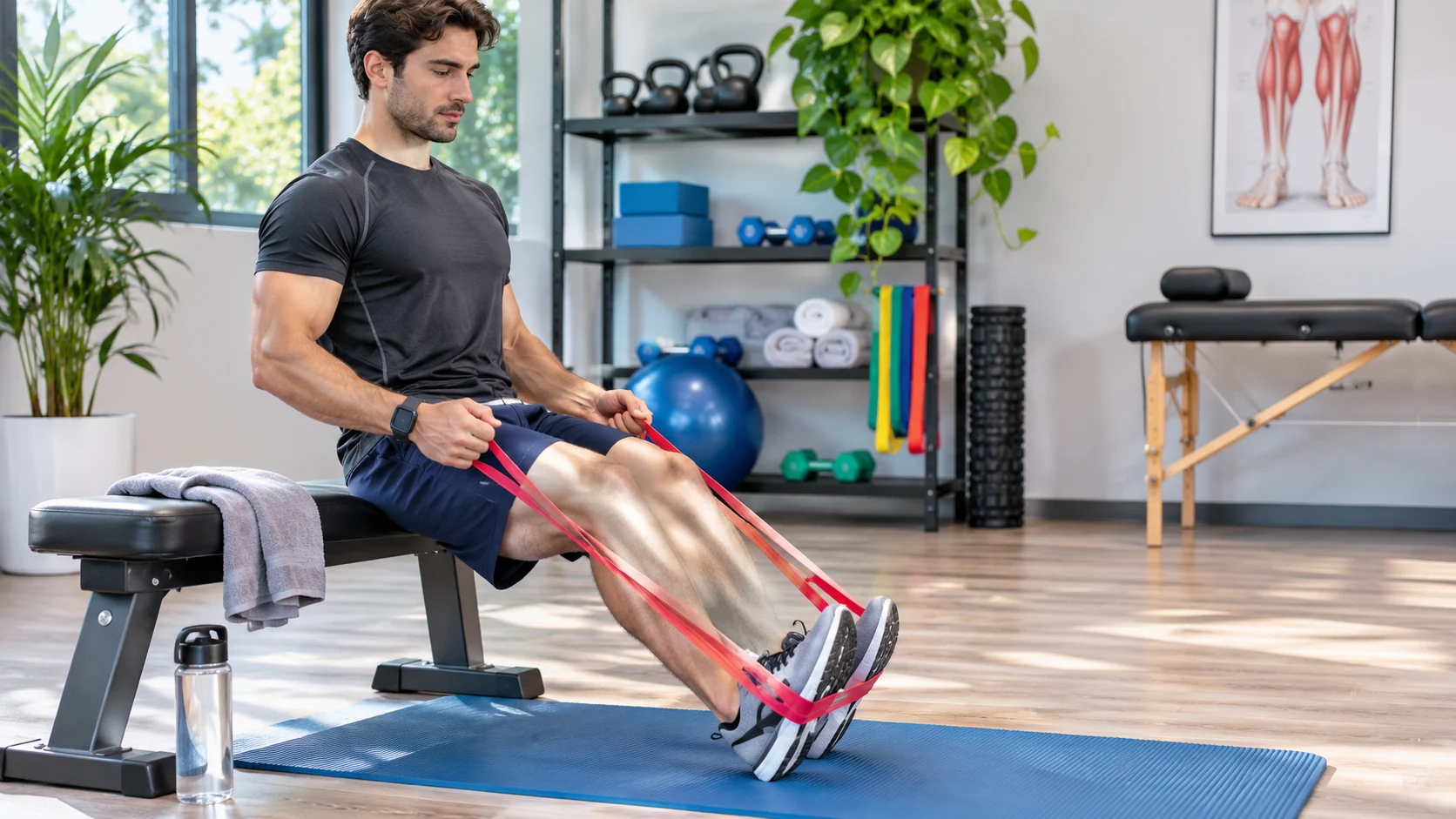
Tibialis anterior exercises are an effective way to strengthen the muscles along the front of your lower legs, improve ankle control, and support everyday movement. Whether you enjoy walking, running, hiking, or other physical activities, the tibialis anterior plays an important role in lifting your feet and maintaining stability. Keeping this muscle strong can contribute to comfortable and efficient movement.
Many people focus on strengthening their calves while overlooking the muscles on the opposite side of the lower leg. However, the tibialis anterior helps control foot placement, supports ankle movement, and assists with balance. Weakness or poor coordination in this area can affect walking mechanics and make certain activities more challenging.
Fortunately, several simple tibialis anterior exercises can be performed at home without complicated equipment. This guide explains the muscle’s function, the benefits of strengthening it, and effective exercises for different experience levels. You will also learn proper form, common mistakes, and practical tips for building a comfortable, balanced lower-leg exercise routine.
What Is the Tibialis Anterior Muscle?
The tibialis anterior is a muscle located along the front of your lower leg, beside the shinbone. It begins near the upper portion of the tibia and extends downward through a tendon toward the inner foot. Its primary function is ankle dorsiflexion, which means lifting the front of your foot toward your shin.
This muscle also assists with foot inversion, the movement that turns the sole slightly inward. During walking, it helps lift the toes so the foot can clear the ground. After the heel touches down, the tibialis anterior helps control how the front of the foot lowers toward the surface.
Although it is smaller than some major leg muscles, the tibialis anterior performs an important role in everyday mobility. It works alongside the calf muscles and other ankle stabilizers to coordinate movement. Understanding its function can help you recognize why targeted shin muscle exercises may be useful in a balanced fitness routine.
Benefits of Tibialis Anterior Exercises
One of the main benefits of tibialis anterior exercises is improved ankle dorsiflexion strength. This movement helps lift the toes during walking, running, and stair climbing. Stronger ankle dorsiflexors can contribute to better foot clearance and more controlled movement, particularly during activities that require repeated steps or changes in direction.
Another benefit is improved muscular endurance around the lower leg. The tibialis anterior works repeatedly during walking and other activities, so developing its endurance may help it tolerate everyday demands. Targeted strengthening can also complement calf exercises by training muscles responsible for opposite ankle movements and supporting balanced lower-leg conditioning.
Regular exercises may also contribute to ankle control and functional movement. However, strengthening one muscle does not automatically prevent all ankle injuries, shin pain, or balance problems. Results depend on individual circumstances, overall strength, coordination, and movement habits. A complete routine should include other lower-body exercises and adequate recovery.
Seated Toe Raises for Beginners
Seated toe raises are among the simplest tibialis anterior exercises for beginners. They allow you to practice ankle dorsiflexion while keeping your body supported. Because the movement requires minimal equipment, it can be performed at home or during a comfortable exercise session without requiring advanced fitness experience.
Begin by sitting upright in a stable chair with both feet resting comfortably on the floor. Keep your heels in contact with the ground while gently lifting the front of your feet. Lower your toes slowly and maintain control throughout the movement. Avoid leaning backward or lifting your entire foot away from the floor.
You can begin with a few comfortable repetitions and adjust according to how your muscles respond. The movement should feel controlled rather than painful or forced. As the exercise becomes easier, you may gradually add repetitions if appropriate. Seated toe raises provide a useful introduction to strengthening the muscles responsible for lifting the feet.
Standing Toe Raises Against a Wall
Standing toe raises provide another way to strengthen the tibialis anterior while practicing controlled ankle movement. This exercise uses your body position to create a manageable challenge for the shin muscles. A stable wall can provide support, making the movement suitable for people who feel comfortable standing and maintaining their balance.
Stand with your back near a wall and place your feet a comfortable distance forward. Keep your heels grounded while gently lifting the front of your feet toward your shins. Pause briefly before lowering them in a slow, controlled motion. Use the wall for balance without placing unnecessary pressure on your lower back.
Maintain a comfortable posture throughout the exercise and avoid rocking your entire body to lift your toes. The movement should come mainly from the ankles. If you notice discomfort or difficulty maintaining control, reduce the effort or return to seated toe raises. Gradual progression is more useful than attempting challenging variations immediately.
Resistance Band Tibialis Anterior Exercises
Resistance band dorsiflexion is a practical exercise for strengthening the tibialis anterior through a controlled range of motion. A light exercise band provides resistance as you lift your foot toward your shin. This makes it possible to adjust the challenge according to your experience and comfort.
Sit on a stable surface with one leg supported in front of you. Attach a light resistance band to a secure, suitable anchor and position the other end around the front of your foot, following the band’s safety instructions. Gently pull your toes toward your shin against the resistance, then return slowly without allowing the band to snap back.
Choose a resistance level that allows smooth movement without straining your ankle. Avoid using worn bands or unstable anchor points because they can create unnecessary risks. If the movement causes sharp pain, numbness, or unusual discomfort, stop the exercise. A physical therapist can help determine the appropriate resistance when rehabilitation is involved.
Heel Walking for Ankle Dorsiflexion
Heel walking is a functional exercise that challenges the muscles responsible for lifting the front of your feet. It involves walking a short distance while keeping the toes elevated. Because this movement requires balance and coordination, it is more demanding than basic seated ankle exercises and may not suit everyone.
Begin on a flat, clear surface near a stable support if necessary. Gently lift the front of your feet while maintaining contact through your heels, then take a few small, controlled steps. Keep your posture comfortable and avoid rushing. Lower your feet normally whenever you need to regain balance or rest.
Heel walking should only be performed when you can control your ankle movement comfortably. People with significant balance difficulties, foot drop, or existing injuries should seek professional guidance before attempting it. This exercise can complement simpler strengthening movements, but it is not necessary for everyone to achieve useful lower-leg fitness benefits.
Ankle Dorsiflexion Exercises Without Equipment
Ankle dorsiflexion can also be practiced without resistance bands or specialized exercise tools. These movements help you become familiar with how the ankle moves and how the tibialis anterior participates. They can be useful as gentle movement exercises, particularly when starting a routine or returning to activity after a period of inactivity.
Sit comfortably with one leg supported and your foot free to move. Slowly bring your toes toward your shin, staying within a comfortable range of motion. Return to the starting position without forcing the ankle. Keep the movement smooth and avoid twisting the knee or moving the entire leg unnecessarily.
Although unresisted movements may not provide enough challenge for substantial strength gains over time, they can support coordination and comfortable ankle mobility. They are also useful for learning proper movement before progressing to resistance exercises. If your ankle movement is restricted or painful, a healthcare professional can help identify an appropriate approach.
Tibialis Raises vs. Calf Raises
Tibialis raises and calf raises strengthen different muscle groups around the lower leg. Tibialis raises emphasize ankle dorsiflexion, which lifts the front of the foot. Calf raises primarily train the muscles responsible for plantarflexion, the movement that lifts the heels. Both actions are important for normal walking and ankle function.
During a typical calf raise, the calf muscles help lift the body onto the balls of the feet. During a tibialis raise, the shin muscles lift the toes while the heels remain supported. These opposite movements contribute to coordinated ankle activity. Training both muscle groups can help develop a more balanced lower-leg exercise routine.
Neither exercise automatically replaces the other because their main muscular demands differ. A well-rounded program may include both movements alongside other strength and balance activities. However, exercise selection should reflect your abilities and goals. Comfort, movement quality, and appropriate recovery are more important than completing a particular number of exercises.
Tibialis Anterior Exercises for Runners and Walkers
The tibialis anterior is active during walking and running because it helps lift the foot and control its position during each step. For this reason, targeted strengthening may be useful as part of a broader conditioning program. However, the muscle’s needs depend on training history, movement mechanics, and individual health.
Runners and regular walkers can include simple dorsiflexion exercises alongside calf strengthening, mobility work, and general lower-body conditioning. Seated toe raises or light resistance band movements may offer convenient starting options. The goal is to develop comfortable muscular control rather than add unnecessary fatigue before important physical activities.
Shin discomfort should not automatically be interpreted as tibialis anterior weakness. Pain along the shin can have several causes, including overuse injuries and other conditions that require different management. Continuing to exercise through worsening pain may delay appropriate treatment. Persistent symptoms should be assessed by a qualified healthcare professional.
Proper Form and Common Exercise Mistakes
Correct technique is important when performing tibialis anterior exercises because uncontrolled movement can reduce their usefulness. The primary motion should occur at the ankle rather than through excessive movement of the knee or hip. Keeping a comfortable posture and using a controlled range of motion helps maintain consistency.
One common mistake is lifting the toes too quickly and allowing them to drop without control. Another is choosing excessive resistance before learning the movement. These habits can make exercises uncomfortable and may interfere with proper technique. Start with manageable movements and increase the challenge only when you can maintain good control.
Ignoring discomfort is another mistake worth avoiding. Mild muscular effort can be normal during strengthening exercises, but sharp pain, persistent numbness, or increasing weakness requires attention. Stop activities that produce concerning symptoms. If problems continue, professional assessment can help determine whether exercise modifications or medical evaluation are necessary.
Best Practices for Tibialis Anterior Training
A practical tibialis anterior routine should match your current abilities and overall activity level. Beginners can start with simple seated movements before considering standing variations or light resistance. There is no need to train this muscle intensely every day. Recovery is an important part of adapting to strengthening exercises.
Gradual progression can involve improving movement control, adding a small amount of resistance, or performing additional comfortable repetitions. However, progress should not be measured only by how difficult the exercise becomes. Improved coordination and the ability to complete everyday movements comfortably are also meaningful outcomes.
For balanced lower-leg fitness, combine dorsiflexion exercises with suitable calf strengthening and other functional activities. Walking, gentle mobility exercises, and appropriate balance training may complement targeted muscle work. If you are recovering from an injury or have a medical condition affecting your legs, seek individualized guidance before beginning a new routine.
When to Seek Professional Help for Shin or Ankle Problems
Tibialis anterior exercises may not be appropriate for every type of shin or ankle problem. Pain can result from several conditions, including muscle irritation, tendon problems, or bone-related injuries. These issues require different approaches, and exercise alone may not address the underlying cause.
Difficulty lifting the front of the foot can sometimes indicate foot drop, which may involve a nerve or muscle problem. New or unexplained foot drop deserves prompt medical assessment rather than attempting to strengthen through the weakness. Sudden weakness, especially with other neurological symptoms, requires urgent medical attention.
A physical therapist can assess ankle strength, movement, balance, and functional limitations. Based on the findings, they may recommend appropriate exercises and gradual activity modifications. Professional guidance is particularly valuable when symptoms follow an injury or affect normal walking. The goal is to restore comfortable function while avoiding unnecessary strain.
Conclusion
Tibialis anterior exercises can help strengthen the muscles along the front of your lower legs and support ankle dorsiflexion. Seated toe raises, standing tibialis raises, and controlled resistance band movements provide different ways to practice this important movement. These exercises may also complement walking, running, and general lower-body conditioning.
Proper form, manageable resistance, and adequate recovery are essential for a comfortable routine. Beginners should focus on learning controlled movements rather than increasing difficulty too quickly. Combining shin muscle exercises with calf strengthening and other suitable activities can support more balanced ankle function and everyday mobility.
Whether your goal is improving lower-leg fitness or supporting comfortable movement, consistency matters more than excessive exercise. Choose variations suited to your abilities and stop if concerning symptoms develop. With a thoughtful approach and professional guidance when necessary, tibialis anterior training can become a useful part of a balanced fitness routine.
Frequently Asked Questions
What Are the Best Tibialis Anterior Exercises?
Seated toe raises, standing tibialis raises, and light resistance band dorsiflexion are useful exercises for strengthening the tibialis anterior. The best choice depends on your current strength, comfort, and movement abilities.
Can Tibialis Anterior Exercises Help With Shin Splints?
Strengthening may support overall lower-leg conditioning, but shin splints have several contributing factors. Exercises alone are not a guaranteed treatment, and persistent shin pain should be assessed before continuing demanding activities.
How Often Should You Do Tibialis Anterior Exercises?
Frequency depends on your exercise intensity, fitness level, and recovery needs. A few appropriately spaced strengthening sessions each week may be suitable, while rehabilitation programs should follow individualized professional recommendations.
Can You Strengthen the Tibialis Anterior Without Equipment?
Yes, seated toe raises, standing toe raises, and controlled ankle dorsiflexion can be performed without specialized equipment. These movements provide accessible ways to practice ankle control and begin lower-leg strengthening.
Why Is My Tibialis Anterior Weak?
Tibialis anterior weakness may relate to inactivity, injury, muscle problems, or nerve conditions. Persistent or new difficulty lifting the foot requires medical evaluation because strengthening exercises may not address the underlying cause.