
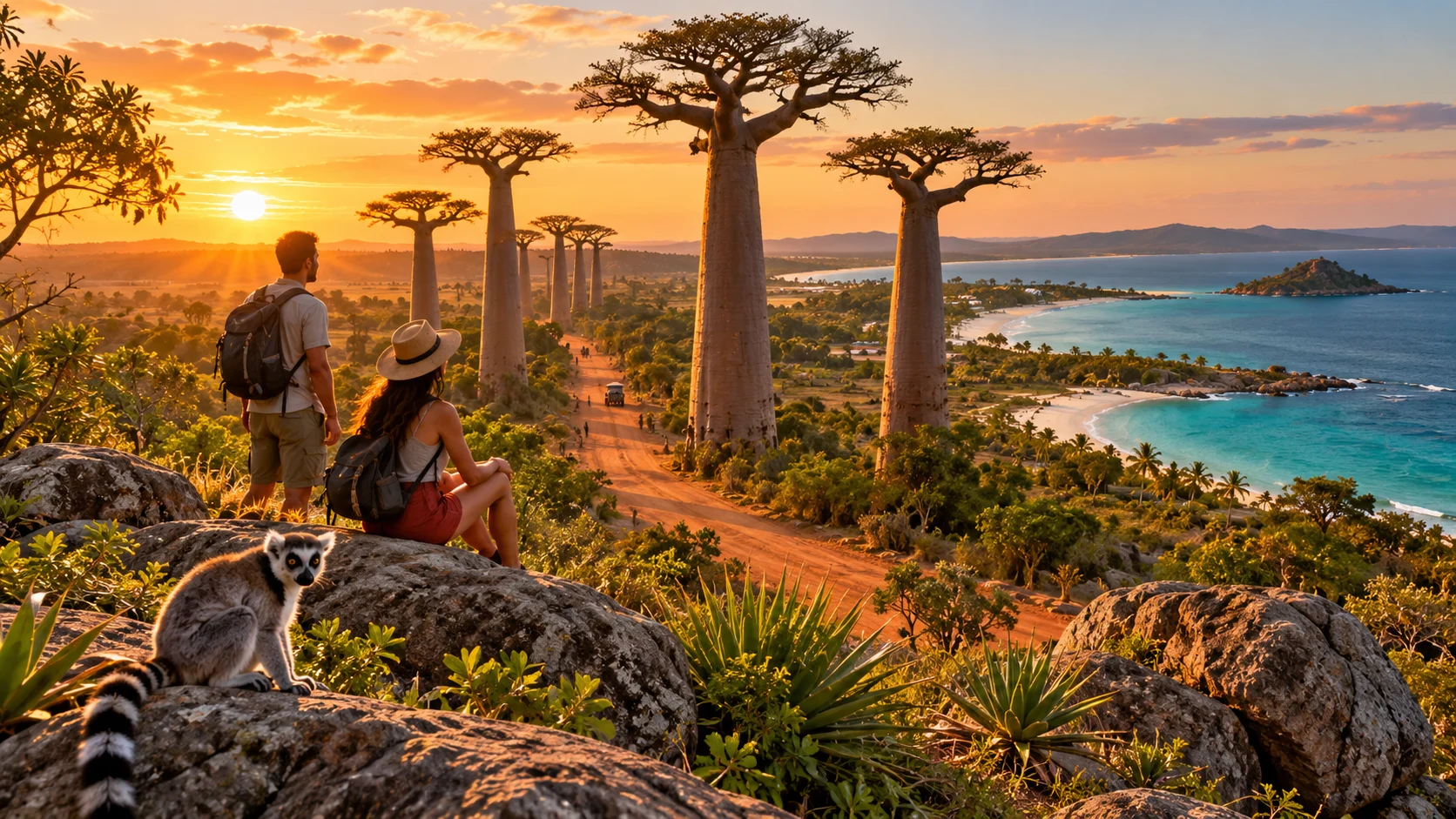
Madagascar is one of the world’s most fascinating travel destinations, famous for its extraordinary wildlife, stunning landscapes, tropical beaches, and unique cultural heritage. Located in the Indian Ocean off the southeastern coast of Africa, this remarkable island offers experiences that are difficult to find anywhere else. Its rainforests, limestone formations, volcanic landscapes, and beautiful coastline create endless opportunities for exploration.
The best things to do in Madagascar include watching lemurs in their natural habitats, exploring dramatic national parks, visiting the famous Avenue of the Baobabs, and relaxing on beautiful tropical islands. Travelers can also discover traditional Malagasy villages, experience regional cuisine, and explore remarkable natural environments. Every region offers something distinctive for visitors interested in wildlife, outdoor adventures, and cultural experiences.
Whether you are planning a wildlife holiday, a relaxing beach getaway, or an unforgettable nature-focused journey, Madagascar has plenty to offer. However, traveling around the island requires careful planning because distances are considerable and transportation can be challenging. This guide explores Madagascar’s top attractions, memorable experiences, and essential travel tips to help you plan your adventure.
1. Visit the Avenue of the Baobabs – Madagascar’s Famous Landmark
The Avenue of the Baobabs is one of Madagascar’s most recognizable natural attractions, located near Morondava on the island’s western coast. This spectacular landscape features enormous baobab trees standing along a dusty road, creating a remarkable natural corridor. Their massive trunks and unusual branches make the area especially popular among photographers and nature lovers.
Many visitors arrive during sunrise or sunset when golden sunlight illuminates the trees and surrounding countryside. The changing colors create a dramatic atmosphere that highlights the extraordinary shapes of these ancient giants. Travelers can admire the scenery from the roadside while learning about the ecological and cultural importance of Madagascar’s distinctive baobab species.
The Avenue of the Baobabs is more than a beautiful photography location because it represents an important part of Madagascar’s natural heritage. Visitors should respect surrounding communities, avoid damaging trees, and follow local guidance. Combining the attraction with nearby Morondava provides an opportunity to experience local culture and explore additional western Madagascar landscapes.
2. Explore Andasibe-Mantadia National Park – See Famous Lemurs
Andasibe-Mantadia National Park is one of Madagascar’s most popular wildlife destinations, located east of the capital, Antananarivo. Its lush rainforest provides habitat for numerous animal species, including the famous indri, the largest living lemur. Visitors are particularly attracted by the indri’s distinctive calls, which can be heard echoing through the forest.
Guided forest walks offer opportunities to observe lemurs, colorful birds, chameleons, and other fascinating wildlife. The park contains different habitats and walking routes suitable for various interests and physical abilities. Experienced local guides help visitors locate animals while explaining the importance of rainforest conservation and Madagascar’s exceptional biodiversity.
Andasibe is particularly appealing to travelers interested in wildlife photography and natural history. The surrounding area also offers additional forest reserves and educational conservation experiences. Because wildlife sightings are never guaranteed, allowing sufficient time and maintaining realistic expectations can make the visit more rewarding and enjoyable.
3. Discover Tsingy de Bemaraha National Park – A Unique Stone Forest
Tsingy de Bemaraha National Park is one of Madagascar’s most extraordinary natural wonders, famous for its dramatic limestone formations. Located in western Madagascar, this protected landscape features towering stone pinnacles, narrow passages, caves, and unusual geological structures. The remarkable scenery creates an almost otherworldly environment that attracts adventurous travelers and nature enthusiasts.
The park offers guided routes through its distinctive limestone formations, with certain sections featuring elevated walkways and challenging terrain. Some excursions require appropriate safety equipment and careful movement over uneven surfaces. Travelers should choose routes suited to their abilities and follow the instructions of authorized guides because conditions can be physically demanding.
Tsingy de Bemaraha also supports unique plant and animal species adapted to its rugged environment. Reaching the park can require significant travel time, particularly because access roads may be affected by seasonal rainfall. Planning visits during suitable months and confirming local access conditions are essential for experiencing this remarkable protected landscape.
4. Experience Isalo National Park – Canyons and Desert Landscapes
Isalo National Park is one of the most beautiful places to visit in Madagascar, known for its sandstone formations, dramatic canyons, and expansive grassland scenery. Located in the country’s south-central region, the park offers landscapes that contrast sharply with Madagascar’s tropical rainforests. Its impressive rock formations create excellent opportunities for sightseeing and nature photography.
Visitors can explore established hiking routes through valleys, rocky terrain, and natural landscapes. Some guided excursions include visits to scenic pools and shaded areas surrounded by impressive sandstone cliffs. The park also provides opportunities to observe regional wildlife and learn about the plants adapted to its relatively dry environment.
Isalo is especially attractive during periods of comfortable weather when walking conditions are more manageable. Travelers should carry sufficient drinking water, use appropriate sun protection, and choose excursions suited to their fitness and experience. Combining the park with nearby communities offers an opportunity to discover the culture and landscapes of southern Madagascar.
5. Visit Ranomafana National Park – Discover Tropical Rainforest Wildlife
Ranomafana National Park is a remarkable rainforest destination located in southeastern Madagascar. Famous for its rich biodiversity and beautiful green landscapes, the park protects numerous species of lemurs, birds, reptiles, and amphibians. Its mountainous rainforest environment provides an exciting setting for travelers interested in wildlife observation and tropical ecosystems.
Guided walks take visitors through forest trails where they may encounter rare animals and unusual plant species. Ranomafana is especially associated with the golden bamboo lemur, a species that contributed to the park’s conservation significance. The forest environment also offers opportunities to appreciate waterfalls, dense vegetation, and the sounds of tropical wildlife.
Because Ranomafana receives considerable rainfall, trails can become muddy and slippery throughout the year. Comfortable walking shoes, lightweight waterproof clothing, and a flexible itinerary can improve the experience. Visitors who enjoy nature and conservation-focused travel will find this national park an important addition to their Madagascar itinerary.
6. Relax on Nosy Be – Madagascar’s Tropical Island Paradise
Nosy Be is one of Madagascar’s most popular island destinations, located off the northwestern coast. Famous for its tropical beaches, warm waters, beautiful sunsets, and relaxed atmosphere, it offers an appealing contrast to the country’s rugged inland landscapes. Travelers visit the island for coastal relaxation, marine experiences, and picturesque scenery.
Popular activities include exploring sandy beaches, enjoying scenic boat excursions, and discovering nearby islands such as Nosy Komba and Nosy Tanikely. Responsible snorkeling experiences provide opportunities to observe colorful marine environments when sea conditions are suitable. Visitors can also explore local markets, coastal villages, and natural attractions around the island.
Nosy Be is a good option for travelers who want to combine wildlife exploration with a relaxing seaside holiday. Restaurants, accommodations, and tourist services are available in several areas, although facilities vary by location. Choosing responsible tour operators and respecting marine ecosystems can help preserve the island’s natural beauty.
7. Explore Île Sainte-Marie – Beaches, History, and Whale Watching
Île Sainte-Marie, also known as Nosy Boraha, is a beautiful island located off Madagascar’s eastern coast. It is known for palm-lined beaches, traditional fishing villages, lush vegetation, and fascinating maritime history. Its peaceful coastal atmosphere makes it attractive to travelers seeking relaxation and memorable cultural experiences.
One of the island’s most popular seasonal attractions is whale watching, particularly when humpback whales migrate through nearby waters. Responsible guided excursions may provide opportunities to observe these magnificent animals from appropriate distances. Visitors can also explore coastal scenery, enjoy local cuisine, and discover the island’s historical associations with maritime trade.
Île Sainte-Marie is especially appealing to travelers who prefer quieter coastal destinations. Nearby Île aux Nattes offers additional opportunities to enjoy tropical scenery and relaxed island surroundings. Ferry and flight arrangements may be influenced by weather conditions, making advance planning and schedule flexibility important for a comfortable visit.
8. Discover Ankarana National Park – Caves and Limestone Formations
Ankarana National Park is a fascinating protected area in northern Madagascar, famous for its limestone formations, underground caves, and diverse wildlife. The park features dramatic rocky landscapes, dry forests, and unusual geological features. Its combination of natural scenery and biodiversity makes it an interesting destination for travelers exploring northern Madagascar.
Visitors can join guided walks through designated forest routes and limestone landscapes. Some sections offer opportunities to observe caves, natural rock formations, and wildlife such as lemurs and birds. Different routes have varying difficulty levels, so visitors should select appropriate activities and follow park safety requirements.
Ankarana’s ecological importance extends beyond its spectacular geology because it protects habitats for numerous endemic species. Travelers can learn about the relationship between local communities and protected natural environments. Visiting with authorized guides and respecting conservation rules helps support responsible tourism while protecting the park’s fragile landscapes.
9. Visit Ifaty – Beautiful Beaches and Unique Spiny Forests
Ifaty is a coastal destination in southwestern Madagascar, known for its sandy beaches, fishing communities, and nearby dry forest landscapes. The region offers a distinctive combination of marine environments and unusual vegetation. Travelers interested in both relaxation and nature can enjoy its peaceful shoreline while discovering the surrounding countryside.
The nearby spiny forests contain remarkable plants adapted to Madagascar’s dry climate, including distinctive thorny vegetation and baobab trees. Guided nature excursions offer opportunities to learn about these specialized ecosystems and observe regional wildlife. Coastal activities may include swimming or snorkeling when weather and sea conditions are appropriate.
Ifaty is also an interesting location for learning about traditional coastal livelihoods and regional Malagasy culture. Visitors can support locally operated accommodations and guided experiences while respecting fishing communities. The region’s warm, dry environment makes appropriate sun protection and drinking water particularly important during outdoor excursions.
10. Explore Antananarivo – Madagascar’s Cultural Capital
Antananarivo, commonly called Tana, is Madagascar’s capital and largest city. Located in the central highlands, it offers an interesting introduction to the country’s history, architecture, markets, and everyday culture. Its hills, historic buildings, and lively neighborhoods create a distinctive urban atmosphere that contrasts with Madagascar’s national parks.
Visitors can explore historical attractions such as the Rova of Antananarivo and discover traditional markets, museums, and cultural landmarks. The city’s elevated viewpoints provide interesting perspectives over surrounding neighborhoods and landscapes. Travelers can also experience Malagasy cuisine and learn about the influences that have shaped Madagascar’s cultural identity.
Antananarivo serves as an important transportation hub for many journeys around the country. However, traffic congestion can make traveling between locations slower than expected. Planning sightseeing activities realistically and using trusted local transportation services can help visitors experience the city more comfortably while preparing for adventures elsewhere in Madagascar.
11. Best Time to Visit Madagascar for Wildlife and Beaches
The best time to visit Madagascar generally falls during the drier months, usually from May through October. This period often provides more manageable road conditions and comfortable opportunities for exploring national parks. However, weather varies considerably across the island, so the ideal travel season depends on the regions and activities included in your itinerary.
Travelers interested in observing wildlife may prefer months when walking conditions are suitable and particular animal species are more active. Whale watching around Île Sainte-Marie is especially associated with the middle of the year. September and October can also offer appealing conditions for exploring several regions while enjoying relatively warm weather.
Madagascar’s wetter season generally occurs from November through March, although regional variations are significant. Heavy rainfall and tropical cyclones can disrupt transportation, affect park access, and change travel plans. Visitors should consider seasonal weather carefully, especially when traveling to remote western destinations or arranging coastal and island excursions.
12. Essential Travel Tips for Visiting Madagascar
Planning transportation is essential because Madagascar is a large country with considerable distances between major attractions. Many roads are uneven, and journeys can take longer than expected. Travelers should allow additional time between destinations, choose reliable transportation providers, and avoid creating itineraries that depend on unrealistically short travel connections.
Accommodation options range from basic guesthouses to comfortable hotels and nature-focused lodges. Facilities can vary significantly between urban centers and remote regions, making advance research useful. Visitors should also check passport and entry requirements, recommended travel vaccinations, and current health guidance before departure to prepare appropriately for their trip.
Responsible tourism is particularly important because Madagascar contains many rare species and environmentally sensitive habitats. Travelers should avoid disturbing wildlife, feeding wild animals, or purchasing products made from protected species. Supporting local guides, respecting cultural traditions, and following conservation regulations can help protect the country’s remarkable natural and cultural heritage.
Conclusion
Madagascar is an extraordinary destination offering some of the world’s most distinctive wildlife, landscapes, and cultural experiences. From the towering baobabs near Morondava to the lush rainforests of Andasibe and Ranomafana, the island provides unforgettable opportunities for nature lovers. Its beautiful beaches, dramatic limestone formations, and traditional communities add further variety to the travel experience.
The best things to do in Madagascar depend on your interests, available time, and preferred travel style. Wildlife enthusiasts may prioritize national parks, while beach lovers can explore Nosy Be or Île Sainte-Marie. Travelers interested in adventure and scenery may enjoy discovering Isalo, Ankarana, and the remarkable landscapes of Tsingy de Bemaraha.
A successful Madagascar trip requires thoughtful planning, flexibility, and respect for the island’s natural environment. Transportation challenges and seasonal weather can influence itineraries, making realistic scheduling important. By exploring responsibly and supporting local communities, travelers can enjoy memorable experiences while contributing to the protection of Madagascar’s exceptional biodiversity and cultural heritage.
Frequently Asked Questions (FAQs)
1. What are the best things to do in Madagascar?
The best things to do in Madagascar include visiting the Avenue of the Baobabs, spotting lemurs in national parks, exploring Tsingy de Bemaraha, hiking in Isalo, and relaxing on Nosy Be’s beaches.
2. What is Madagascar most famous for?
Madagascar is famous for its unique wildlife, especially lemurs, chameleons, and rare plant species. The island is also known for its enormous baobab trees, dramatic landscapes, tropical rainforests, and beautiful beaches.
3. How many days do you need to explore Madagascar?
Ten to fourteen days allows travelers to explore a selection of Madagascar’s major attractions. However, two to three weeks is preferable for visiting several regions because distances are considerable and transportation can be slow.
4. What is the best month to visit Madagascar?
September and October are popular months for visiting Madagascar because many regions experience favorable travel conditions. The wider dry season, generally May through October, is also suitable for exploring national parks and coastal attractions.
5. Is Madagascar a good destination for wildlife lovers?
Yes, Madagascar is an exceptional destination for wildlife enthusiasts because it supports numerous endemic species. National parks such as Andasibe-Mantadia and Ranomafana offer opportunities to observe lemurs, birds, reptiles, and unique rainforest ecosystems.