
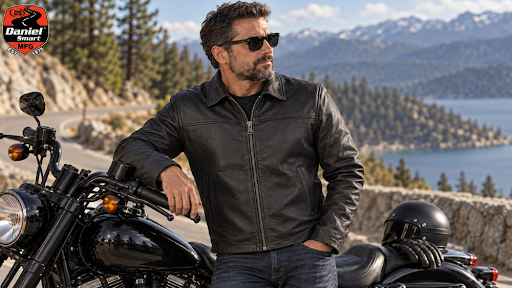
A custom motorcycle leather jacket for club riding should be designed around more than appearance. It needs the right fit, enough patch space, practical storage, comfortable riding mobility, durable construction, and details that work both on the motorcycle and during club events.
Club riders often wear the same jacket for group rides, highway travel, meetups, rallies, and everyday motorcycle use. That makes versatility especially important.
Well-planned custom motorcycle jackets allow riders to choose features around their actual riding habits while leaving enough room for club identity, personalized patches, and functional details.
Before finalizing a design, riders should think carefully about how the jacket will be used, what needs to be added later, and how each feature affects comfort on the road.
Why Do Club Riders Need a Different Approach to Custom Motorcycle Jackets?
Club riders often have requirements that go beyond those of a standard motorcycle jacket.
A jacket may need to accommodate large back patches, smaller front patches, club identifiers, event patches, or personalized embroidery while still working as functional motorcycle gear.
That means design decisions must balance:
- Patch placement
- Riding comfort
- Storage
- Durability
- Layering
- Weather conditions
- Group-ride use
- Personal style
A jacket that looks good while standing may not work as well while seated on a motorcycle for several hours.
The best design begins with riding function and then adds club-specific details around it.
How Much Back Space Should a Club Motorcycle Jacket Have?
Back panel space is one of the most important considerations for club riders.
Large patches need a clean, uninterrupted area to sit properly. Too many seams, decorative panels, vents, or pockets across the back can make patch placement difficult.
A club-oriented motorcycle jacket often benefits from a large rear panel with minimal visual interruption.
Before finalizing the design, consider:
- The approximate size of the back patch
- Whether top and bottom rockers will be used
- Whether additional event or chapter patches may be added
- How much spacing is needed between elements
- Whether stitching lines will interfere with placement
Planning the patch area before the jacket is made can prevent awkward positioning later.
The jacket should also maintain proper shape after patches are sewn onto it.
Where Should Front Patches Be Placed?
Front patch placement depends on how much information or personalization the rider wants to display.
Common areas include the upper chest, opposite chest, and lower front sections.
However, front pockets, vents, and zippers can compete for the same space.
If a rider plans to add patches later, the jacket should leave enough uninterrupted leather around the intended locations.
It is also useful to think about visibility when the jacket is zipped.
A patch placed too close to the center zipper may become partially hidden or distorted.
Good front-panel planning allows patches and functional features to coexist without making the jacket look crowded.
Should Club Riders Choose a Clean or Detailed Jacket Design?
For riders who expect to add multiple patches over time, a cleaner jacket design often works better.
Heavy decorative stitching, multiple contrast panels, or excessive hardware can compete visually with club insignia.
A simpler base gives the rider more freedom to personalize the jacket later.
That does not mean the jacket has to look plain.
Details can still be added through:
- Hardware choice
- Collar design
- Sleeve construction
- Pocket shape
- Lining
- Stitching
- Custom embroidery
The key is to avoid using the same areas that may later be needed for club patches.
How Should a Club Motorcycle Leather Jacket Fit?
A club jacket should fit securely without restricting normal riding movement.
Riders should evaluate fit while seated in a motorcycle position, not just while standing.
When reaching toward the handlebars, check whether:
- The shoulders feel restricted
- Sleeves become too short
- The back rides up
- The chest feels tight
- The collar presses against the neck
- The waist bunches
- Patches pull or fold excessively
Club riders often spend long periods in the saddle during group rides, so small fit problems can become more noticeable over time.
The jacket should allow natural movement while still maintaining a clean, structured appearance.
Why Does Shoulder Mobility Matter for Group Riding?
Group rides often involve extended time on the road.
Shoulder tension can become uncomfortable when riders maintain the same arm position for long periods.
Features such as an action back, gussets, or riding-oriented sleeve construction can improve movement.
The goal is to let the rider reach the handlebars without pulling excessively across the upper back.
This becomes especially important for riders using motorcycles with wide handlebars.
Better shoulder mobility can also help reduce strain when turning the upper body during traffic checks or group communication.
Should a Custom Club Jacket Include Extra Length in the Back?
Rear coverage matters while riding.
A jacket that appears long enough while standing may rise significantly once the rider sits and reaches forward.
A slightly extended rear section can help maintain lower-back coverage.
However, the front should not be excessively long because it may bunch around the waist when seated.
The ideal shape balances front comfort with rear coverage.
Club riders who spend long hours on the motorcycle should consider riding posture before finalizing body length.
What Pockets Are Most Useful for Club Riders?
Pockets should be selected based on what the rider actually carries.
Useful items may include:
- Phone
- Wallet
- Keys
- Identification
- Small documents
- Ear protection
- Riding accessories
Secure interior pockets can be useful for valuables.
Exterior zippered pockets provide quick access while reducing the risk of items falling out.
Pocket placement should not interfere with patch areas.
For example, adding a large chest pocket may limit where a front club patch can be positioned.
The best custom layout keeps storage functional without competing with the jacket’s identity.
Should Club Riders Add Concealed Carry Pockets?
Some riders may prefer jackets with dedicated interior storage, including concealed-carry-style pockets where lawful and appropriate.
The important design point is pocket structure and accessibility.
Interior storage should not create uncomfortable bulk against the body or distort the exterior of the jacket.
Any specialized pocket should also be selected with local laws and rider needs in mind.
For riders who do not need that type of storage, standard internal security pockets may provide a cleaner and lighter setup.
Why Should Patch Placement Be Planned Before Ventilation?
Ventilation and patch placement can compete for the same areas.
Back vents may interfere with large back patches, while chest vents may reduce the available space for front patches.
Club riders who frequently ride in warm weather still need airflow, but ventilation should be positioned strategically.
Possible areas include:
- Underarms
- Side panels
- Lower torso
- Carefully positioned front sections
The goal is to improve airflow without reducing the clean patch areas needed for club identification.
This is another reason why club-specific customization should be planned before production rather than added afterward.
Should a Club Motorcycle Jacket Have a Removable Liner?
A removable liner can make a club jacket more practical across multiple seasons.
Group rides may begin early in the morning and continue into warmer afternoon conditions.
A liner allows the rider to adjust insulation without changing jackets.
It can be especially useful for:
- Spring rides
- Fall rides
- Cooler mornings
- Evening rides
- Longer highway trips
The jacket should still fit comfortably with the liner installed and without it.
That requires enough room for layering without making the jacket loose.
What Type of Collar Works Best for Club Riding?
Collar preference varies, but comfort should remain the main priority.
A club rider may wear the jacket for several hours at a time, so the collar should not create pressure around the neck.
Important factors include:
- Collar height
- Closure type
- Helmet compatibility
- Wind exposure
- Personal riding posture
A simple, low-profile collar may offer greater freedom of movement, while a higher collar may provide additional wind coverage.
The right choice depends on the rider’s motorcycle and typical weather conditions.
How Important Are Zippers and Hardware?
Hardware is both functional and visual.
Zippers, snaps, and buckles are used repeatedly, so durability matters.
Weak hardware can become frustrating during everyday riding.
Club riders should consider:
- Main front zipper strength
- Pocket zipper quality
- Cuff closures
- Waist adjustment hardware
- Snap durability
Hardware should also fit the overall style of the jacket.
However, decorative hardware should not interfere with normal motorcycle movement.
Should Club Riders Add Armor Compatibility?
A custom club jacket can still include space for motorcycle armor.
Common protection zones include:
- Shoulders
- Elbows
- Back
If armor pockets are planned, they should be integrated without disrupting patch space or creating excessive bulk.
Riders should also check fit with the intended armor installed.
Protective inserts can change how the jacket sits across the shoulders and torso.
Planning this during customization produces a cleaner result than trying to add armor after the jacket is already fitted.
How Do Ready-Made Leather Jackets Help With Custom Design Decisions?
Ready-made motorcycle jackets can provide a useful reference point before creating a custom design.
By reviewing existing men’s leather motorcycle jackets, riders can compare common pocket layouts, collar styles, sleeve shapes, lengths, closures, and riding-oriented construction.
This helps identify which features are genuinely useful and which details are mainly cosmetic.
A rider may discover that they prefer a cleaner front, fewer pockets, a different collar, or a longer rear section before committing to a custom build.
Should Club Jackets Be Designed for Future Patch Additions?
Yes.
Many riders continue adding patches over time.
A jacket that is completely filled from the beginning may leave little room for future events, chapters, memorial patches, or personal additions.
Leaving intentional open space can make the jacket more adaptable.
This is especially useful on:
- Lower front sections
- Sleeves
- Side panels
- Secondary back areas
Future planning allows the jacket to evolve without looking overcrowded.
What Makes a Club Motorcycle Jacket Practical for Long Group Rides?
The most practical club jackets combine identity with road function.
Useful features may include:
- Proper riding fit
- Large clean back panel
- Planned front patch space
- Secure interior pockets
- Comfortable shoulder mobility
- Adjustable cuffs
- Suitable ventilation
- Removable liner
- Durable zippers
- Armor compatibility
- Correct seated length
Each feature should support the rider’s actual use rather than simply making the jacket more complex.
Final Thoughts
A custom motorcycle leather jacket for club riding should be planned around both identity and function.
Patch space is important, but so are riding comfort, mobility, ventilation, storage, layering, and durability. A clean back panel makes large club patches easier to position, while careful front design leaves enough space for smaller identifiers without interfering with pockets or vents.
The best approach is to think ahead.
Decide where patches will go, how much room may be needed later, what items need to be carried, what weather conditions are common, and how the jacket should fit while seated on the motorcycle.
A well-designed club jacket should look distinctive, remain comfortable during long rides, and provide enough flexibility to grow with the rider over time.