
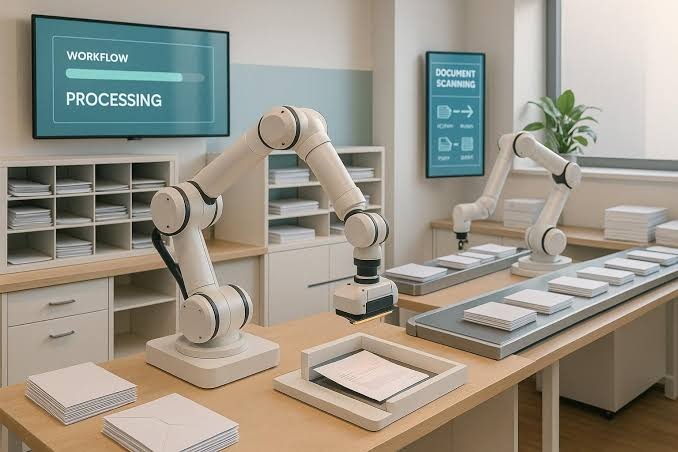
Manual mailroom processes can appear inexpensive. A paper log, spreadsheet, shared inbox, and a few shelves may seem sufficient for recording deliveries and notifying employees. For a small organization receiving relatively few items, that approach may work reasonably well.
The limitations become clearer as the business grows. More employees and deliveries create more registrations, notifications, searches, collections, and exceptions. Tasks that once took only a few minutes begin consuming a meaningful amount of staff time. Moving to a digital mailroom management system can address these less visible costs by creating structured workflows for registration, package tracking, notifications, searchable records, and collection management.
The real cost of a manual mailroom is therefore not limited to what a business spends running it. It also includes the time and operational capacity lost to inefficient processes.
Administrative Time Adds Up
Every incoming package creates work.
An employee may need to accept the parcel, identify its recipient, write the details into a log, find the recipient’s contact information, send a notification, place the item in storage, and later update the record when it is collected.
None of these tasks seems particularly demanding in isolation. The problem is repetition.
As parcel volumes grow, employees perform the same administrative sequence repeatedly throughout the day. If notifications are sent manually or records need to be entered into multiple systems, the workload increases further.
Digital mailroom management software can streamline appropriate parts of this process. Structured registration and automated notifications, for example, reduce repetitive administration while allowing employees to concentrate on deliveries that require individual attention.
The hidden cost of a manual mailroom is often the accumulation of small tasks repeated across every delivery.
Searching for Information Consumes Productive Time
Manual mailroom management also creates costs when someone needs information after a parcel has been received.
An employee might ask whether a delivery arrived yesterday. Reception may then need to check a spreadsheet, search emails, inspect storage shelves, or ask the colleague who worked the previous shift.
If the parcel cannot be found immediately, a simple inquiry becomes an investigation.
Searchable digital records can reduce this friction. Authorized employees can review relevant parcel information and determine what has been recorded about its arrival, notification, storage, or collection.
This becomes increasingly valuable as mailroom teams grow because operational knowledge no longer needs to remain with the individual who originally handled the delivery.
Poor Visibility Creates Avoidable Work
Manual processes often provide a record that something happened without providing a clear view of what should happen next.
A paper log may confirm that a parcel arrived, for example, but not make it immediately obvious whether the recipient was notified or whether the package remains in storage.
The difference between manual and digitally managed workflows can be seen across the parcel lifecycle:
| Mailroom Activity | Manual Process | Digital Process |
| Registration | Paper log or spreadsheet | Structured digital record |
| Notification | Individual email, call, or message | Automated notification workflow |
| Parcel status | Staff check manually | Centralized tracking information |
| Storage | Relies partly on staff knowledge | Consistent location records |
| Collection | Informal handover or sign-out | Collection event recorded |
| Historical inquiry | Search logs and communications | Searchable parcel history |
Poor visibility creates work because employees have to reconstruct information that should already be readily available.
Uncollected Parcels Have a Physical Cost
The consequences of manual mailroom management are not entirely administrative.
Packages occupy physical space while waiting for recipients. When collection information is poorly maintained, older parcels can remain on shelves while new deliveries continue arriving.
Hybrid working can make this problem more noticeable. An employee may be notified on a day they are working remotely and not return to the office for several days.
Without reliable collection tracking, staff may struggle to distinguish parcels awaiting collection from items whose records were simply never updated.
Digital collection records provide clearer visibility into outstanding deliveries. Employees can identify packages that remain in storage and apply the organization’s procedures for reminders or long-term uncollected items.
Better information helps businesses use limited mailroom space more effectively.
Missing Accountability Makes Problems More Expensive
When a parcel cannot be located, the operational costs can exceed the value of the item itself.
Employees may spend time checking records, searching storage areas, contacting colleagues, reviewing messages, and speaking with the intended recipient. Managers can also become involved if the delivery contains important business equipment or documents.
Manual records can make these investigations difficult because the internal parcel journey may contain gaps.
Digital tracking creates a clearer history of relevant events. Registration establishes when the item entered the workplace. Notifications document communication within the workflow, while collection tracking can establish whether the parcel was subsequently handed over.
Technology cannot guarantee that packages will never be misplaced. It can provide a stronger information trail when something needs to be investigated.
Manual Processes Become Harder to Scale
A manual mailroom can seem manageable until the organization begins to expand.
Adding employees generally means more potential recipients. Additional offices, floors, or buildings can create more complex internal distribution routes. More reception staff introduce a greater need for consistent procedures between shifts and locations.
Manual systems often scale by adding administrative effort.
More deliveries require more spreadsheet entries. More recipients require more individual notifications. More stored parcels require more manual checking.
A digital process can scale differently because routine activities follow standardized workflows. Employees work from common records rather than creating separate methods as activity increases.
This consistency is particularly important when organizations open additional locations or need new staff to become productive quickly.
Manual Reporting Can Hide Operational Problems
Another hidden cost is limited insight into how the mailroom is performing.
Paper logs and basic spreadsheets may contain useful information, but turning those records into a meaningful operational picture can require manual compilation.
As a result, managers may notice problems only when they become visible physically, such as crowded shelves or repeated complaints about missing parcels.
Structured digital records make it easier to review available information about delivery activity, outstanding collections, and recurring exceptions.
This can help managers identify where the workflow is creating unnecessary effort. A persistent backlog, for example, may indicate that collection procedures need attention rather than simply requiring additional storage.
Better information supports process improvement before problems become more disruptive.
Growing Mailrooms Need Digital Skills
Moving away from manual processes also changes what businesses should expect from mailroom teams.
Modern mailroom employees need to understand how to use digital mailroom management software effectively. Core skills include accurate digital registration, package tracking, automated notifications, searching historical records, recording collections, and maintaining accountability throughout each handoff.
Training also needs to cover exceptions.
An unidentified recipient, damaged package, incorrect address, or disputed collection may require investigation rather than a standard automated workflow. Employees must understand when technology can handle a routine process and when human judgment is necessary.
Automation is most useful when it removes repetitive administration while giving skilled employees more time to deal with these less predictable situations.
The Cheapest Process Is Not Always the Lowest-Cost Process
Manual mailroom management can look economical because its costs are distributed across everyday work rather than appearing as a single technology expense.
The business pays through employee time spent entering information, sending notifications, searching for parcels, managing backlogs, and investigating unclear handoffs. As the organization grows, those activities can become increasingly difficult to control.
Digital mailroom management creates an alternative based on structured registration, searchable records, automated notifications, package tracking, and documented collections.
For growing businesses, the case for modernization is not about eliminating mailroom employees. It is about reducing the administrative friction surrounding each delivery and giving staff better tools to manage increasing parcel activity.
A mailroom becomes more scalable when employees spend less time reconstructing information and more time managing the deliveries and exceptions that genuinely require their attention.