
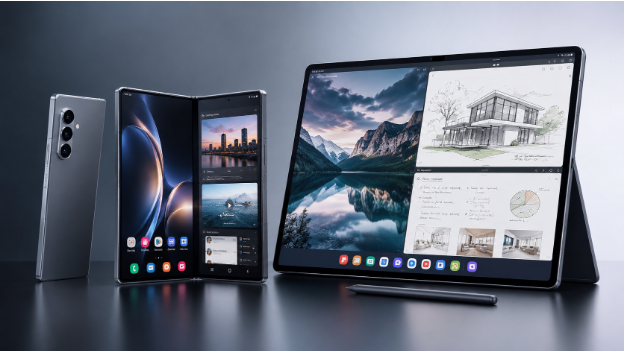
Samsung has continued to expand the Galaxy ecosystem beyond conventional smartphones, with a growing focus on new device formats, flexible displays, productivity, and connected experiences. Two areas are particularly interesting for consumers today: foldable phones and premium tablets. Both categories are changing how people interact with their devices, whether they want a more versatile phone for multitasking or a larger screen for work, entertainment, and creativity.
The latest Galaxy devices show how Samsung is approaching these categories from different directions. Foldable phones are designed to offer new ways to combine portability with a larger display, while premium tablets focus on delivering a desktop-like experience in a slimmer and more mobile form factor.
For consumers comparing the latest Galaxy products, understanding the differences between these device categories can make it easier to choose the right option.
The Changing Role of Galaxy Devices
Smartphones and tablets are no longer limited to a single primary purpose. Modern devices are increasingly expected to handle communication, photography, entertainment, productivity, gaming, content consumption, and even professional workflows.
This shift has encouraged manufacturers to experiment with different designs. Traditional smartphones remain popular because of their portability, but foldable phones introduce additional screen space without requiring users to carry a conventional tablet. At the same time, premium tablets are becoming more capable, offering larger displays and features aimed at people who want a portable productivity device.
Samsung’s Galaxy lineup reflects this broader evolution. Instead of treating every device as simply a larger or smaller version of another product, the company has developed different form factors for different usage patterns.
Foldable Phones Are Redefining Portability
One of the most noticeable changes in mobile hardware has been the development of foldable smartphones. Instead of relying on a single rigid display, foldable devices use flexible display technology to provide a different relationship between screen size and portability.
A foldable phone can remain relatively practical to carry while offering additional screen space when opened. This can be particularly useful for reading, multitasking, viewing documents, browsing websites, or consuming multimedia content.
The Galaxy Z Trifold represents an interesting direction in this category. Rather than simply following the traditional foldable-phone design, a trifold concept focuses on providing even more display flexibility while maintaining a mobile form factor.
For readers interested in the device’s design, usability, performance, and overall experience, the Samsung Galaxy Z Trifold Review 2026 provides a more detailed look at what this type of foldable device brings to the table.
Why Foldable Phones Are Becoming More Interesting
The appeal of foldable phones is not simply about having a larger screen. The real advantage is flexibility.
A conventional smartphone provides a familiar experience, but its display size is constrained by the need to remain comfortable to carry. A foldable device attempts to solve that limitation by allowing the screen to expand when needed.
This can make a difference in several everyday situations.
Multitasking
A larger display can make it easier to work with multiple applications at the same time. Users may be able to reference information while writing notes, communicate while browsing, or move between different tasks without constantly switching screens.
Entertainment
Additional screen space can also improve the experience of watching videos, viewing photos, and reading longer content. The larger viewing area can make a foldable device feel closer to a small tablet while still maintaining the flexibility of a phone.
Productivity on the Go
For people who frequently travel or work away from a desk, a foldable phone can provide additional screen real estate without requiring them to carry both a smartphone and a larger secondary device.
These advantages explain why foldable phones continue to attract attention despite their more complex designs.
Premium Tablets Are Taking a Different Approach
While foldable phones are focused on changing the traditional smartphone format, premium tablets are improving the larger-screen mobile experience.
A premium tablet can be useful for people who need more display space than a smartphone provides but do not necessarily want to carry a full-sized laptop everywhere. Modern tablets can support productivity, entertainment, creative work, web browsing, communication, and other tasks from a single portable device.
Samsung’s Galaxy Tab lineup has become an important part of this category. The Galaxy Tab S11 Ultra represents the company’s premium tablet approach, focusing on users who want a large-screen Galaxy experience for both everyday use and more demanding tasks.
For a closer look at its design, display experience, capabilities, and overall positioning, readers can explore the Samsung Galaxy Tab S11 Ultra Review.
Why a Premium Tablet Can Make Sense
The main advantage of a premium tablet is the combination of screen size and portability.
For example, someone who spends a significant amount of time reading documents, reviewing presentations, editing content, watching videos, or working with multiple applications may find a larger display considerably more comfortable than a smartphone.
Tablets can also occupy an interesting middle ground between phones and laptops. They are generally easier to carry than traditional computers while providing substantially more screen space than a smartphone.
For students, professionals, creators, and frequent travelers, this balance can be particularly useful.
Foldable Phone or Premium Tablet?
Choosing between a foldable phone and a premium tablet ultimately depends on how the device will be used.
A foldable phone makes more sense for users who prioritize portability but still want access to a larger display when necessary. It can serve as a primary mobile device while offering additional flexibility for multitasking and entertainment.
A premium tablet, on the other hand, is better suited to users who prioritize screen size and productivity. It can provide a more comfortable environment for longer sessions involving documents, media, creative applications, and other tasks.
Neither category necessarily replaces the other.
Instead, they solve different problems.
A foldable phone is primarily about making a mobile device more versatile. A premium tablet is about creating a more capable large-screen mobile workspace.
Design Is Becoming an Important Differentiator
As smartphone and tablet hardware becomes increasingly powerful, design is playing a larger role in how consumers choose between devices.
Specifications remain important, but users also care about how a product feels during everyday use. Weight, portability, display size, hinge or folding mechanisms, accessories, software features, and multitasking capabilities can all influence the overall experience.
This is particularly true for foldable devices. Because the design is more complex than that of a traditional smartphone, factors such as usability and durability can be just as important as raw hardware specifications.
Premium tablets have their own design considerations. A larger device needs to remain comfortable enough for extended use while providing the screen space and functionality expected from a high-end product.
Software Is Just as Important as Hardware
Hardware innovation only becomes useful when software can take advantage of it.
Foldable devices need software that can adapt to different screen configurations and make effective use of additional display space. Multitasking features, application layouts, and responsive interfaces can significantly affect whether a foldable design feels practical.
Premium tablets also benefit from software designed around larger displays. Features that support multitasking, document editing, media consumption, and accessory integration can turn a tablet from a simple entertainment device into a more capable productivity platform.
This is why evaluating a Galaxy device should involve more than looking at its processor, display, or camera specifications. The overall software experience can determine how useful the hardware becomes in real-world situations.
The Galaxy Ecosystem Adds Another Advantage
Another important consideration is the wider Galaxy ecosystem.
People who already use Samsung devices may find additional value in staying within the same ecosystem. Smartphones, tablets, accessories, and other connected products can work together to create a more consistent experience.
This can be useful when moving between devices throughout the day. A user might rely on a smartphone while traveling, switch to a tablet for a larger-screen task, and then return to the phone for communication while keeping important information accessible across devices.
As consumers increasingly own multiple connected devices, ecosystem integration is becoming an important part of the purchasing decision.
What Consumers Should Consider Before Buying
Before choosing a foldable phone or premium tablet, it is worth considering several practical factors.
First, think about portability. If carrying a device everywhere is the priority, a foldable phone may have an advantage because it combines smartphone functionality with additional screen flexibility.
Second, consider screen requirements. Users who frequently work with large documents, creative applications, presentations, or long-form content may benefit more from a premium tablet.
Third, evaluate multitasking needs. Both categories can support multitasking, but they approach it differently. A foldable phone focuses on making a mobile device more versatile, while a premium tablet provides a larger workspace from the beginning.
Finally, consider the broader ecosystem. If you already use Galaxy products, compatibility and integration may influence which device makes the most sense.
The Future of Mobile Devices
The development of foldable phones and premium tablets suggests that the future of mobile technology will not necessarily be defined by one universal device design.
Instead, manufacturers are exploring different form factors to address different consumer needs.
Foldable technology can make smartphones more flexible, while premium tablets can continue to become more capable alternatives for users who need a larger mobile workspace. As hardware and software continue to evolve, the distinction between traditional categories may become less rigid.
This evolution also gives consumers more choice. Someone who values portability can explore new foldable designs, while someone who prioritizes a large display and productivity can choose a premium tablet.
Technology publications such as TheTweaks are also useful for readers who want to follow developments across smartphones, tablets, gadgets, software, and other areas of consumer technology.
Final Thoughts
Samsung’s Galaxy lineup continues to explore new ways of using mobile technology. The Galaxy Z Trifold highlights the potential of foldable phones, while the Galaxy Tab S11 Ultra focuses on delivering a powerful large-screen experience.
Both devices represent different approaches to modern mobile technology, giving consumers more flexibility depending on their needs. Whether portability or a larger workspace matters most, Galaxy’s expanding range offers options for different types of users.