
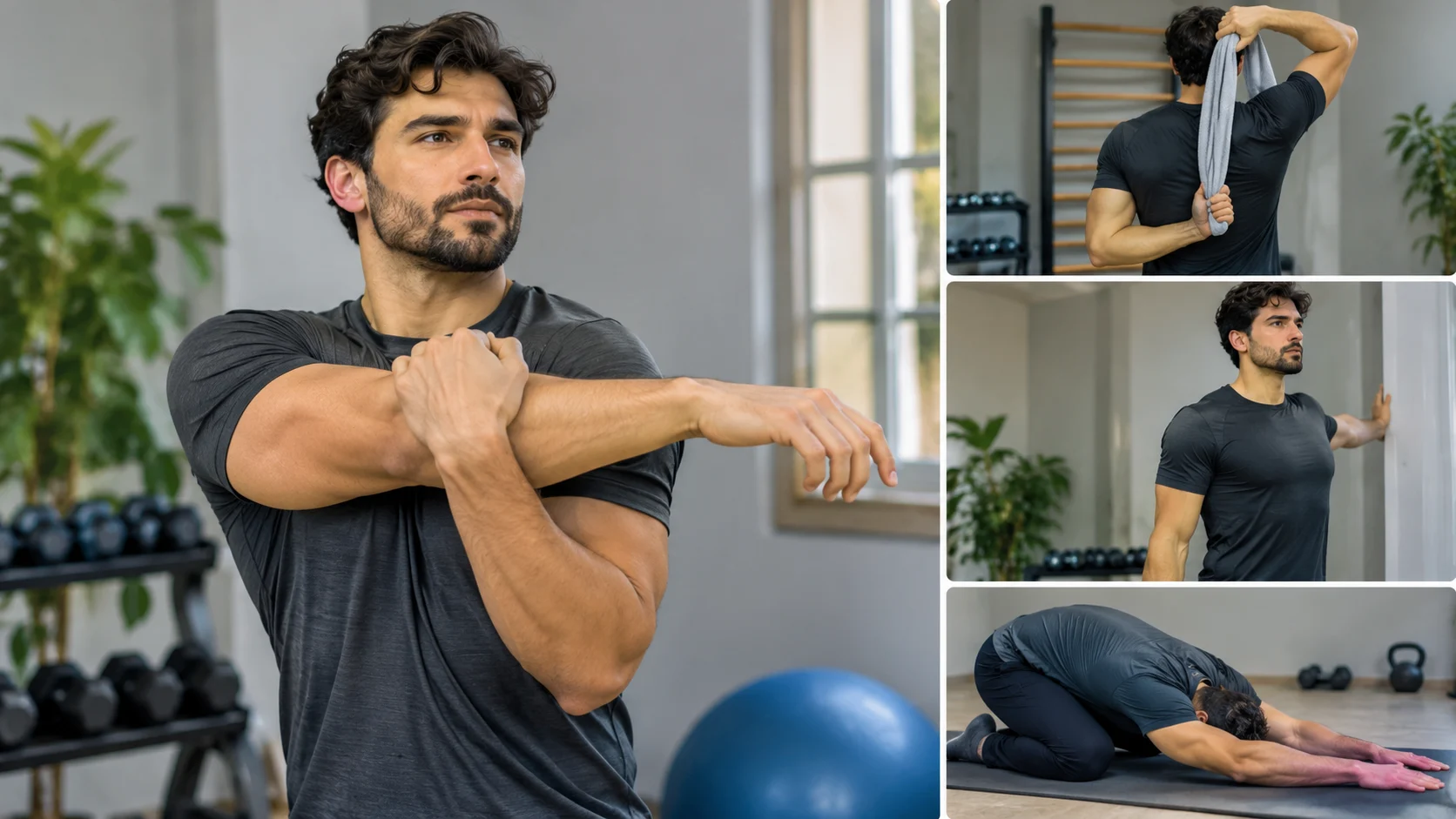
Rotator cuff stretches are gentle movements that help maintain shoulder flexibility, improve mobility, and reduce feelings of tightness. The rotator cuff consists of four muscles and their tendons that help stabilize the shoulder joint. These muscles support everyday activities such as reaching, lifting, dressing, and moving your arms. Keeping the surrounding tissues flexible can make normal shoulder movements feel more comfortable.
Many people experience shoulder stiffness because of prolonged sitting, repetitive movements, or limited physical activity. Gentle stretching may improve comfort and range of motion when performed correctly. However, not every shoulder problem benefits from the same stretches, especially when pain or an injury is present.
Understanding rotator cuff stretches can help you develop a safer approach to shoulder mobility. This guide explains common stretching techniques, their potential benefits, proper form, and mistakes to avoid. It also covers when stretching may not be appropriate and when professional medical advice is necessary.
What Are Rotator Cuff Stretches?
Rotator cuff stretches are movements designed to improve flexibility around the shoulder joint. They may target the rotator cuff muscles directly or stretch nearby muscles that influence shoulder movement. These exercises often involve gentle arm positioning, controlled rotation, and comfortable movement through a limited range. Their purpose is to support mobility without placing excessive stress on sensitive tissues.
The rotator cuff includes the supraspinatus, infraspinatus, teres minor, and subscapularis muscles. Together, these muscles help position and stabilize the upper arm bone within the shoulder socket. They also contribute to rotational movements and arm elevation. Because the shoulder is highly mobile, its muscles must coordinate to maintain stability during daily activities.
Stretching is only one part of maintaining shoulder function. Strength, coordination, posture, and joint health also affect how comfortably the shoulder moves. While gentle stretches may help reduce stiffness, they cannot correct every cause of shoulder discomfort. A balanced approach considers both flexibility and muscle control.
Why Rotator Cuff Flexibility Matters
Shoulder flexibility allows the arm to move through a comfortable range during ordinary activities. Reaching for a shelf, putting on a jacket, or washing your hair requires coordinated movement from several muscles and joints. Restricted mobility may make these actions uncomfortable or difficult. Gentle stretching can sometimes improve movement when muscle tightness contributes to the limitation.
The shoulder works together with the shoulder blade, upper back, and surrounding muscles. Stiffness in one area can influence how other structures move. For example, limited chest or upper-back mobility may affect overhead reaching. Addressing these related areas may be more useful than stretching the rotator cuff alone.
Flexibility should not be confused with joint stability. Some people naturally have a large range of shoulder movement and do not need additional stretching. Excessive stretching may worsen symptoms in people with unstable or irritated joints. The goal is comfortable, controlled movement rather than achieving the greatest possible range.
Key Benefits of Rotator Cuff Stretches
One potential benefit of rotator cuff stretches is improved shoulder range of motion. Gentle, consistent movement may help reduce stiffness associated with inactivity or muscle tightness. Better mobility can make everyday tasks easier when restricted flexibility is the main problem. Improvements usually develop gradually rather than immediately after a single stretching session.
Stretching may also help reduce temporary feelings of muscle tension around the shoulder. Slow movements can encourage relaxation and increase awareness of how the joint moves. This may be useful after prolonged periods of desk work or other activities involving sustained positions. However, stretching should not be expected to relieve every type of shoulder pain.
Another benefit involves maintaining comfortable movement as part of a broader exercise routine. Mobility exercises can complement appropriate strengthening and general physical activity. They may help people recognize restrictions before attempting demanding movements. Still, research does not show that stretching alone reliably prevents rotator cuff injuries or treats torn tendons.
Understanding the Anatomy of the Rotator Cuff
The supraspinatus muscle sits above the shoulder blade and helps initiate arm elevation. Its tendon passes through a relatively narrow region near the top of the shoulder. This structure can become irritated in certain shoulder conditions. Movements that compress or overload sensitive tissues may produce discomfort, making appropriate exercise selection important.
The infraspinatus and teres minor muscles help rotate the upper arm outward. These muscles are located along the back of the shoulder blade. The subscapularis lies on the front surface of the shoulder blade and contributes to inward rotation. Together, they help control the position of the upper arm during movement.
The rotator cuff muscles work with larger muscles, including the deltoid, pectorals, and muscles controlling the shoulder blade. Tightness or weakness in these surrounding structures can affect shoulder movement. For this reason, shoulder mobility routines often include stretches for several muscle groups. Not every effective shoulder stretch directly targets a rotator cuff muscle.
How to Prepare Before Doing Rotator Cuff Stretches
Before stretching, begin with a few minutes of comfortable shoulder movement. Gentle arm movements or an easy walk can help you transition from inactivity to exercise. Avoid suddenly pulling your arm into a large range of motion. Starting slowly allows you to notice stiffness, discomfort, or unusual limitations.
Choose a comfortable position with enough space to move your arms freely. Keep your breathing steady and avoid holding your breath during a stretch. Support your arm when necessary to prevent unnecessary tension. If you have an existing shoulder injury, follow the movement restrictions provided by your healthcare professional.
Pay attention to how your shoulder feels before and during each movement. Mild stretching tension may be acceptable, but sharp pain, catching, numbness, or increasing discomfort are warning signs to stop. Never force a movement to reach a particular position. Comfortable movement matters more than matching an example perfectly.
Cross-Body Shoulder Stretch: How to Do It
The cross-body shoulder stretch gently moves one arm across the front of the chest. Begin by sitting or standing comfortably with your shoulders relaxed. Raise one arm to a comfortable height and move it across your body. Use your opposite hand to support the upper arm without pressing directly on the elbow joint.
Keep the movement gentle and avoid pulling the arm forcefully. You may notice a mild stretch around the back of your shoulder. Hold the position for approximately 15 to 30 seconds if it remains comfortable. Release slowly and repeat on the opposite side, allowing normal breathing throughout the movement.
This stretch primarily targets tissues around the back of the shoulder rather than isolating one rotator cuff muscle. It may help with posterior shoulder tightness in some people. However, it can aggravate certain shoulder conditions. Stop if it causes pinching, sharp pain, or a feeling that the joint is unstable.
Doorway Shoulder Stretch: Step-by-Step Guide
A doorway stretch primarily targets the chest muscles and front of the shoulders. Stand near an open doorway and place one forearm against the doorframe at a comfortable height. Keep your elbow slightly below shoulder level if that feels more natural. Position your feet so you can maintain balance without straining.
Gently shift your body forward until you feel mild tension across the chest or front shoulder. Keep your shoulders relaxed and avoid pushing into discomfort. Hold the position for about 15 to 30 seconds, then return to standing. Repeat on the other side if your shoulder tolerates the movement.
Although this exercise does not directly isolate the rotator cuff, it may support overall shoulder mobility by addressing tight chest muscles. It can be particularly useful when prolonged sitting contributes to a feeling of upper-body stiffness. Avoid forcing the arm backward. People with shoulder instability or anterior shoulder pain may need a different exercise.
Pendulum Exercise for Gentle Shoulder Mobility
The pendulum exercise is a gentle movement commonly used in shoulder rehabilitation programs. Stand beside a stable table or chair and support yourself with your unaffected arm. Lean forward slightly and allow the other arm to hang comfortably. Keep the hanging shoulder relaxed rather than actively lifting the arm.
Use a small movement of your body to let the hanging arm swing gently forward and backward. You can also try small side-to-side movements or circles if they are comfortable. The motion should come mainly from shifting your body, not forcefully moving your shoulder muscles. Continue briefly without pushing through pain.
Pendulum movements are mobility exercises rather than traditional sustained stretches. They may help people maintain gentle shoulder movement when recommended for their condition. Their usefulness depends on the reason for shoulder stiffness or discomfort. After an injury or operation, follow a clinician’s instructions about whether and when this exercise is appropriate.
Towel-Assisted Shoulder Rotation Stretch
A towel-assisted rotation stretch can be used to explore gentle shoulder mobility, but it is not suitable for every shoulder condition. Hold a small towel with both hands in a comfortable position. Avoid placing your arm behind your back if that produces pain or instability. Begin with a range that feels easy to control.
For a gentle version, keep your elbows near your sides while holding the towel loosely in front of your body. Slowly rotate your forearms outward within a comfortable range without pulling aggressively. Maintain an upright posture and avoid twisting your torso. Stop before reaching a painful or restricted endpoint.
This movement may provide light mobility practice, although it does not strongly stretch every rotator cuff muscle. A clinician may recommend a different towel-assisted technique for specific restrictions. Do not use the opposite arm to force an injured shoulder into rotation. Controlled movement is safer than trying to achieve maximum flexibility.
Sleeper Stretch: Benefits and Precautions
The sleeper stretch is sometimes used to address tightness at the back of the shoulder. It is commonly associated with shoulder mobility programs for people involved in repetitive overhead activities. However, the position can place stress on sensitive shoulder structures. It should not be considered a universal stretching exercise.
Traditional versions involve lying on one side and rotating the upper arm inward. Some people experience discomfort or pinching when attempting this movement. For that reason, healthcare professionals may prefer modified positions or alternative stretches. The cross-body stretch is often easier to adjust for comfort.
If a physical therapist has specifically recommended the sleeper stretch, follow the technique and range they demonstrate. Avoid pressing forcefully on the forearm or attempting to overcome resistance. Stop if you experience pain, catching, or unusual pressure. A modified exercise may be more appropriate depending on your shoulder condition.
External Rotation Mobility Exercise
External rotation is the movement of turning the upper arm outward at the shoulder. This motion involves several structures, including the infraspinatus and teres minor muscles. Gentle mobility exercises can help assess and maintain a comfortable rotational range. They should be performed without forcing the shoulder beyond its natural limits.
Begin seated or standing with your elbow bent and resting comfortably near your side. Keep your upper arm close to your body and slowly move your forearm outward. Stop when you reach a comfortable endpoint without twisting your torso. Return to the starting position using a smooth, controlled movement.
This exercise is an active mobility movement rather than a deep stretch. It may be useful for maintaining shoulder control when there are no restrictions against the motion. Resistance bands and weights are not required for this gentle version. If rotation causes pain or instability, stop and seek guidance about suitable alternatives.
How Often Should You Do Rotator Cuff Stretches?
Stretching frequency depends on your comfort, activity level, and any existing shoulder condition. For general mobility, a brief routine on several days of the week may be reasonable. Some people prefer gentle daily movement when it feels comfortable. There is no single schedule that works for everyone.
A simple session might include a few comfortable movements and short holds rather than an extended routine. For static stretches, holds of approximately 15 to 30 seconds are commonly used in general flexibility programs. However, duration should be adjusted according to tolerance. Longer or stronger stretching is not automatically more beneficial.
Consistency is generally more useful than attempting aggressive stretches occasionally. Pay attention to how your shoulder responds later in the day and the following morning. If symptoms increase or movement becomes more restricted, reduce or stop the activity. Persistent problems deserve professional assessment rather than repeated stretching through discomfort.
Common Mistakes to Avoid During Rotator Cuff Stretches
One common mistake is applying too much force when stretching the shoulder. People sometimes assume that stronger tension produces faster improvement. In reality, aggressive movements may irritate sensitive muscles, tendons, or joint structures. Stretching should create only mild, tolerable tension rather than significant pain.
Another mistake involves poor positioning. Raising the shoulder toward the ear, twisting the torso, or locking the arm into an uncomfortable angle can change the movement. These compensations may reduce the usefulness of the stretch. A stable posture and controlled range help keep the exercise focused and comfortable.
Ignoring symptoms is another important concern. Painful catching, unusual weakness, or increasing discomfort should not be treated as signs of progress. Continuing to stretch through these symptoms may aggravate an underlying problem. Stop the movement and seek medical advice when symptoms are persistent, severe, or unexplained.
Rotator Cuff Stretches vs. Strengthening Exercises
Stretching and strengthening exercises serve different purposes in shoulder care. Stretching focuses on maintaining or improving movement range when tissues are tight. Strengthening helps muscles produce force and stabilize the shoulder during activity. Both may be useful, depending on the person’s physical needs and medical history.
Rotator cuff strengthening exercises often involve controlled movements with light resistance under appropriate guidance. They target muscles responsible for shoulder rotation and stability. Stretching alone does not provide the same training effect. In some shoulder conditions, strengthening and gradual activity are more important than increasing flexibility.
A balanced exercise program considers movement quality, strength, coordination, and comfort. However, not everyone needs both stretching and strengthening in equal amounts. People with excessive joint mobility may benefit more from stability-focused exercises. A physical therapist can help determine which approach suits a particular shoulder problem.
Can Rotator Cuff Stretches Help Shoulder Pain?
Gentle stretches may help some types of shoulder discomfort, particularly when muscle tightness or restricted movement contributes to symptoms. They can also help people become more aware of comfortable movement patterns. However, shoulder pain has many potential causes. Stretching is not an appropriate treatment for every condition.
Rotator cuff tendinopathy, tears, frozen shoulder, arthritis, and neck-related problems can all produce shoulder discomfort. These conditions may require different approaches to treatment. A stretch that feels helpful for one problem may worsen another. Accurate diagnosis is important when pain continues or affects normal activities.
Seek medical assessment if shoulder pain follows an injury, becomes progressively worse, or is associated with significant weakness. Sudden inability to lift the arm, obvious deformity, or severe pain after trauma requires prompt medical attention. Chest pain or breathing difficulty with shoulder pain requires emergency evaluation. Do not rely on stretching to address these warning signs.
Rotator Cuff Stretches for People Who Work at Desks
Desk work often involves long periods of sitting and limited upper-body movement. This can contribute to feelings of stiffness around the neck, chest, upper back, and shoulders. Gentle movement breaks may help reduce temporary discomfort associated with staying in one position. However, sitting posture alone does not explain every shoulder problem.
During a work break, comfortable shoulder rolls, arm movements, and light chest stretches can provide variety. Avoid forcing the shoulders backward or trying to maintain a rigid posture all day. Changing positions regularly is often more practical. The goal is to support comfortable movement throughout daily activities.
Workspace organization may also influence comfort. Positioning frequently used items within easy reach can reduce unnecessary stretching or reaching. Adjusting a chair and desk to suit your needs may help avoid sustained awkward positions. These changes complement general physical activity and appropriate shoulder exercises.
When Should You Avoid Rotator Cuff Stretches?
Rotator cuff stretches should be avoided or modified when they trigger sharp pain, instability, or worsening symptoms. Recent shoulder injuries may involve damaged tissues that need protection. Aggressive stretching could interfere with recovery in some cases. A healthcare professional can advise which movements are appropriate during healing.
People recovering from shoulder surgery should follow their prescribed rehabilitation plans. Certain positions or rotations may be restricted while repaired tissues recover. The timing of stretching varies depending on the procedure and individual circumstances. General online exercise instructions cannot replace personalized postoperative guidance.
Stretching may also be unsuitable for people with significant shoulder instability or certain inflammatory conditions. Numbness, tingling, marked weakness, or persistent night pain deserves medical evaluation. These symptoms may reflect problems beyond simple muscle tightness. Identifying the cause is more important than increasing the intensity of a stretching routine.
Tips for Building a Safe Shoulder Mobility Routine
Begin with movements that feel comfortable and easy to control. Select only a few exercises that match your current mobility and physical needs. A short routine may include gentle pendulum movements, active rotations, and a mild cross-body stretch when tolerated. There is no need to perform every available shoulder exercise.
Increase movement gradually rather than forcing immediate improvements. Notice whether your shoulder remains comfortable during the routine and afterward. If a movement consistently causes irritation, leave it out until you receive appropriate guidance. Progress should be measured by comfortable function rather than the amount of stretching discomfort endured.
Combine mobility work with regular physical activity and suitable strengthening when appropriate. Good sleep, adequate recovery, and avoiding repeated painful movements may also support shoulder comfort. For ongoing limitations, a physical therapist can assess strength, movement, and individual needs. Personalized guidance can help establish realistic goals.
Conclusion
Rotator cuff stretches can support shoulder mobility and reduce feelings of stiffness when performed gently and appropriately. Movements such as the cross-body stretch, doorway stretch, and pendulum exercise may be useful for certain people. Their benefits depend on the underlying cause of restricted movement. Comfortable technique is more important than stretching intensity.
Understanding the difference between flexibility, stability, and strength helps create a balanced shoulder care routine. Not every shoulder condition requires additional stretching, and some movements may aggravate injured or unstable tissues. Paying attention to symptoms and avoiding forceful techniques can reduce unnecessary irritation. Persistent pain or weakness should be assessed by a qualified healthcare professional.
A practical shoulder mobility routine focuses on consistency, controlled movement, and gradual progress. Small improvements in comfort and range of motion can make everyday activities easier. By choosing suitable exercises and respecting your body’s limits, you can support healthy shoulder function without placing unnecessary stress on the joint.
Frequently Asked Questions
What are the best rotator cuff stretches?
Gentle cross-body shoulder stretches and selected rotation exercises may help improve shoulder mobility. Doorway stretches can address nearby chest tightness. The best exercise depends on your symptoms, flexibility, and any existing shoulder condition.
How long should you hold rotator cuff stretches?
General flexibility routines commonly use comfortable holds of about 15 to 30 seconds. However, the appropriate duration varies by exercise and individual tolerance. Stop immediately if stretching causes sharp pain, instability, or worsening symptoms.
Can rotator cuff stretches help with shoulder stiffness?
Yes, gentle stretching may improve stiffness caused by muscle tightness or limited movement. However, stiffness can also result from joint conditions or injuries that require different treatment. Persistent or painful restrictions should be professionally assessed.
Should you stretch a painful rotator cuff?
Not necessarily. Some painful shoulders tolerate gentle movement, while others become more irritated with stretching. Avoid forcing painful positions, especially after an injury. A healthcare professional can help determine which exercises are appropriate.
How often should rotator cuff stretches be performed?
For general mobility, gentle stretching several days per week may be suitable if it remains comfortable. Frequency depends on your condition and exercise tolerance. People recovering from injuries should follow an individualized rehabilitation schedule.