
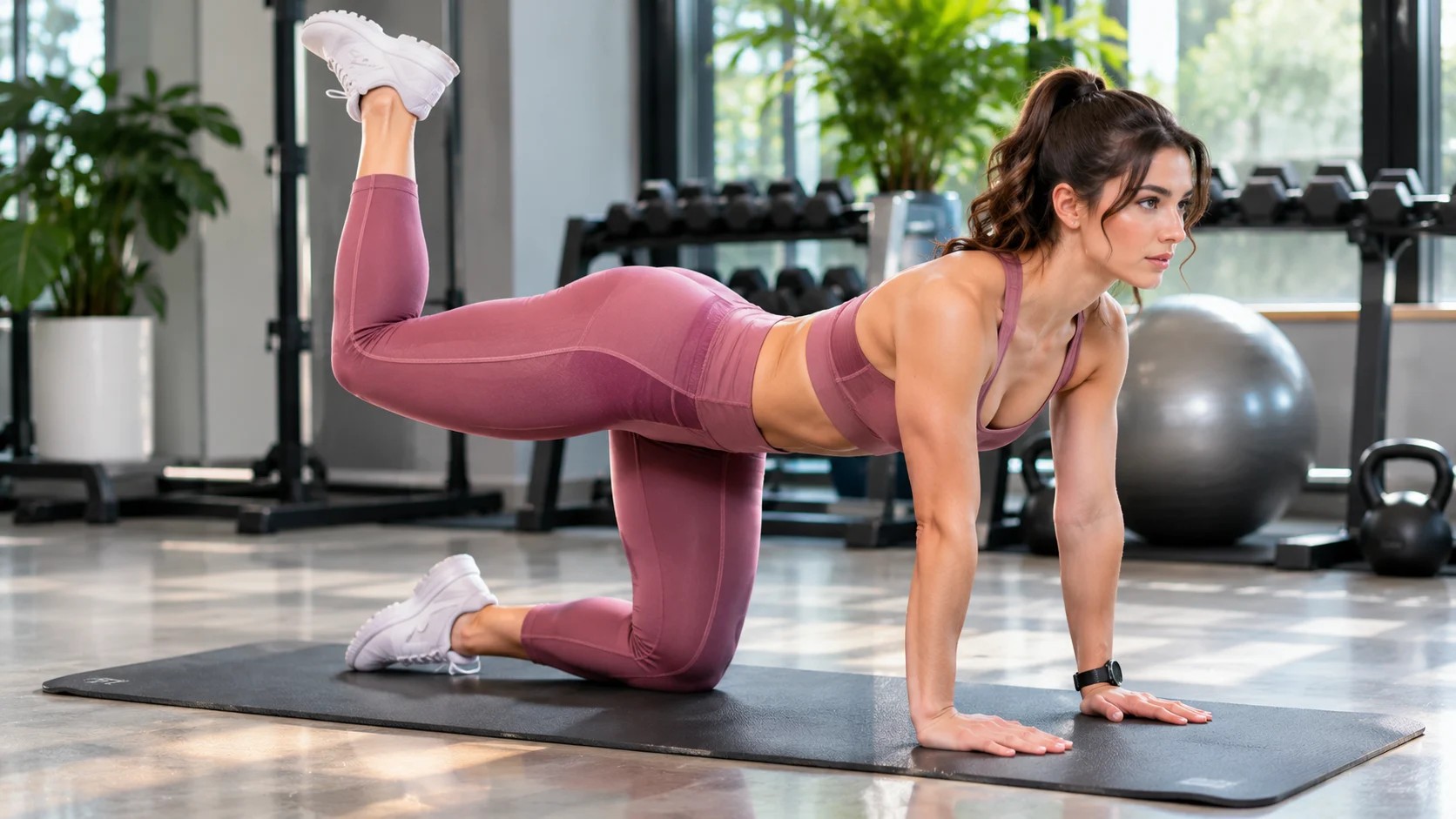
The donkey kicks exercise is a simple bodyweight movement that helps strengthen the glutes and improve lower-body muscle control. It requires very little equipment, making it a convenient addition to home workouts, gym routines, and beginner exercise programs. However, performing the movement incorrectly can place unnecessary pressure on your lower back and reduce its effectiveness.
Donkey kicks are commonly included in glute workouts, Pilates-inspired routines, and rehabilitation programs. The exercise involves lifting one leg backward while maintaining a stable position on your hands and knees. Although the movement appears straightforward, proper alignment, controlled motion, and steady breathing are essential for comfortable performance.
This guide explains how to do donkey kicks correctly, which muscles they target, and their potential benefits. You will also learn about beginner-friendly modifications, common technique mistakes, exercise variations, and practical workout tips. Understanding these details can help you strengthen your hips and improve movement control without unnecessary strain.
What Is the Donkey Kicks Exercise?
Donkey kicks are a bodyweight strengthening exercise performed from a hands-and-knees position. The movement involves extending one hip while keeping the knee bent, resembling a gentle backward kick. It primarily targets the gluteus maximus, one of the major muscles responsible for hip extension. The exercise also requires supporting muscles to maintain balance and stability.
Donkey kicks are sometimes called quadruped hip extensions because of the position and movement involved. Unlike standing leg exercises, they allow you to focus on controlled hip movement while supporting much of your body weight. This makes them accessible to many beginners. However, people with wrist, knee, or back discomfort may require modifications.
The exercise can be performed without weights, resistance bands, or specialized equipment. A comfortable exercise mat is often helpful for supporting the knees and hands. As movement control improves, some people add resistance or try different variations. The most important starting point is learning to move the hip without excessively arching the lower back.
What Muscles Do Donkey Kicks Work?
The primary muscle involved in donkey kicks is the gluteus maximus. This large muscle contributes to hip extension during activities such as standing up, climbing stairs, and running. When you lift your thigh backward, the gluteus maximus helps produce the movement. Its contribution depends on the exercise position and how the movement is performed.
Other muscles assist with stability during donkey kicks. The gluteus medius and smaller hip muscles help support pelvic control, while the abdominal and back muscles contribute to maintaining a steady trunk. The shoulders and arms also provide support in the quadruped position. These supporting actions make the exercise more than an isolated leg movement.
Although several muscles participate, donkey kicks should not be considered a complete lower-body workout. They emphasize hip extension but provide less direct training for some other important leg movements. Exercises such as squats, step-ups, and suitable hip-hinge movements can provide complementary benefits. Combining different movements supports more balanced strength development.
How to Do Donkey Kicks Step by Step
Begin on an exercise mat with your hands positioned beneath your shoulders and knees beneath your hips. Keep your spine in a comfortable, neutral position and look toward the floor. Distribute your weight evenly through your supporting limbs. Gently engage your abdominal muscles without holding your breath or forcing your back into a rigid position.
Keep one knee bent at approximately a right angle and slowly lift that thigh backward and upward. Focus on moving from your hip rather than swinging the entire leg. Raise the leg only as far as you can while keeping your pelvis reasonably level. Avoid arching your lower back to create additional height.
Lower the leg slowly until your knee returns toward the starting position. Complete a manageable number of controlled repetitions before switching sides. Maintain steady breathing and pause if your technique becomes difficult to control. The goal is smooth hip movement rather than lifting your foot as high as possible.
Benefits of Donkey Kicks for Glute Strength
One of the main benefits of donkey kicks is their ability to activate and strengthen the gluteus maximus. This muscle supports important movements involving hip extension and lower-body control. Donkey kicks provide a simple opportunity to practice these actions. When performed consistently with suitable progression, they can contribute to a broader strengthening program.
The exercise also encourages awareness of how the hips move independently from the lower back. Some people find it difficult to maintain trunk stability while moving one leg. Practicing controlled repetitions can help develop better coordination. These skills may support other exercises that require the hips and trunk to work together.
Donkey kicks are convenient because they require little space and can be adjusted to different abilities. Beginners may perform them using only body weight, while more experienced individuals may use appropriate resistance. However, results depend on the overall training program and individual circumstances. No single exercise guarantees a particular physical appearance or level of strength.
How Donkey Kicks Support Hip Stability
Hip stability involves coordinated activity among the glutes, abdominal muscles, and other surrounding structures. During donkey kicks, the supporting side must help prevent excessive pelvic movement. This creates an opportunity to practice controlled movement while maintaining a steady base. The exercise may therefore contribute to improved awareness of hip and trunk positioning.
Maintaining a level pelvis is particularly important when lifting one leg. If the hips rotate excessively, the movement may become less focused on the intended muscles. Slow repetitions allow you to notice these changes and adjust your position. Using a mirror or receiving professional feedback may help when learning the exercise.
Donkey kicks can support hip stability as part of a varied exercise routine. However, functional stability also involves standing, walking, balancing, and moving in different directions. Additional exercises may be necessary to address these abilities. A physical therapist or qualified exercise professional can recommend appropriate movements when specific stability limitations are present.
Common Donkey Kick Mistakes to Avoid
One common mistake is arching the lower back excessively while raising the leg. This often happens when someone tries to lift the foot higher than their hip movement comfortably allows. The extra movement may come from the spine rather than the glutes. Maintaining a comfortable trunk position helps keep the exercise controlled.
Another mistake is rotating the hips or shifting too much weight toward one side. This can reduce stability and make the movement difficult to repeat consistently. Some people also rush through repetitions, using momentum instead of muscular control. Slower movements make it easier to notice whether the pelvis and supporting limbs remain reasonably steady.
Holding your breath and placing unnecessary pressure on the wrists are additional mistakes to watch for. Keep breathing naturally and distribute your weight comfortably through your hands. If the supporting position creates pain, consider a suitable modification. Correct technique should feel manageable and should not require forcing joints into uncomfortable positions.
How Many Donkey Kicks Should You Do?
The appropriate number of donkey kicks depends on your fitness experience, current strength, and exercise goals. Beginners often benefit from a small number of controlled repetitions while learning proper technique. For example, one or two sets of eight to twelve repetitions per side may be a reasonable starting point for healthy individuals. These numbers are flexible rather than universal requirements.
Focus on movement quality instead of attempting to complete as many repetitions as possible. If your back begins arching or your hips rotate, the exercise may be becoming too demanding. Reduce the repetitions or take a break when needed. Gradual progression allows your muscles to adapt without adding unnecessary strain.
Donkey kicks can be included in a lower-body routine a few times per week, depending on your overall training plan. Allowing recovery between demanding strengthening sessions is important. People recovering from injuries may require a different schedule. A qualified professional can help establish suitable exercise volume when medical or rehabilitation needs are involved.
Donkey Kicks for Beginners
Beginners should focus on understanding the movement before introducing additional resistance. Start in a comfortable hands-and-knees position with adequate padding beneath your knees. Practice gently shifting your weight while keeping the trunk steady. Once the position feels manageable, begin lifting one leg through a small, comfortable range of motion.
A smaller leg lift can make the exercise easier without eliminating its purpose. Rather than trying to reach a specific height, focus on moving the thigh backward while keeping your lower back comfortable. Pause briefly and return to the starting position. Gradually increase the movement range only when control improves.
If supporting your body on your wrists or knees feels uncomfortable, consider a standing hip extension variation. Holding a stable support can reduce the demands of the quadruped position. The standing version still allows you to practice controlled backward leg movement. Choose the option that best matches your abilities and comfort.
Donkey Kicks With Resistance Bands
Resistance bands can increase the difficulty of donkey kicks once basic technique is comfortable. The added resistance challenges the hip muscles during the lifting movement. However, a stronger band is not automatically better. Select resistance that allows you to maintain a steady trunk and controlled leg movement throughout the exercise.
A suitable resistance band may be positioned according to the specific variation and manufacturer’s instructions. Some arrangements involve placing a loop around the thighs, while others use bands designed for quadruped movements. Check that the band remains secure and does not pull unpredictably. Begin with gentle resistance and avoid forcing the leg upward.
Resistance band donkey kicks should feel challenging without causing pain or significant changes in technique. If the lower back arches or the hips rotate excessively, reduce the resistance. Controlled movement remains more important than the amount of tension provided by the band. Progress gradually as strength and coordination improve.
Straight-Leg Donkey Kick Variation
The straight-leg donkey kick is a variation that changes the position of the moving leg. Instead of maintaining a bent knee, you extend the leg backward while keeping the movement controlled. This variation may feel different because of the altered position and leverage. It still emphasizes hip extension and requires trunk stability.
Begin in the standard quadruped position with your spine comfortable and your hands beneath your shoulders. Slowly extend one leg backward until it is reasonably aligned with your torso. Avoid lifting the leg excessively or forcing the lower back into extension. Return to the starting position with control before repeating.
The straight-leg variation may be more demanding for some people because the extended limb changes the exercise’s leverage. Start with a small range if necessary. Avoid attempting this variation when it causes back discomfort or difficulty maintaining balance. Proper technique and comfortable movement should determine whether the exercise suits your current abilities.
Standing Donkey Kicks for Better Accessibility
Standing donkey kicks offer an alternative for people who find kneeling uncomfortable. The movement can be performed while holding a stable chair, countertop, or other suitable support. It primarily involves extending one hip backward without excessive trunk movement. This variation can be useful for beginners and individuals who prefer an upright exercise position.
Stand tall with your feet comfortably positioned and hold the support lightly for balance. Keep one leg planted while slowly moving the opposite leg backward. Maintain a gentle bend in the moving knee if that feels comfortable. Avoid leaning forward excessively or arching your lower back to increase the movement.
Return the leg slowly and repeat with controlled movement before switching sides. Some individuals may benefit from professional guidance if they have balance difficulties or existing injuries. The standing version provides a convenient way to practice hip extension without placing weight on the knees. It can also be included in simple home exercise routines.
Donkey Kicks vs. Fire Hydrants
Donkey kicks and fire hydrants are both commonly performed from a hands-and-knees position. However, they emphasize different hip movements. Donkey kicks primarily involve extending the hip backward, while fire hydrants involve moving the thigh outward to the side. These differences influence which muscles contribute most strongly to each exercise.
Fire hydrants place greater emphasis on hip abduction, involving muscles such as the gluteus medius. Donkey kicks focus more directly on hip extension through the gluteus maximus. Both exercises also require trunk and pelvic stability. Their usefulness depends on the goals of the exercise program and the individual’s movement abilities.
Including both exercises can provide variety within a suitable lower-body routine. However, completing every variation is not necessary for developing functional strength. Other exercises may be more appropriate depending on available equipment and training needs. Choosing movements that complement one another helps create a balanced program without unnecessary repetition.
Can Donkey Kicks Help With Lower-Back Comfort?
The gluteal muscles contribute to hip movement and work alongside the trunk muscles during many activities. Strengthening these muscles may support a broader program designed to improve movement control. However, donkey kicks are not a specific treatment for every type of lower-back discomfort. Back pain can develop from several causes requiring different approaches.
Some people experience discomfort during donkey kicks when they arch their lower back or lift the leg too high. Reducing the movement range may improve comfort. Others may need an alternative exercise that places less demand on the spine. The goal is controlled hip extension without increasing existing symptoms.
If you experience persistent lower-back pain, new leg weakness, or symptoms spreading down the leg, seek professional assessment. A physical therapist can determine whether donkey kicks are suitable for your situation. Exercise selection should reflect the underlying problem rather than assumptions about weak muscles. Appropriate rehabilitation may involve several different movement strategies.
How to Add Donkey Kicks to a Workout Routine
Donkey kicks can fit into a home workout, gym session, or general lower-body strengthening program. They may be used as a preparation exercise or included among other controlled hip movements. Their placement depends on your goals and the intensity of surrounding exercises. A balanced routine should not rely on donkey kicks alone.
For example, a lower-body workout might include comfortable squats, step-ups, glute bridges, and donkey kicks. These exercises involve different movement patterns and challenge the muscles in complementary ways. Select variations appropriate for your experience and physical abilities. Allow enough rest to maintain good technique rather than rushing between exercises.
You can also use donkey kicks during a short movement session when limited space or equipment is available. Focus on slow repetitions and comfortable positioning. As strength improves, adjust repetitions, resistance, or exercise selection gradually. Consistency and good technique are more useful than completing an unnecessarily demanding routine.
Safety Tips for Performing Donkey Kicks
Safety begins with choosing a comfortable exercise surface and checking your starting position. A supportive mat can reduce pressure on the knees, while a stable floor helps prevent slipping. Keep your hands positioned comfortably and avoid forcing the wrists into painful angles. Small adjustments may improve comfort without changing the overall exercise.
Move slowly and avoid using momentum to lift the leg. The exercise should create manageable muscular effort rather than sharp pain. If you notice discomfort in the lower back, knees, wrists, or hips, stop and reassess the movement. Persistent symptoms may indicate that a different exercise or professional guidance is needed.
People with recent injuries, surgical restrictions, or significant joint problems should ask a healthcare professional whether donkey kicks are appropriate. Rehabilitation programs often require individualized exercise selection and progression. Do not assume a movement is suitable simply because it uses body weight. Listening to your body’s response helps support safer physical activity.
Conclusion
The donkey kicks exercise is a practical bodyweight movement that primarily strengthens the gluteus maximus while encouraging hip and trunk control. It can be performed at home or included in broader lower-body workouts. Proper technique involves maintaining a stable position, moving the hip slowly, and avoiding excessive lower-back movement.
Beginners can start with small, controlled leg lifts before exploring variations such as standing donkey kicks or resistance band exercises. Choosing suitable repetitions and allowing adequate recovery help support gradual progress. Combining donkey kicks with other lower-body exercises provides a more balanced approach to strength and mobility.
Whether your goal is improving hip strength, learning better movement control, or adding variety to your workouts, donkey kicks can be a useful option. Focus on comfortable positioning and consistent technique rather than lifting the leg as high as possible. If pain or movement difficulties occur, seek appropriate guidance before continuing.
Frequently Asked Questions
What Are Donkey Kicks Good For?
Donkey kicks primarily strengthen the gluteus maximus and support controlled hip extension. They also involve muscles that help stabilize the pelvis and trunk during movement.
How Many Donkey Kicks Should Beginners Do?
Healthy beginners may start with one or two sets of eight to twelve controlled repetitions per side. Adjust the amount according to comfort, technique, and individual exercise needs.
Do Donkey Kicks Work the Glutes?
Yes, donkey kicks target the gluteus maximus through hip extension. Other muscles also contribute to stability, making the exercise useful as part of a balanced strengthening routine.
Can You Do Donkey Kicks Every Day?
Daily practice is not necessary for everyone. Strengthening sessions should allow suitable recovery, particularly when using demanding resistance. Frequency depends on your abilities and overall training program.
Why Does My Lower Back Hurt During Donkey Kicks?
Lower-back discomfort may occur when you arch your spine or lift the leg beyond your comfortable hip range. Stop if pain develops and seek professional guidance when symptoms persist.