
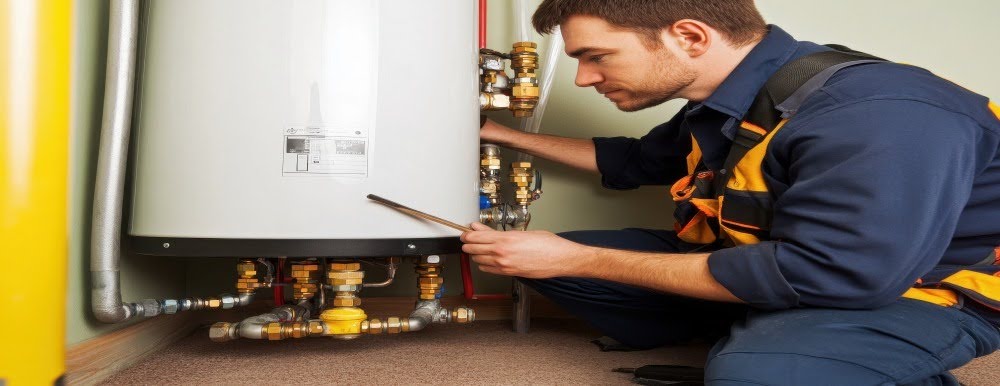
Few household problems get noticed as fast as a cold shower. One morning the water runs and runs, but it never warms up. Maybe it’s lukewarm. Maybe it’s ice cold. Either way, your day just got harder.
The cause can be as simple as a tripped breaker or as serious as a failing tank. Some fixes take five minutes. Others call for professional water heater repair or a full replacement. Knowing the difference saves time, money, and a lot of frustration.
This guide covers the quick checks worth trying first, the most common causes for gas and electric units, warning signs that point to bigger trouble, and when to pick up the phone.
Start with the simple checks
Before you assume the worst, look at the basics. A surprising number of service calls end with a reset switch or a closed valve. These checks are safe for most homeowners and may spare you a water heater repair visit.
First, figure out how widespread the problem is. Turn on the hot water at a few faucets around the house. If only one fixture runs cold, the issue is probably the faucet or its mixing valve, not the heater. If every tap is cold, the heater itself is the likely source.
For an electric heater, check your electrical panel. Water heaters run on a dedicated double-pole breaker. If it has tripped, reset it once. If it trips again, stop there. Repeated trips point to a wiring fault, a shorted element, or another problem that needs a professional.
For a gas heater, check that the gas supply is on and the pilot light is lit. Many newer units have a viewing window and a status light that blinks a code when something is wrong. Your owner’s manual or the label on the tank explains what the code means and how to relight the pilot safely.
Also check the thermostat setting. Sometimes a setting gets bumped during cleaning or a previous service visit. Most households do well with a setting around 120 degrees Fahrenheit.
One safety rule overrides everything else. If you smell gas near the heater, don’t touch any switches or try to relight anything. Leave the house and call your gas utility or emergency services from outside.
Common causes in electric water heaters
Electric units have fewer parts than gas models, but each one can fail. Most electric tanks have two heating elements, one near the top and one near the bottom, each controlled by its own thermostat.
A burned-out heating element is the most frequent culprit. When the upper element fails, you usually get no hot water at all. When the lower element fails, you get a small amount of hot water that runs out quickly. Elements wear out over time, and hard water speeds up the process by coating them with mineral scale.
A faulty thermostat causes similar symptoms. If it can’t read the water temperature correctly, it won’t tell the elements to heat. Thermostats can also stick, causing water that’s far too hot.
The high-limit switch is a safety device that cuts power if the water overheats. When it trips, the heater shuts down completely. A one-time trip may follow a power surge. Frequent trips usually signal a bad thermostat or element that needs water heater repair.
Common causes in gas water heaters
Gas heaters depend on a steady flame, so most problems involve ignition or gas flow.
A pilot light that won’t stay lit often points to a dirty or failing thermocouple or flame sensor. This small part confirms the pilot is burning before letting gas flow to the main burner. When it wears out, the heater shuts off gas as a safety measure.
A faulty gas control valve can stop the burner from firing even when the pilot is fine. Venting problems are another cause. Many newer gas heaters shut down if they sense poor airflow or blocked exhaust. A bird’s nest, a crushed vent pipe, or a clogged air intake screen can all trigger a shutdown.
Gas components are not a good place for trial and error. Replacing valves, sensors, or venting should be left to a licensed professional who can confirm safe operation and code compliance after any water heater repair.
When the water is warm but never hot
Sometimes the heater works, just not well. Lukewarm water or hot water that runs out fast has its own set of causes.
Sediment buildup is a big one. Minerals settle at the bottom of the tank over time and form a layer between the burner or lower element and the water. That layer wastes energy, reduces how much hot water the tank can hold, and often causes popping or rumbling sounds. Annual flushing helps prevent it.
A broken dip tube can also cause lukewarm water. This plastic tube carries incoming cold water to the bottom of the tank. If it cracks, cold water mixes with hot water at the top, right where it leaves for your faucets. You may also notice small bits of white plastic in faucet screens.
Sometimes the heater is simply too small. A growing family, a new soaking tub, or more people showering at the same time can outpace a tank sized years ago. No water heater repair fixes that. A larger tank or a tankless system may be the better answer.
How well water affects your water heater
Homes on private wells face some extra challenges. Hard water deposits scale on elements and tank walls faster. Iron and manganese add sediment. Acidic water can corrode the tank and fittings from the inside. Any of these conditions can shorten a heater’s life and lead to more frequent water heater repair calls.
A rotten egg smell that appears only in hot water is another common well water issue. It often comes from a reaction between sulfate-reducing bacteria and the tank’s anode rod. Replacing the anode with a different type and treating the water supply usually solves it.
Also keep in mind that no water at all is a different problem from no hot water. If cold water won’t run either, the issue is likely your well pump or pressure tank, not the heater.
When to call a plumber
Some problems are fine to check yourself. Others need trained hands. Call a professional for water heater repair if you notice any of the following:
- The breaker or high-limit switch trips more than once
- The pilot light keeps going out after you relight it
- You smell gas anywhere near the heater (leave first, then call)
- Water is pooling around the base of the tank
- Hot water looks rusty, brown, or cloudy
- The tank makes loud popping, banging, or rumbling sounds
- The pressure relief valve drips or discharges water
- Water temperature swings between hot and cold without warning
- You see scorch marks, soot, or a yellow flame on a gas unit
The pressure relief valve deserves special mention. It protects the tank from dangerous pressure. If it leaks or releases water, something inside isn’t working correctly. Don’t plug it or cap it. Have it checked right away.
Repair or replace?
Age is the best starting point. Most tank water heaters last about 8 to 12 years, sometimes longer with good maintenance. If your unit is still well within that range and the problem is a single part, such as an element, thermostat, or thermocouple, water heater repair usually makes sense.
Replacement is often the smarter choice when the tank itself is leaking, since a corroded tank can’t be patched. It also makes sense when the heater is near or past the end of its expected life, or when repair costs approach a large share of the price of a new unit. A replacement also gives you a chance to move to a more efficient model, such as a tankless or heat pump water heater, or to resize for your household’s current needs.
Get hot water back with a team you can call any time
A cold shower is a nuisance. A leaking tank or a gas problem is more serious. Knowing which is which helps you act quickly and safely.
Tri-County Pump Service, Inc. has served homeowners across Maryland, Virginia, and West Virginia since 1991. Our technicians diagnose electric, gas, tankless, and hybrid units, then handle water heater repair or replacement based on what your system actually needs. We also work on well pumps and water treatment. That means we can spot hard water, iron, or acidic water that may be wearing down your heater and fix the problem at its source.
If your home has no hot water, contact Tri-County Pump Service, Inc. for emergency 24/7 service. They provide urgent water heater repair.