
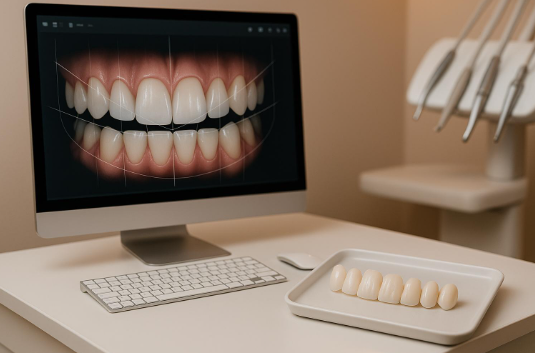
There was a time when cosmetic dentistry was discussed almost entirely in terms of appearance. A brighter smile, straighter-looking teeth and a more symmetrical shape were often considered the defining goals. Today, that conversation has become considerably more nuanced. Across Australia, smile design is increasingly being shaped by a combination of clinical precision, digital technology, individual expression and a growing understanding that a beautiful smile still needs to function as naturally as it looks.
This evolution has placed dental veneers in an interesting position within contemporary dentistry. Once associated primarily with dramatic cosmetic transformations, dental veneers are now part of a broader discussion about proportion, facial harmony, tooth preservation and personalised treatment planning.
From Perfect Smiles to Personal Smiles
The modern Australian patient is not necessarily searching for a mathematically perfect smile. Increasingly, people want something that feels appropriate to their face, personality and lifestyle.
That distinction matters.
A smile can be technically symmetrical without looking natural. Conversely, subtle variations in tooth shape, translucency and alignment can contribute to an appearance that feels more authentic. Contemporary smile design therefore involves more than selecting a shade of porcelain from a chart. Dentists may consider facial proportions, gum contours, tooth dimensions, bite relationships and the way teeth appear when a person speaks or smiles.
Digital imaging and computer-assisted planning have further changed this process. Rather than relying solely on conventional impressions and physical models, clinicians can use digital scans and visual simulations to analyse a patient’s existing smile and plan potential changes with greater precision.
The result is a shift from the concept of a new smile towards something more personal: a smile designed around the individual.
Why Dental Veneers Continue to Evolve
Veneers are thin restorations designed to cover the visible surfaces of teeth, and they can be used to address selected cosmetic concerns such as discolouration, certain shape irregularities and minor spacing issues. However, they are not a universal solution for every aesthetic concern.
The quality of the outcome depends heavily on diagnosis, treatment planning, material selection and clinical execution.
Modern veneer dentistry increasingly places emphasis on conservative approaches where appropriate. Preserving healthy tooth structure is an important consideration because dentistry is not simply about achieving an immediate visual transformation. It is also about considering what happens years after treatment.
This long-term perspective is particularly relevant in Australia, where patients have access to an increasingly sophisticated range of dental services and information. People can research materials, compare treatment approaches, examine digital smile simulations and investigate practitioners before making an appointment.
The relationship between patient and clinician is consequently becoming more informed — and more collaborative.
Technology Is Changing the Conversation
Digital dentistry has introduced a new vocabulary into smile design. Terms such as intraoral scanning, 3D imaging, digital treatment planning and computer-aided manufacturing are becoming more familiar to patients.
These technologies can help dentists gather detailed information and improve communication throughout treatment. A digital scan, for example, can create a detailed representation of the mouth without relying exclusively on traditional impression techniques. Digital planning can also help clinicians visualise proposed changes before treatment begins.
But technology itself does not create a beautiful smile.
Clinical judgement remains central.
A sophisticated digital workflow is only as valuable as the diagnosis and decisions behind it. The most impressive software cannot replace an understanding of occlusion, periodontal health, tooth structure or facial aesthetics. The future of smile design therefore appears less about technology replacing dentistry and more about technology giving dentists better tools to practise it.
The Changing Role of Dental Marketing
As smile design becomes more personalised, dental marketing is changing alongside it.
Traditional advertising often focused heavily on before-and-after photographs, promotional offers and promises of a dramatically transformed smile. While visual results remain relevant, today’s patients increasingly want to understand the story behind those results.
They want to know who is providing the treatment, what the process involves, whether alternatives exist, how maintenance works and what the potential limitations may be.
This creates an opportunity for dental practices to communicate differently.
Educational content can explain why one treatment may be appropriate for one patient but unsuitable for another. Articles, videos and social media can explore the importance of oral health before cosmetic treatment, the differences between restorative materials and the significance of personalised planning.
In this environment, effective dental marketing is not simply about attracting attention. It is about building understanding.
For Australian practices, this distinction is especially important because healthcare advertising must be approached responsibly. Cosmetic dentistry should be communicated in a way that remains informative, accurate and respectful of patient expectations rather than turning clinical care into a purely commercial proposition.
A More Human Definition of Aesthetic Dentistry
Perhaps the most significant development in Australian smile design is not technological at all. It is cultural.
Patients are becoming more discerning about what looks natural. Social media has exposed people to an enormous variety of aesthetic styles, from ultra-white smiles to extremely subtle cosmetic enhancements. At the same time, there is growing appreciation for individuality.
The future may therefore belong to smiles that do not immediately announce that they have been redesigned.
This is where the language of cosmetic dentistry becomes more interesting. Instead of asking simply, How can my teeth look better?, patients are beginning to ask more meaningful questions: What will suit my face? How can my smile remain natural? What does this treatment mean for my oral health in the long term?
Those questions reflect a maturing industry.
Designing Smiles for the Future
Australia’s oral care industry is moving towards an era where aesthetics, technology and preventative thinking increasingly overlap. Dental veneers remain an important part of that landscape, but their role is becoming more sophisticated.
The strongest smile designs are unlikely to be defined solely by brightness or symmetry. They will be defined by thoughtful planning, appropriate treatment, healthy foundations and an understanding of the person behind the smile.
And as dental marketing continues to evolve, the practices that communicate this complexity clearly may help reshape how Australians understand cosmetic dentistry — not as the pursuit of an artificial ideal, but as a carefully considered form of personalised oral care.