
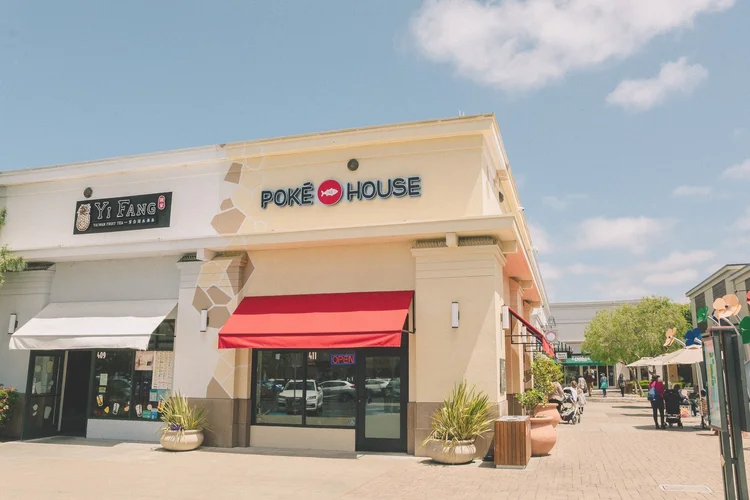
People considering a franchise usually start by evaluating the brand. They look at how recognizable the name is, whether customers seem to like it, and how the storefronts look. This makes sense as a first filter, but it examines the least transferable part of what is actually being purchased. A recognizable name draws the first customer through the door. What determines whether that location succeeds over the following years is everything behind the name: the procedures, the supply arrangements, the training, and the accumulated decisions about how the work gets done. The sign is the visible part. The system is the part that matters.
What a Restaurant Actually Requires
Anyone who has opened an independent restaurant learns quickly how many separate problems it contains. There is the menu and its costing. There is sourcing, which means finding suppliers who deliver consistently at a price the menu can support. There is kitchen layout and equipment selection, which shape how fast food can move. There is hiring, training, and scheduling. There is the buildout, the permits, the point-of-sale setup, the marketing, and the daily rhythm of ordering against forecasted demand.
Each of these is solvable. Solving all of them at once, with no template and no prior data, is what makes independent restaurant ownership so difficult. The first year is largely spent discovering which assumptions were wrong and correcting them at full cost. Many operators never reach the point where the corrections stop consuming the margin.
What a System Replaces
A franchise system exists to replace that discovery process with an inherited one. The menu has already been costed across many locations. The suppliers have been identified and the pricing negotiated at a scale a single location could not reach. The kitchen layout reflects what was learned from earlier stores about where bottlenecks form. The training materials exist because someone already made the mistakes that made them necessary.
Someone deciding whether to own a Poke House franchise or open an independent bowl shop is really deciding how much of that operating system they want to build themselves. The independent route offers full control over every decision and requires making every decision without reference data. The franchise route trades a portion of that control for access to answers that were expensive to develop and are cheap to adopt.
Neither choice is universally correct. The trade only makes sense when the system being offered actually contains those answers, which is why the evaluation should focus there rather than on the strength of the name.
Reading a System Honestly
Assessing a franchise system means looking past the marketing materials at the operational substance. Several questions surface most of what matters.
How specific is the operational guidance? A system with detailed procedures for prep, service, cleaning, and ordering has encoded real learning. A system that offers general guidance and leaves the specifics to the owner has left the hardest work undone.
What does the supply arrangement actually provide? Access to negotiated pricing and reliable delivery is one of the most concrete benefits a system can offer, because it directly affects food cost, which directly affects survival. Vague language about supplier relationships is worth less than clear terms.
What does support look like after opening? Initial training matters, but the difficult period is months four through eighteen, when the opening enthusiasm has faded and the operational problems have not. A system that provides ongoing field support behaves differently from one that provides a manual and a phone number.
How do existing locations perform, and how consistently? Averages conceal wide variation. A system where most locations perform similarly is transmitting something real. A system with a few strong performers and a long tail of weak ones may be transmitting less than it claims.
The Obligations on the Other Side
The exchange runs in both directions. A franchise owner accepts ongoing fees, usually a percentage of sales, plus contributions to shared marketing. They accept limits on the menu, the pricing, the suppliers, and the appearance of the store. They accept oversight and standards enforcement. These are not incidental terms; they are the mechanism that makes the system work, since consistency across locations is what the brand is actually selling to customers.
Prospective owners sometimes evaluate these constraints as costs to be minimized. A more accurate reading is that the constraints and the benefits are the same thing viewed from different sides. The standards that limit an owner’s discretion are the standards that make the brand mean something at every other location, including their own. An owner who resents the constraints will find the arrangement uncomfortable regardless of how well the concept performs.
The Fit Between Operator and Model
This points to the factor that most often determines outcomes and gets the least attention: whether the person suits the model. Franchise ownership rewards operators who execute a defined system precisely, manage people well, watch numbers closely, and work within an established framework without needing to redesign it.
It suits people who want to run a business poorly if their satisfaction comes from creating the concept rather than operating it. Someone whose motivation is culinary expression or building something original will chafe against the same standards that make the system valuable. That person is better served by independence, with all the difficulty that entails, than by a system whose central promise is uniformity.
Honest self-assessment on this point prevents more failed franchise relationships than any amount of financial analysis. The model is not better or worse than independent ownership; it asks for a different set of strengths and offers a different set of rewards.
What the Decision Comes Down To
Evaluating a franchise well means shifting attention from the visible to the operational. The recognizable name is genuinely worth something, and it is the easiest thing to see and the hardest to evaluate in isolation. The system underneath it, the procedures and suppliers and training and support that determine what happens on an ordinary Tuesday in the second year, is where the actual value sits.
A prospective owner who examines that system carefully, understands the obligations attached to it, and honestly assesses whether the model matches how they want to work has done the analysis that matters. The sign brings people in the first week. The system is what keeps them coming back long after the opening has stopped being news.