
Partial power loss creates a different kind of confusion than a full outage. A few lights still work, some outlets go dead, and certain appliances suddenly stop responding, which makes the problem look random when it usually is not. That mix of working and nonworking circuits often points to a fault somewhere in the electrical path rather than a simple utility interruption.
For homeowners, property managers, and building owners, the practical risk is twofold. First, partial power can disrupt equipment, lighting, and daily operations without a clear pattern. Second, guessing at the cause can waste time while a loose connection, panel issue, or service problem continues to develop. A trained electrician approaches this kind of complaint methodically, tracing where voltage is being lost and why only part of the home is affected.
Why Partial Power Is Misleading
- The Pattern Usually Tells A Story
Partial power loss rarely begins as a mystery to an electrician. The affected rooms, devices, and circuits usually reveal an early pattern. If one side of the home loses power while another side keeps working, the issue may involve one leg of the electrical service. If only a group of outlets and lights is affected, the fault may be isolated to a branch circuit, a tripped breaker that did not fully reset, or a failed connection at one point in the chain. An experienced company like JDV Electric would typically begin by mapping what still works and what does not, as those details often quickly narrow the diagnosis.
- Service Problems Come First
One of the first things an electrician considers is whether the home is receiving full service from the utility. Many residential systems depend on two incoming hot legs. If one leg is lost or weakened, some 120-volt circuits may still operate while others go completely dead, and 240-volt equipment may stop working altogether. That is why partial power loss can feel so inconsistent from room to room. The electrician checks the panel and service entry conditions to confirm whether voltage is present and balanced where it should be. If the incoming supply is compromised, the problem may extend beyond the interior wiring.
- The Panel Often Reveals Clues
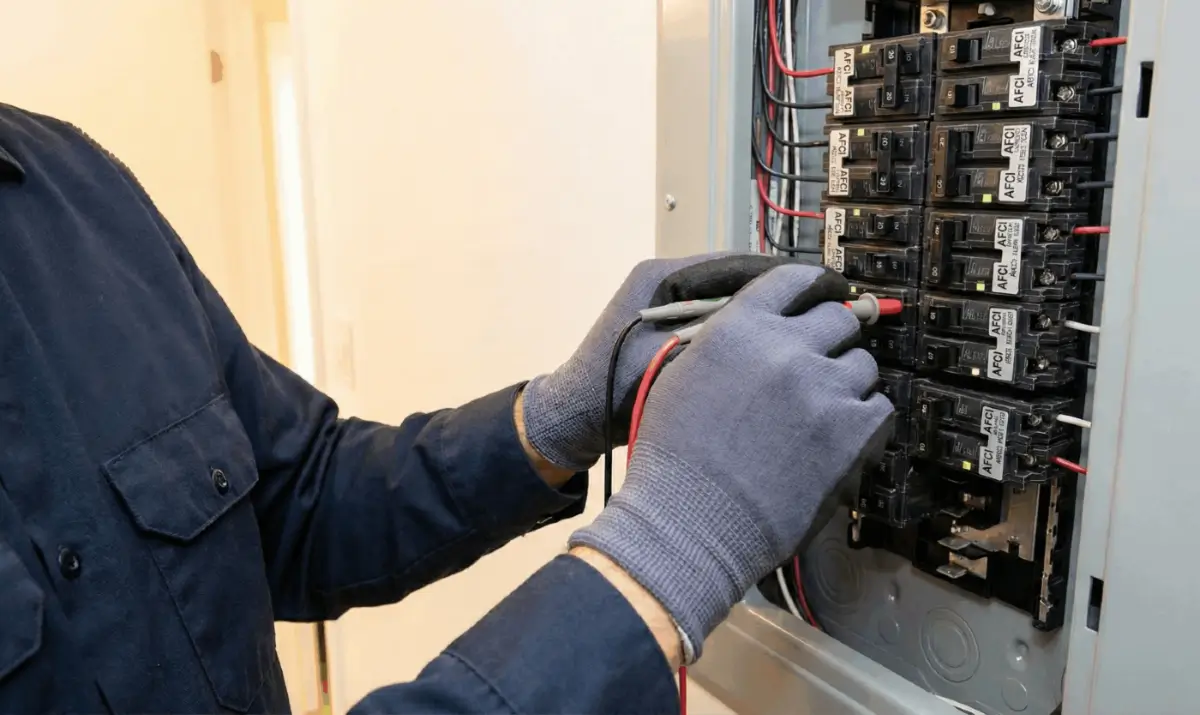
If utility service appears intact, the electrician turns attention to the main panel and subpanels. Breakers that appear normal are not always functioning properly. A breaker may trip internally, fail to seat correctly, or lose reliable contact with the bus bar. Loose terminations, overheating, corrosion, or evidence of arcing can also interrupt only part of the electrical distribution. This is where diagnosis goes beyond visual inspection. Measuring voltage at key points helps determine whether electricity is entering and leaving the breaker the way it should. A partial loss issue often becomes much clearer once the panel is tested under the right conditions.
- Branch Circuits Can Fail Midway
When the panel is not the source, the next step is to follow the affected branch circuit. Power may be lost at a receptacle, switch box, light fixture, or splice point somewhere between the panel and the dead devices. Backstabbed connections, loose wire nuts, worn terminals, and damaged conductors are common causes of intermittent or partial loss of power. In older homes, aging devices and previous modifications can make this even more likely. The electrician traces the circuit to find where the voltage stops or drops unexpectedly. That process is what turns a vague complaint into a specific location and cause.
- Neutral Issues Complicate Symptoms
Some of the most confusing partial power problems involve the neutral conductor. A loose or failing neutral can cause flickering lights, outlets that test strangely, dim-bright shifts in lighting, or appliances that behave unpredictably. Because the symptoms are inconsistent, people often misread them as separate issues when they may come from one unstable connection. An electrician checks for proper voltage relationships, not just whether power is present at all. That distinction matters because a circuit can appear partially energized yet remain unsafe or unreliable due to a compromised neutral.
- Load Conditions Help Confirm The Cause
Diagnosis often requires seeing how the system behaves under load, not just at rest. A circuit may show voltage with no demand on it, then collapse once a microwave, space heater, or hair dryer is turned on. That kind of response points to a weak connection, a deteriorated conductor, or a failing breaker that cannot maintain performance when current is required. Testing under real operating conditions helps the electrician separate a dead circuit from an unstable one. It also helps explain why occupants may report that power comes and goes rather than failing in a clean, obvious way.
Accurate Diagnosis Prevents Bigger Problems
Partial power loss is rarely random, even when it feels that way inside the home. Electricians diagnose it by identifying the pattern, confirming service integrity, testing panel components, tracing branch circuits, and checking for unstable neutral or load-related failures. That methodical process matters because the visible symptom is only the starting point. The real issue may be located at the service entrance, inside the panel, or at a single weak connection hidden deeper in the circuit. For property owners and managers, a proper diagnosis protects more than convenience. It helps restore reliable electrical performance and reduces the risk that a small fault could escalate into a larger safety concern.