
An HVAC system can have decent equipment, a functioning thermostat, and steady runtime, yet still struggle to heat or cool a building efficiently. That disconnect leads many owners to blame the unit itself when the real problem lies in the air path returning to it. Return air issues are easy to overlook because they do not always create dramatic failures. Instead, they show up as weak airflow, uneven room temperatures, rising utility costs, humidity problems, and systems that seem to work harder than the results justify. HVAC contractors identify these issues by treating return air as a measurable part of system performance, not a background detail.
Return Air Problems Show Up Indirectly
- Small Restrictions Create Larger Losses
Return air issues rarely announce themselves with one obvious symptom. More often than not, contractors hear a familiar mix of complaints: rooms that feel stuffy, hot and cold spots that never stabilize, noisy grilles, long system runtimes, and equipment that seems to cycle under strain. Those symptoms may sound like equipment trouble, but they often point to a system that cannot pull enough air back to the air handler or furnace. When return airflow is restricted, the entire heating and cooling process becomes less stable.
That is one reason property owners searching for AC repair near me often learn the issue is not limited to the equipment cabinet. Contractors who diagnose comfort and efficiency problems seriously know that return air pathways affect pressure, airflow volume, coil performance, and overall system balance. If the return side is weak, the equipment cannot move air as intended, no matter how modern the equipment may be.
- Static Pressure Testing Exposes Hidden Stress
One of the most effective ways HVAC contractors identify return air problems is through static pressure testing. This gives them a measurable view of how much resistance the blower is working against as it moves air through the system. High return-side static pressure often indicates that the system is being starved for air before it can even condition and redistribute it. That matters because the blower can only perform properly when it has a clear, adequately sized path for air to return.
This testing helps separate vague comfort complaints from actual system conditions. A building owner may report weak cooling or rising energy use, but static pressure readings indicate whether the return side is concretely restricting performance. Contractors use those readings to determine whether the issue stems from undersized return ductwork, a blocked filter, closed grilles, duct damage, or a design that never supported the building’s airflow needs properly in the first place.
- Return Grille Placement Changes Results
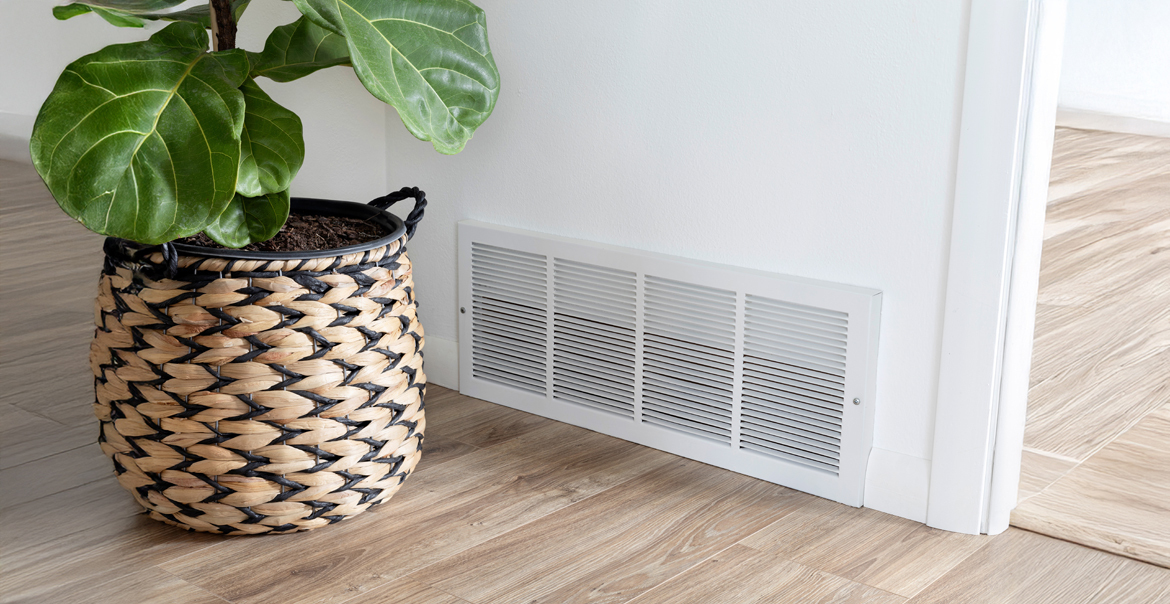
Contractors also evaluate where return grilles are located and whether those locations make sense for the building’s layout. Poor grille placement can make a system look weaker than it really is. If the return is too far from problem areas, concentrated on one level of the building, or blocked by furniture, doors, or renovations, air circulation becomes uneven, and rooms start drifting apart in temperature. The system may continue operating, but it is no longer pulling air evenly from the spaces that need conditioning.
This is especially important in multi-story properties, additions, and remodeled buildings. A return design that once seemed adequate may no longer match the way the building is used. Contractors inspect airflow patterns room by room to see whether air is being trapped, whether upper floors are holding heat, or whether closed interior doors are choking off return pathways. In many cases, poor placement is not a minor design detail. It is a direct contributor to system inefficiency.
- Filters And Grilles Can Restrict Flow
Not every return air problem requires major duct reconstruction. Sometimes the issue begins with more basic restrictions that still have significant performance consequences. Dirty filters, overly restrictive filter media, blocked return grilles, and dust-loaded grilles can all reduce the amount of air that returns to the equipment. When that happens, the blower works harder, airflow across the coil becomes unstable, and the system starts losing efficiency in ways that may appear gradual until they become impossible to ignore.
Contractors check these points early because they are both common and easy to miss. Owners often focus on visible supply airflow and may not notice that the return grille is partially obstructed or that an upgraded high-resistance filter is affecting system performance. Good diagnosis means looking at these simple restrictions before assuming the problem requires a larger repair. Even so, contractors do not stop there if the symptoms suggest a deeper return-side design issue.
Efficiency Improves When Air Can Return
Return-air issues reduce efficiency by interfering with the basic cycle that makes forced-air HVAC systems work. If the system cannot pull enough air back, cannot pull it from the right spaces, or pulls it from the wrong places, the equipment operates under strain, and the building pays the price through discomfort, waste, and repeated service complaints. Contractors identify these issues by testing pressure, inspecting grille placement, evaluating duct size, checking for restrictions, and tracking airflow through actual occupied spaces.
For property managers and building owners, that approach matters because it prevents expensive misdiagnosis. A system that seems underpowered may actually be underfed on the return side. Once contractors identify and correct that problem, the results are often broader than expected: steadier temperatures, quieter operation, improved humidity control, and lower system stress. In practical terms, return air is not a secondary detail. It is one of the clearest indicators of whether the HVAC system is working with the building or fighting against it.