
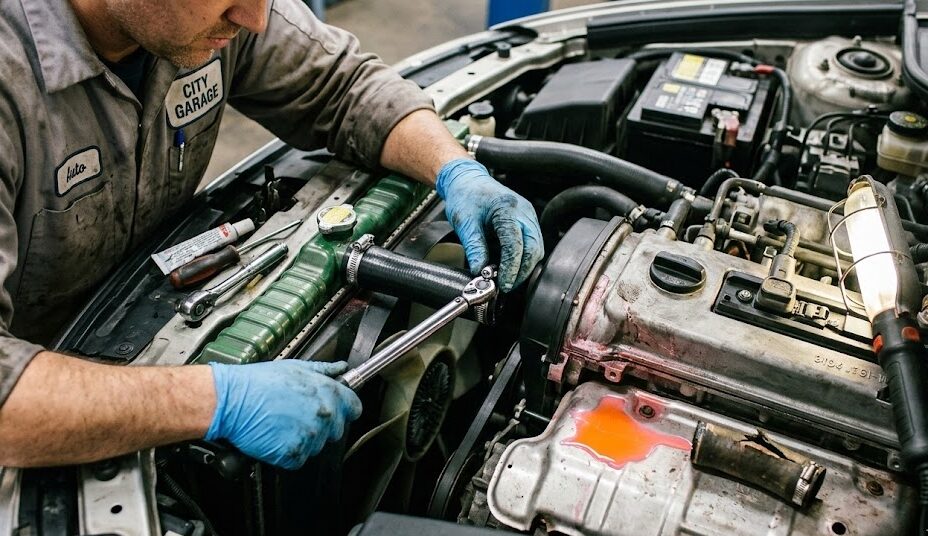
Coolant leak repair can be a car owner’s worst nightmare. They often appear suddenly and can lead to overheating, engine damage, and costly repairs if not addressed promptly. Whether you’re driving an old classic or the latest model, understanding coolant leak repair is essential for keeping your vehicle running smoothly. In this blog post, we’ll dive into the signs of a coolant leak, explore its common causes, and provide practical tips for both DIY enthusiasts and those who might need professional assistance. Let’s get started on ensuring your ride stays cool!
Signs of a Coolant Leak
Spotting a coolant leak early can save you from costly repairs. One of the first signs to look for is an unexplained puddle or stain under your vehicle. If you notice a green, orange, or pink liquid, it’s likely coolant. Another indicator is overheating. If your engine temperature gauge rises higher than normal, this could signal that your cooling system isn’t functioning properly due to a leak. Pay attention to any sweet smells while driving. Coolant has a distinct odor, and if you catch whiffs of it inside or around your car, there may be an issue. Check for visible damage on hoses and connections. Cracks or wear can lead to leaks over time. Be vigilant in observing these signs; they are crucial for maintaining your vehicle’s health.
Causes of Coolant Leaks
Coolant leaks can stem from various sources, each requiring attention. One common cause is worn or damaged hoses. Over time, rubber components lose elasticity and develop cracks. Another frequent culprit is a failing radiator. Corrosion can eat away at its structure, leading to leaks that are hard to spot initially. Gasket failures also play a significant role in coolant loss. The head gasket seals important engine areas, and when it fails, coolant may escape into the oil system or outside the engine entirely. Water pumps are essential for circulating coolant but can wear out too. A faulty pump often leads to puddles under your vehicle. Connections where hoses attach to other components can loosen over time due to vibrations or temperature changes. Regular inspections help catch these issues early before they escalate into major problems.
Steps for Identifying the Source of the Leak
To identify the source of a coolant leak, start by inspecting your vehicle’s hoses and connections. Look for any visible cracks or signs of wear. These are common culprits. Next, check the radiator and water pump areas. Any puddles or stains around these parts might indicate a problem. Don’t forget to examine the engine block itself. Sometimes leaks can originate from gaskets that have worn out over time. A pressure test can also be beneficial; it helps pinpoint hidden leaks that aren’t immediately visible. If you have access to UV dye, adding it to your coolant system can make finding leaks easier under black light conditions. Always remember to keep safety in mind while performing these checks. Wear gloves and protect your eyes if you’re working with pressurized systems or chemical substances.
DIY Coolant Leak Repair Tips
If you notice a coolant leak, tackling it yourself can save time and money. Start by gathering the necessary tools: a wrench set, pliers, and leak sealant. Check your vehicle’s manual for specific instructions related to your model. Locate the source of the leak—common culprits include hoses, radiator seams, or water pumps. For minor hose leaks, use a high-quality tape or clamp to secure any loose sections temporarily. If you find cracks in plastic components, consider applying epoxy as a quick fix. Always allow the engine to cool before starting repairs. Safety is paramount; wear gloves and safety glasses while working with automotive fluids. Once you’ve made temporary repairs, monitor fluid levels closely over the next few days. This will help ensure that your DIY efforts are effective before deciding on more permanent solutions.
When to Seek Professional Help
Not all coolant leaks are created equal. Some can be fixed with DIY methods, while others may require a professional touch. If you notice the leak is substantial or persistent, it’s wise to consult an expert. A small drip might not seem serious, but if you’re constantly topping off your coolant, that’s a red flag. Additionally, complicated systems like head gaskets or water pumps often need specialized knowledge and tools for repair. If these components are involved in your leak, don’t hesitate to reach out for help. Strange noises accompanying the leak signal something more severe too. Never ignore sounds that suggest mechanical failure; they could lead to bigger issues down the road. If your vehicle is overheating frequently despite repairs and checks, it’s time for professional intervention. This situation can escalate quickly and put both you and your vehicle at risk.
Prevention and Maintenance Tips for Avoiding Coolant Leaks
Regular inspections can save you from costly repairs. Check your coolant levels frequently. Low fluid indicates possible leaks or other issues. Monitor hoses and connections closely. Look for signs of wear, such as cracks or soft spots. Replacing a worn-out hose is much cheaper than fixing an engine. Flush your cooling system according to the manufacturer’s recommendations. Old coolant can corrode components and lead to leaks over time. Consider using high-quality coolant designed for your vehicle model. It helps maintain optimal performance and reduces the risk of leakage. Pay attention to unusual engine temperatures during drives. If something feels off, don’t ignore it—addressing potential problems early can prevent bigger headaches down the road.
Conclusion
Coolant leaks can lead to serious engine damage if not addressed promptly. Recognizing the signs and understanding the causes of these leaks is crucial for maintaining your vehicle’s health. By following the steps outlined for identifying leak sources, you empower yourself with knowledge that could save you time and money. DIY repairs are often manageable, but knowing when to seek professional help ensures your car remains in peak condition. Regular maintenance checks can further prevent coolant issues before they arise, giving you peace of mind while driving. Staying proactive about coolant leak repair will enhance your vehicle’s performance and longevity. Make it a habit to monitor your cooling system regularly, keep an eye out for warning signs, and always prioritize safety on the road. Your car deserves it!