
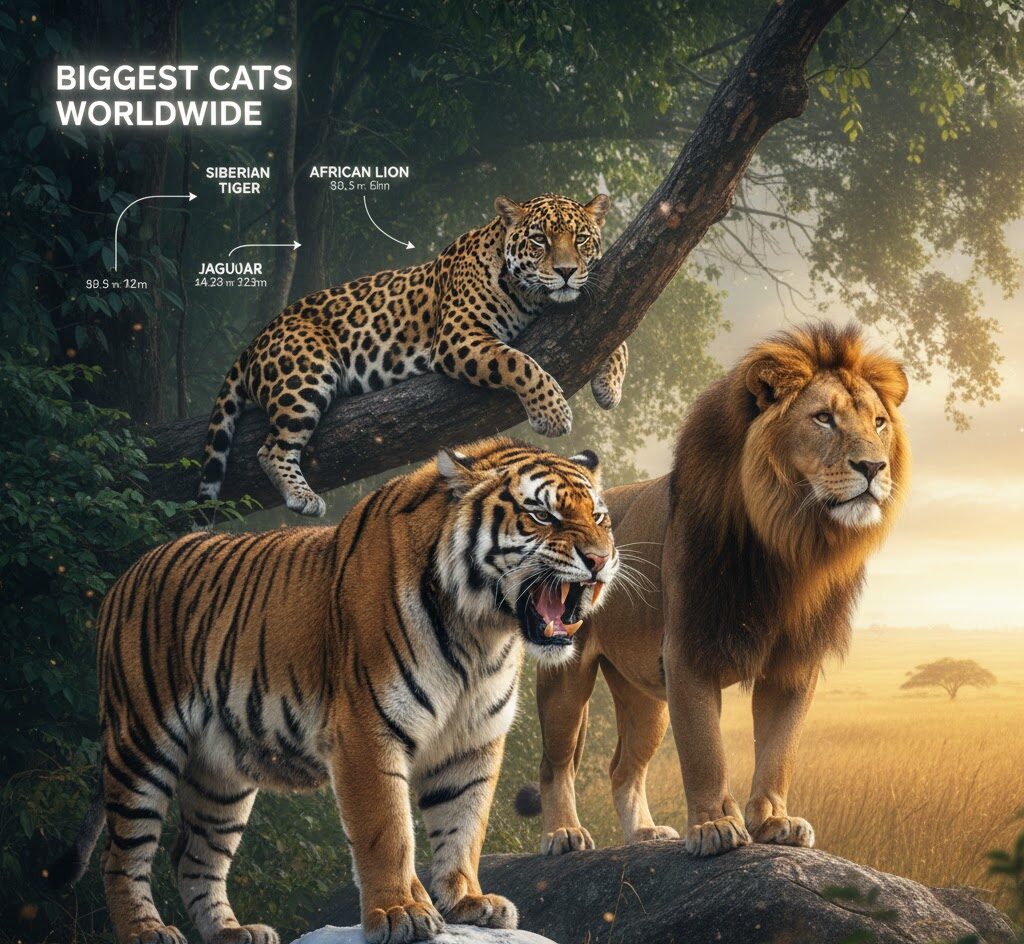
Big cats have captured our imagination for centuries. Their strength, beauty, and mysterious nature make them some of the most fascinating creatures on the planet. From the majestic tiger prowling through dense jungles to the sleek leopard lurking in tall grass, these incredible animals are more than just symbols of wilderness; they represent power and grace in their every move. While many people adore domestic cats for their playful antics and affectionate behavior, biggest cats worldwide evoke a different kind of admiration. They embody raw ferocity and untamed spirit that can leave us both awestruck and humble. As we explore the biggest cats worldwide, prepare to dive into their unique characteristics, habitats, and conservation challenges. Join us as we unravel the stories behind these magnificent felines! Whether you’re an animal lover or simply curious about wildlife, this journey will deepen your appreciation for some of nature’s most impressive giants.
Top 10 biggest cats ranked by size and weight
When it comes to the biggest cats worldwide, size and weight can be astounding. The Siberian tiger tops the list, reaching lengths of up to 12 feet and weighing over 600 pounds. Next is the Bengal tiger, a stunning feline that can weigh between 400 to 500 pounds. Its striking orange coat makes it one of the most recognizable big cats. The African lion follows closely behind. Males typically weigh around 420 pounds, showcasing strength and majesty in their pride dynamics. Then we have the jaguar, known for its powerful build and unique rosette pattern. Weighing up to 250 pounds, this cat is an apex predator in its habitat. Don’t forget about cougars! These versatile felines can reach weights of around 220 pounds while roaming vast territories across North America. Each of these remarkable creatures showcases nature’s incredible diversity among big cats and leaves us in awe.
Unique features and behaviors of each cat
The Siberian tiger is renowned for its striking orange coat adorned with black stripes. This majestic cat has powerful limbs and a thick fur that helps it survive in harsh climates. Next, the African lion stands out as a social creature. Known for their pride structures, these lions exhibit teamwork during hunts, showcasing impressive coordination and strength. The jaguar possesses one of the strongest bites among biggest cats worldwide. Its unique ability to crush bones enables it to prey on armored animals like turtles effortlessly. Leopards are masterful climbers. Their agility allows them to stash their kills high up in trees, keeping food safe from scavengers below. The cheetah holds the title for speed; they can sprint at incredible rates over short distances. Their lightweight bodies and large nasal passages support this extraordinary athleticism while hunting on open savannas.
Where these cats can be found in the wild
The habitats of the biggest cats worldwide vary drastically. Many thrive in dense rainforests, while others prefer open savannas or rugged mountains. Tigers roam primarily across Asia, from India to Siberia. Their adaptability allows them to exist in various environments, including mangrove swamps and grasslands. Lions are synonymous with African savannas. They often gather in prides, making their home among tall grasses where they can hide before launching a hunt. Leopards have an expansive range that includes sub-Saharan Africa and parts of Asia. These elusive felines are known for their climbing skills, seeking refuge in trees away from potential threats. Snow leopards inhabit high mountain ranges like the Himalayas and Altai Mountains. Their thick fur keeps them warm against harsh climates at altitudes above 3,000 meters. Each species has evolved intricately with its surroundings, showcasing nature’s incredible diversity.
Conservation efforts for these endangered species
Conservation efforts for the biggest cats worldwide are crucial as many species face critical threats. Habitat loss, poaching, and human-wildlife conflict have pushed populations to alarming levels. Organizations globally work tirelessly to protect these majestic animals. Measures include establishing protected areas where big cats can roam freely without threat. Education initiatives also play a vital role in raising awareness about their plight. Wildlife corridors are being created, allowing safe passage between habitats fragmented by human activity. This helps maintain genetic diversity and reduces conflicts with local communities. Community involvement is essential; local people often become advocates for conservation when they see the benefits it brings. Supporting eco-tourism fosters economic incentives that prioritize wildlife preservation over exploitation. Innovative tracking technologies help researchers monitor movements and behaviors of these elusive creatures, ensuring informed decision-making for future conservation strategies. Each effort counts toward securing a brighter future for the largest felines on our planet.
How big cats compare to domesticated house cats
Big cats and house cats share a common ancestry, yet their differences are striking. While domesticated cats typically weigh between 5 to 20 pounds, big cats can tower over them. For example, tigers can exceed 600 pounds. Behaviorally, big cats possess wild instincts that are often absent in our cuddly companions. They stalk prey with precision and exhibit strong territorial behaviors. House cats may pounce on toys but lack the same level of hunting prowess. Appearance also varies greatly. Big cats boast powerful physiques and distinctive markings—like the stripes of a tiger or the rosettes of a leopard—while house cats come in various colors without such elaborate patterns. Social structures differ too; many big cat species are solitary hunters, whereas domestic felines engage more socially within households. This contrast highlights how evolution has shaped these majestic creatures into two distinct categories despite their shared lineage.
Misconceptions about big cats
Many people think all biggest cats worldwide are aggressive. While they can be formidable predators, their behavior often varies widely among species. Most big cats prefer to avoid human interaction unless threatened. Another common misconception is that all big cats roar. Interestingly, not every member of the feline family has this ability. For instance, cheetahs make a series of chirps and purrs instead. Some believe that big cats live solitary lives forever. However, social structures differ greatly between species; lions thrive in prides while leopards usually roam alone. Many assume these magnificent animals are invincible due to their size and strength. In reality, many face serious threats from habitat loss and poaching which endanger their survival in the wild. Understanding these truths helps foster greater appreciation for wildlife conservation efforts aimed at protecting them.
Tips for safely observing or interacting with big cats
Observing big cats in their natural habitat can be thrilling. Always maintain a safe distance. Use binoculars or a camera with a zoom lens for the best view without disturbing them.
If visiting wildlife parks or reserves, stick to designated paths and follow guidelines provided by staff. These measures ensure both your safety and that of the animals. Never attempt to feed or approach wild cats. This can lead to dangerous situations for you and disrupt their natural behaviors. Educate yourself about the specific species you hope to see. Understanding their habits enhances your experience while fostering respect for these majestic creatures. Always stay calm if encountering a cat unexpectedly. Keep quiet, back away slowly, and avoid making sudden movements; this helps prevent any aggressive behavior from the animal.
Cultural significance and symbolism of big cats in different societies
Big cats have held a prominent place in the cultural narratives of societies around the globe. They symbolize strength, bravery, and ferocity. In many cultures, these majestic animals represent power and authority. For instance, the lion is often referred to as the “king of the jungle.” This title transcends geographical boundaries and has made its way into various folklore and mythology. Lions are featured in coats of arms, national flags, and emblems symbolizing courage. The tiger carries similar weight in Asian cultures. It represents protection against evil spirits and is revered for its gracefulness combined with raw power. In Chinese culture, it symbolizes bravery and is one of their zodiac signs. In ancient Egypt, leopards were associated with royalty due to their beautiful spots that mimicked those found on fine textiles worn by pharaohs. Many tribes across Africa view cheetahs as symbols of speed or cunning hunters—qualities admired by local communities. These interpretations highlight how deeply intertwined big cats are within human history. From ancient civilizations to contemporary art forms like tattoos or fashion trends featuring feline motifs—they continue to captivate our imagination today. Understanding these connections can deepen our appreciation for big cats beyond mere spectacle; it reminds us why preserving them matters not only environmentally but culturally too.